Thermostats are newer and more efficient heat exchangers, which are currently used on a number of occasions between liquids and liquids and between liquids and gases. But people don't know very well about the principle of tablet heat exchangers, or about their structure and classification, so let's get to the bottom of it。
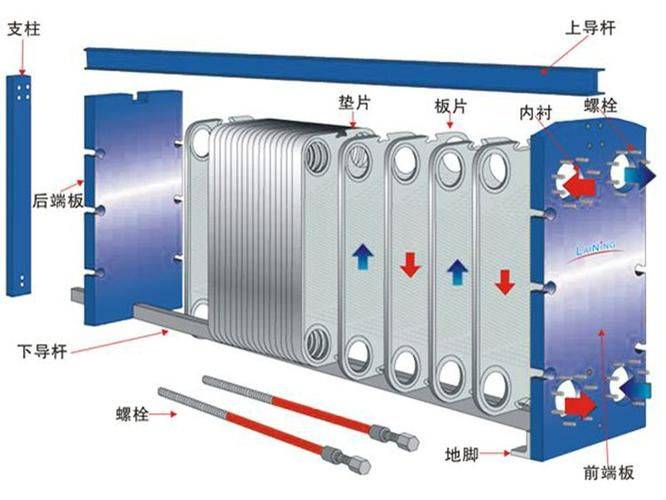
Thermostats are a heat exchanger that is pressured by thin metal plates into a form of a waver shape, which is then stacked and reinforced by a plywood and bolt. A thin rectangular channel is formed between the various plates and the heat is exchanged through half a piece. Working fluids flow through narrow and convoluted channels formed between two plates. The cold thermal fluid passes in turn through the channel, with a partition plate separating the fluid and switching the heat through it。
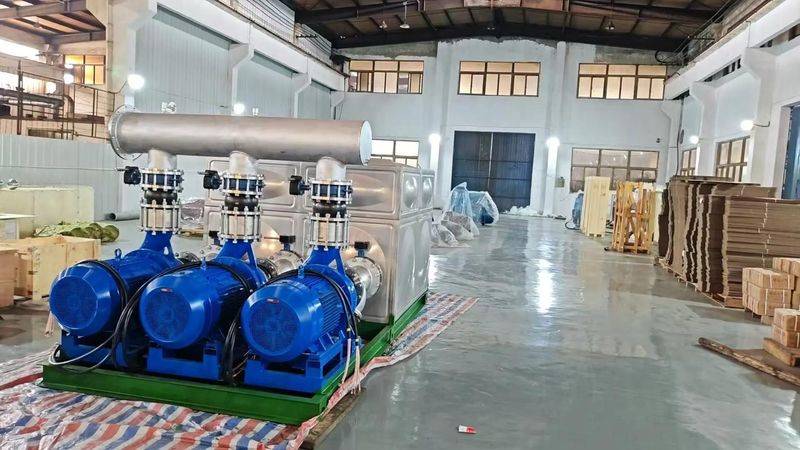
Thermostats consist of a number of impulsive wave-lined thin sheets that are sealed at intervals, sealed by gaskets, and compacted with frames and compact spirals. The four angles of the plates and gaskets form the distribution and assembly tubes of the fluids, while at the same time they are reasonably separated from the cold thermal fluids, moving separately in the fluids on both sides of each plate, and thermally exchanged through the plates。
The plate thermal exchangeer distinguishes between the outer form of a detached plate thermal exchanger (also known as a plate thermal exchanger with a sealed pad), a welded plate thermal exchanger, a screw thermal exchanger, and a plate thermal exchanger (also known as a honeycomb thermal exchanger)。
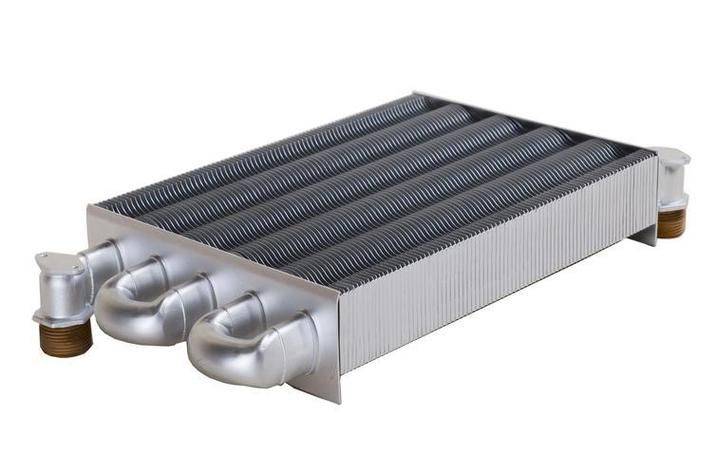
As a new type of heat exchanger with a reasonable structure and a relatively large number of classifications, the plate thermal exchangeers can be tailored to specific needs in different settings. In refrigeration air-conditioning, in use and in boilers. And there's a lot of chemical, metallurgical, mechanical and electrical。