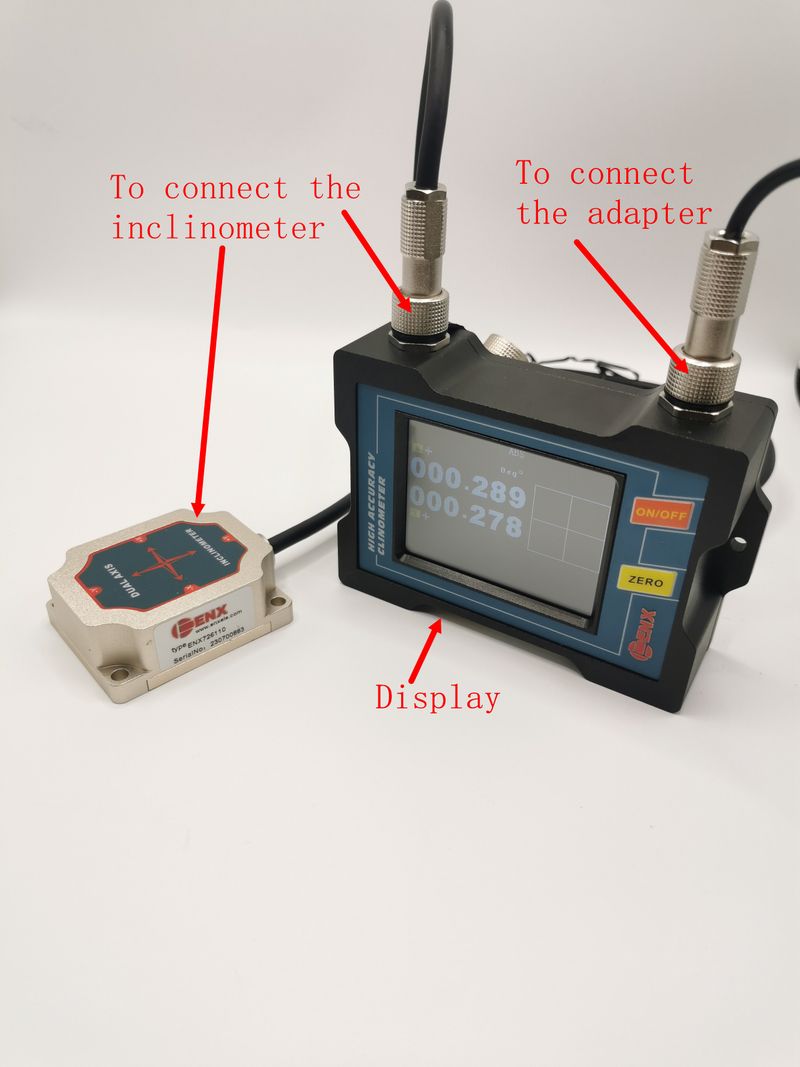
The rationale and application of the tilt gauge
The logic and application of the tilt gauge, which is a measurement tool whose primary function is to measure the tilt angle of the plane or object relative to the horizontal surface. It has been applied in the areas of construction, engineering and geological exploration. This paper presents the principles and applications of the tilt gauge。
The tilt gauge detects the position of the horizontal surface by using the acceleration of gravity. The tilt gauge usually includes one or more sensors that measure the slope angle of the plane or object. Each sensor includes a sensitive transistor or resistor that can detect changes in the location of the equipment。
Sensors are installed on a mechanical arm or base and can display data by telemetry or digital display screens. When the device is tilted, the sensor detects a change in gravity and calculates the corresponding tilt angle based on its output voltage signal。
The tilt gauge is used extensively in a variety of fields, of which several typical applications are listed below:
Architectural and engineering field: the tilt gauge can be used to detect the location and angle of buildings and engineering structures. They can help architects and engineers determine whether adjustments are needed to ensure that buildings and structures are in line with norms。
Geological exploration: geologists use tilt gauges to determine the angle and direction of mountains, faults and other geological formations. Such information is important for understanding geological processes and predicting natural disasters。
Space and ship industry: in the space and ship industry, tilt gauges are used to maintain the balance and stability of equipment and vessels. They can also be used for navigation and attitude control。
Sports competition: an oscillator can be used to measure the angles and trajectory of athletes in projects such as jumping, jumping, lead balls, etc。