


“quality development” is the distinct theme of the “fifty-five” programme, which coincides with the kernel depth of long-term insurance. This not only provides direction for the future of the industry, but also injects more strategic energy into institutions that uphold long-term values. In recent days, mr. Liu bingfa, the general manager of chinese life, has been invited to engage in an in-depth dialogue with the media。
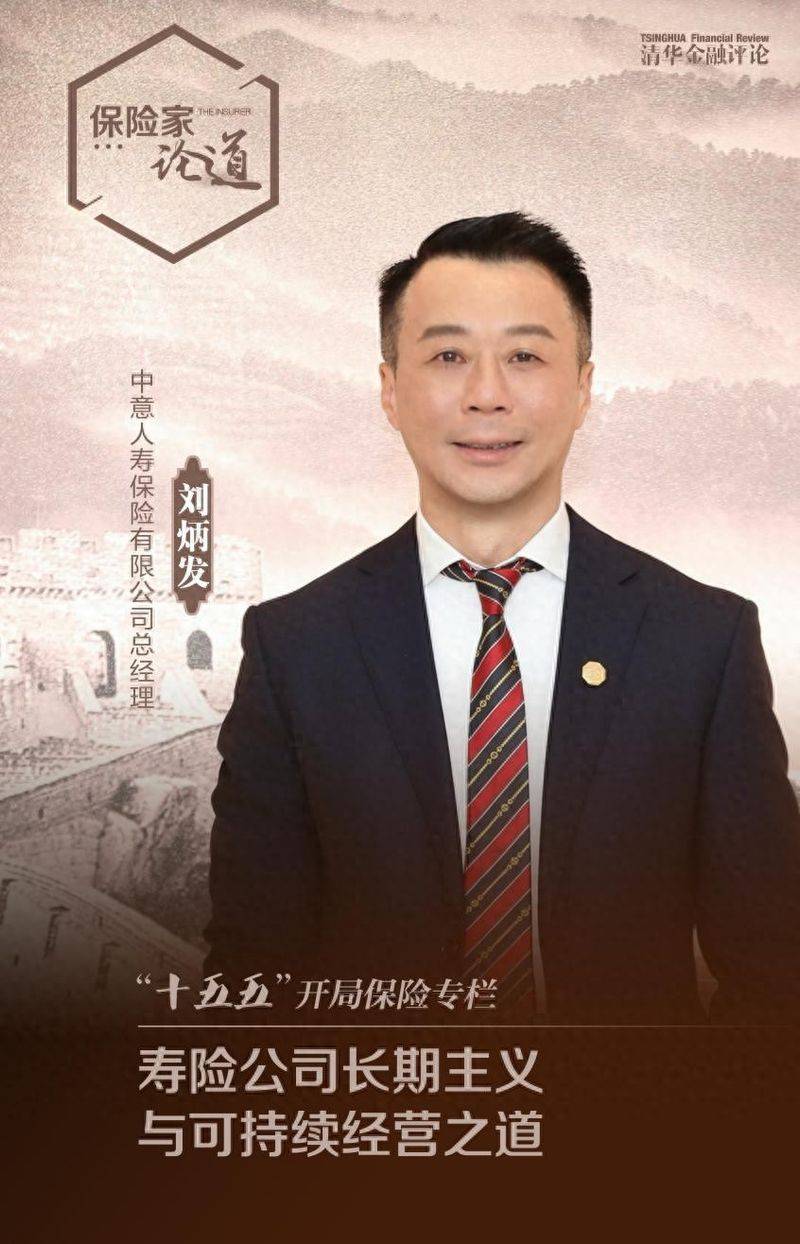
As a core participant and leader in corporate preparation and development, mr. Liu bingfa has served for more than two decades with an actuarial professional background and an internationalized management perspective. Based on long-term industry patterns and global practice, he provided a systematic illustration of how insurance companies could build sustainable business capacity, reshape asset liability management systems in complex cycles and achieve their own high-quality development in national strategies for services. Its views reflect both the ability to manage risks under actuarial thinking and the depth of thinking at the strategic and governance levels, and provide important inspiration for long-term business and value creation in the industry。
I. Transboundary resilience growth, life-friendly practices and thinking
Q: the national “fifty-five” plan establishes “quality development” as a core strategic orientation, which implies higher levels of development for a long-term, long-term, life-risk industry. How, then, should life insurance companies systematically internalize the strategic requirements of a country's “quality development” into its “cycle-crossing” business model and core competencies? In achieving this goal, what do you think is the greatest test facing the industry
Liu bingfa: to answer this question, we must first return to the nature of life insurance — long-termism. The premiums we collect correspond to responsibilities for decades to come, which means that all corporate strategies and decisions must be based on long-term sustainability。
Economic cycle fluctuations are objective and inevitable. The core capacity of insurance companies is therefore to build robust business systems that can cross the cycle. Any operational decision is subject to a long-term perspective as to whether it truly establishes a sustainable safeguards base。
The bottom logic of insurance operations lies first and foremost in ensuring the firm's own robustness. Reliable customer assurance can only be sustained if they have robust risk resilience and compliance capabilities. For example, while a product with a higher guaranteed interest rate would increase market attractiveness, companies would have to look simultaneously at whether they had the asset-end earning capacity to match it to meet long-term insurance liabilities。
The key to long-term soundness lies in the effective association of assets and liabilities. The commitment of the liability side must be effectively supported by the asset side. If high guaranteed interest rate products are introduced, matching and hedgeing must be made at the end of the asset with assets that generate corresponding returns. Such operations should not take place if an effective correlation between asset liabilities and gains cannot be achieved。
As a result, the current industry faces cyclical challenges such as low interest rates, which are in essence a stress test of the fundamentals of asset liability management for insurance companies. The real test is whether the company, in its past operations, is well prepared for future liability payments through a forward-looking asset allocation and prudent debt structure design. It is only by doing this basic function that the core capacity to cross the cycle and achieve high-quality development can truly be built。
Q: in general, life insurance companies go through a seven to eight-year cycle from inception to profitability, but starting a profit does not mean that they can sustain a steady profit. What are the factors that, in your opinion, have largely benefited from the establishment of the life of the people of the republic in 2002 and the establishment of a sustained profit in 2010 and the continuation of this trend for 15 consecutive years
Liu bingfa: behind the 15 consecutive years of profit, we have always followed life insurance company business practices and worked to achieve a dynamic balance between the dead, the spread and the fee。
First, the business logic of “careful risk management in order to better deliver on promises” has always been upheld. Before conducting any operation, consideration must be given to how to build its own risk resilience. In particular, for each product to be launched, it is necessary to identify whether the corresponding asset allocation programmes are supported and hedged. A stable level of spreads can be maintained only by ensuring that the end-of-debt commitment is effectively matched with the end-of-assets gains, which is a prerequisite for achieving sustainable business and protecting the long-term interests of the client。
Second, great importance is attached to accounting rules and the management of financial fluctuations. In addition to the long-term robustness of economic security in substance, insurance companies must have an in-depth understanding of the impact of accounting rules on short-term financial performance. The current industry is at the stage of implementation of new standards such as ifrs 17 (ifrs 17), where the classification of assets and the measurement of liabilities influence the volatility of profit statements. The mismatch between assets and liabilities in accounting treatment is likely to result in significant profit fluctuations and financial pressures in the short term. Corporate management therefore needs to be deeply involved in the development of financial and accounting strategies, working with the cfo team to ensure that prudent arrangements are made in such areas as accounting policies, matching of assets and liabilities to smooth short-term fluctuations and avoid potential risks。
Thirdly, the concept of business outreach is promoted along with technical expertise. As managers of companies, it is important to promote business development as well as a deep understanding of the technological core of insurance operations. Focusing only on scale expansion, without clarity about the cost structure behind the operation, risk characteristics and long-term financial implications, tends to lead to increased pressure on scale and even to the accumulation of hidden risks. Therefore, life expectancy in china has always emphasized that scale growth must be based on a manageable value contribution and risk, and that the blind pursuit of growth does not erode the long-term profit base。
Shareholder empowerment practices: multi-dimensional drivers of high-quality growth
Q: as a joint venture insurance company, what support is provided by shareholders on both sides in terms of professional capacity-building, resource synergy, etc. For a life-friendly life
Liu bingfa: chinese life is china's first joint venture life insurance company since joining wto. By the end of 2025, assets had exceeded $22 billion, becoming a “life partner” to which 18 million clients depend。
China oil and gas group ltd. (“china oil”), a group of chinese shareholders, has provided us with a wealth of resources in the group's clients and industrial chain, providing strong support in the areas of health, medical care and old age, including the china petroleum group's serious sickness insurance project, supplementary medical insurance services, the oil insurance universal insurance product scheme, and individual pensions. In the area of investment, the west-west and west-west pipeline equity investment plan, which is entrusted to the management of the chinese-chinese limited liability company for asset management (known as “chinese-owned assets”), amounts to $36 billion, which both guarantees financial security and returns to a greater extent and further enhances the capacity of our national strategy and professional investment in services。
The foreign shareholder, côte d'ivoire, inc. (known as the “thongley group”), has a history of nearly 200 years and has survived two world wars, the oil crisis and the sub-prime crisis, as well as a low-interest-rate cycle in europe, which began in the 1990s and lasted for 30 years, during which time the rate of return on the sovereign debt of the major european markets fell to zero or even negative zones, posing a huge challenge to traditional products providing guaranteed benefits. Thanks to the depths of the many economic cycles, the group has evolved into a mature asset-liability management system, which has created a dynamic pricing mechanism linked to market interest rates by facilitating the transformation of product structures to floating-income models, supported by asset-end optimization such as long-term bond allocation. This experience in asset-liability management, which can cross the life cycle, has been injected from the outset into the development gene of a healthy life。
Q: how has life been adjusted for product pricing and design in recent years under the guidance of both shareholders
Liu bingfa: the international experience and professional insights of shareholders on both sides have provided a valuable international perspective and operational guidance on life in the interest of life, particularly in addressing the current low-interest rate environment, promoting business structure optimization and achieving sustainable development。
At the level of indebtedness, we have been driving the shift in the focus of corporate business from 2022 to splitting risk. In the current complex economic environment, ris is a preferred option, with both a guaranteed part of the benefits and an opportunity to obtain a profit-sharing distribution of the ssa. By the end of 2025, we had received 10 heavy-weight awards for our “life-care” series of sub-redacted products, which in 2024 had recorded a single premium of more than $6 billion; in addition, we had earlier introduced a sub-redged personal pension product that met the client's basic security needs and gave clients the opportunity to share the results of industry development and corporate operations. The firm's rigid cost rate for new business in 2025 was 70bp lower than for the full year of 2024, with a floating yield of 98 per cent, not only meeting the customer's wealth management needs but also controlling the spread risk of new business at source。
In order to match the adjustment of the liability end, at the asset end, we have a professional asset allocation that focuses on the robustness and diversity of the configuration. On the one hand, increasing long-term interest-rate debt allocation at relatively high interest rates ensures that investment returns are robust; on the other hand, market opportunities are seized by a modest allocation of high-equity stocks, high-quality alternative assets, science and technology-growth stocks, etc., subject to manageable risk. In 2025, the difference between the maturity rate and the rigid cost of our newly configured assets was 20 bp greater than in 2024。
Iii. Service countries “155” for first-class joint ventures
Q: how do you see the development of the insurance market in china over the next five years? How can china life insurance remain competitive in the long term? How does life respond to the direction of national “155” planning
Liu bingfa: looking ahead to the next five years, china's insurance market still has great prospects for development. In terms of current patterns of financial products, the competitiveness of insurance in the allocation of assets to the population is becoming more pronounced. On the one hand, interest rates on deposits are at a low level; on the other hand, equity-type assets, such as equities and funds, impose higher requirements on investors ' risk tolerance. The nature of the insurance product is to provide risk security, and some floating revenue-type products also provide an opportunity for clients to share in the company's business results, striking a better balance between safety and the potential for wealth growth, especially for a relatively robust client group of risk preferences。
The key to long-term competitiveness of insurance companies in the future is to achieve the same synergy with socio-economic development through specialization, prudential management and strategic synergy, and to promote their own high-quality development in the service of the country. The state continued to promote the development of priority areas of old-age, health and wealth management during the “155,” and to deepen the structural reform of the financial supply side around the “five articles” on science and technology finance, green finance, inclusive finance, old-age finance and digital finance, in line with the direction of the insurance sector. In the area of old-age care, for example, it is committed not only to meeting the needs of clients with regard to old-age planning, but also, more importantly, to further fine-tuning the client's pension solutions at all stages, significantly improving the core competitiveness of the employer; in the area of health, not only providing a diversified supply of health products, but also constantly improving the service network to further upgrade the client's experience; and in the area of wealth management, making arrangements for the targeted payment of clients ' beneficiaries through insurance, effectively combining the needs of the client with the needs of the client in terms of education, inheritance and contributing to the targeted planning of wealth。
Insurance funds play an important role in the economic and social development of the country as long-term capital. In the use of funds, the focus has been on integrating the real economy and national strategies, actively implementing the green investment concept and promoting the implementation of esg standards in investment decisions. The inclusion of esg in the global business and investment framework by the shareholders ' group is highly consistent with our policy orientation to promote green transformation and sustainable development and provides a solid foundation for sustainable corporate development。
Q: how can the core vision and value proposition for the future of life be resonated with china's economic development
The core vision of life and value propositions have been consistent with china's economic development. For the 15th and longer term, companies need to adopt high-quality development that anchors the strategic goal of building “world-class insurance companies” with a focus on the development orientation of “head-to-head challengers, providers of specialized insurance services by china’s oil companies, and supporters of health development in the oil industry.” this is not just a quest for leadership in scale, but also to ensure the quality of development and the depth of corporate development in china's economic transformation process。
Our mission is to be a lifelong partner of our clients, which embodies the essence of the duty of insurance. Guided by this mission, we focus on the long-term needs of our clients, not subject to short-term market fluctuations, and are committed to meeting the risk management and financial security needs of clients at different stages of their lives。
To achieve our vision and mission, we must remain robust, professional and continuously enhance our capacity for sustainable development. In accompanying the growth of clients and in serving the country's development, harmonize the values of enterprises with those of society and work with industry counterparts to promote a healthier and more sustainable future for insurance。



