


The rationale for taking off the aircraft was based essentially on the bernouli doctrine and newton iii. While there are a variety of theories for specific explanations of the lifting power of the wings, most of the explanations relate to pressure differentials on the upper and lower surfaces of the wings and variations in the momentum of the air。
Bernoulian doctrine
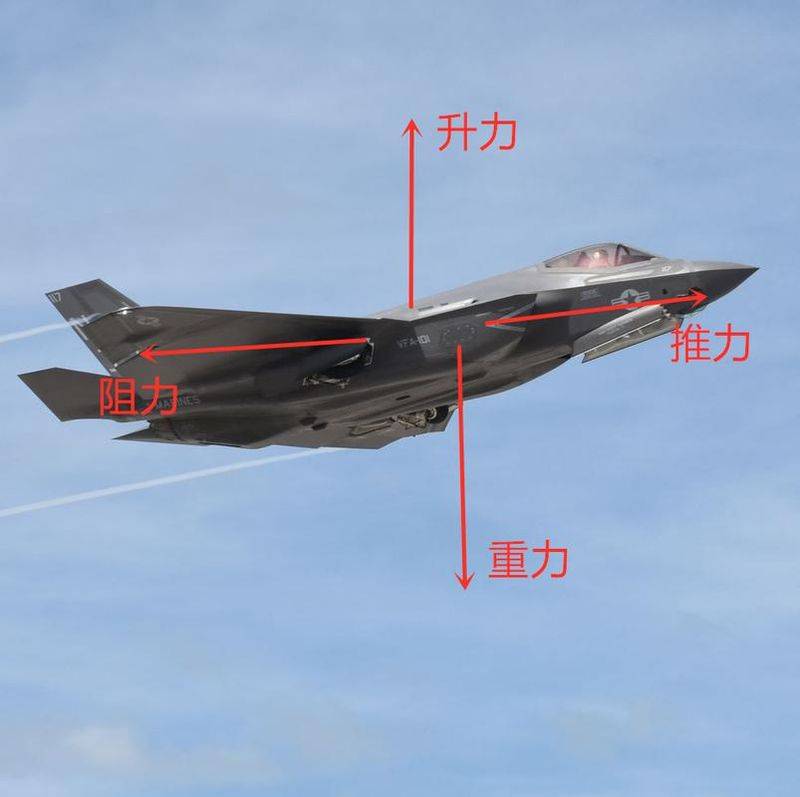
The benuli principle explains a phenomenon in hydrodynamics, i. E., the higher the fluid speed, the lower the pressure of the fluid under ideal conditions (non-compressable, non-adhesive). The wing was designed to make the air flow faster on the surface of the wing than on the lower surface. According to the benuli doctrine, this means that the pressure on the upper surface of the wing will be lower than that on the lower surface, thus generating upward lift。
The third law of newton
Newton's third law describes the relationship between force and reaction, i. E., that for any two objects interacting, their effect and reaction are equal and opposite. When the aircraft takes off, the wing accelerates the air downwards and, according to newton's third law, the air also exerts an equal and opposite force on the wing, i. E. Upward lift。
Explanation of pressure differential
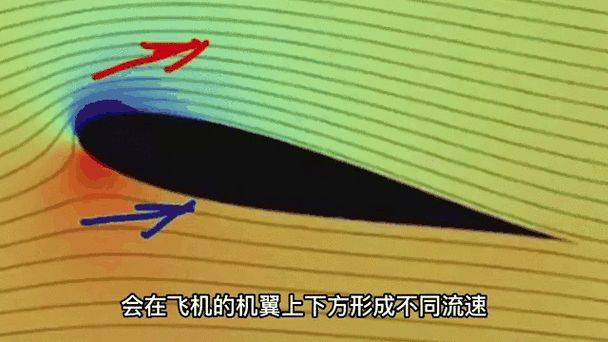
While the bernuli doctrine and the newton law have all played a role in explaining how aircraft generate lifts, there are some arguments and differing interpretations of the specific mechanisms for forming pressure differentials. One view emphasized the role of the bernoulian doctrine in interpreting upwards, while the other was more dependent on changes in newton's law and air momentum. In fact, these two interpretations are not mutually exclusive but can be seen as different perspectives describing the same phenomenon。
Actual situation
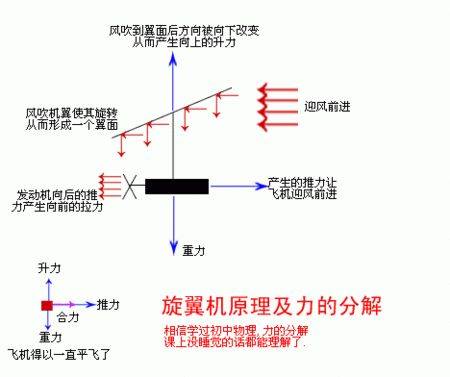
In practice, the mechanism for aircraft to generate lifts is more complex than these theories. The shape of the wing (e. G., the wing), the angle of the attack (the angle of the wing and direction of movement), the speed and the nature of the air influence the generation of the lift. In addition, factors such as the three-dimensional effects of the wings, the behaviour of the boundary layers and the flow of aircraft play an important role。
In sum, the working method of aircraft take-off is a complex process involving many aspects of hydrodynamics and physics, and the benoli doctrine and the newton law provide the basic framework for understanding the process。



