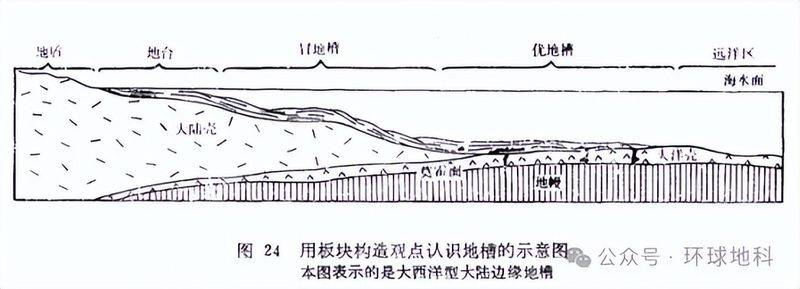
According to dietz and holden, the sedimentation of the modern continental margin is equivalent to what was described earlier as the stairwell deposition. This continental margin, however, may never have formed an oscillation, but rather a slope, so in 1966 it was boldly referred to as geocline, which could be translated as a “land slope” or a “land slope”, or a “continental margin”. They further raised the issue of tyrannical and preferential slopes。
Following the presentation of the plate tectonics doctrine, mitchell and ridding divided the troughs into three main types: the atlantic, on the passive edge of the plate, the andes, on the surface of the deep-sea ditches, on the surface of two condensed plate contact strips, and the island's expulsive, on the plate and on the arc。
In the latter category, a japanese haiya or back-arc basin type can also be distinguished. All three types and sub-types are located on the continental margin。
Seyffert and sirkin, in their book " earth history and plate tectonics " , also drew the grooves of each period of the trial around the then continental plate, close to the mainland and graft to the outside (figure 23)。
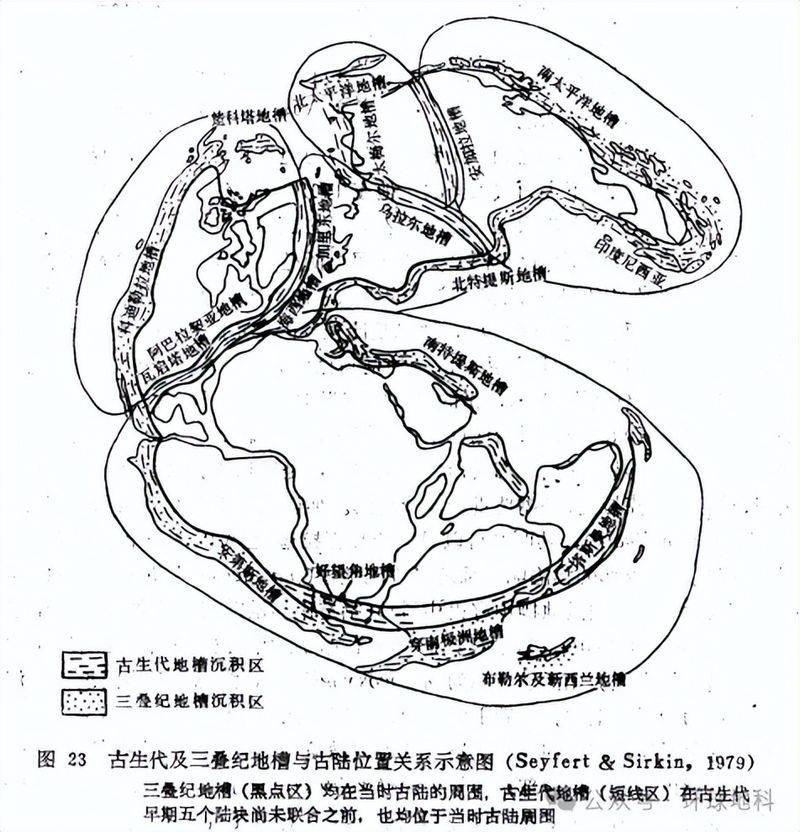
In terms of asian geological characteristics, the sink is also on the continental margins, not between two continents or within one continent。
Our south-eastern south-eastern china, with its early and ancient wrinkles, lies in an euphemism on the edge of the mainland china, in the western part of china, in the eastern part of the country, in the ocean, not within the continent or between two continents。
Our country, taiwan, is a platinum-dict on the pre-chiliptic base, west of which is chinese land of fire and east is the pacific ocean. It is neither within the continent nor between the two continents, or it can be said to be equivalent to the positive sink between the gacarton and the deep kratton, as stil calls it, and is in fact a slot on the continental margin。
Japan does not have a very old layer of floors, there is not much presence of long-standing and mud basins, and the graphite and diaphragm systems are utilised by eugenic sediments. From its ancient geographical location, it is on the margins of the asian continent, and on the eastern side is the pacific ocean, which has never been ancient. So the japanese trough is neither within the continent nor between the two continents, and is similar in nature to the taiwan trough and is a continental plate edge. It seems difficult to explain the urals。
Today it lies between the eurasian continent. Until the plate tectonic doctrine was presented, it was considered to be the intercontinental sink. This is not the case now with the tectonic analysis。
On the western side is the russian platform, on the edge of which there is a slant towards the east, on the east side of which there is the siberian platform, in the middle of which is the micro-paste of kazakhstan and its edges. They were separated from each other before the charisma, and in the middle were the oceans. The tatters form the ural mountains, following the movement of the ancient and ancient plates, which coincided with each other。
The situation is similar in the himalayas. The himalayan mountains themselves are not a wrinkle, and the northern slope of the himalayan slope (i. E. The tibetan south) is an euphemistic and euphemistic gland wrinkle, which was part of the northern edge of the gonwana groove and which was later split from the gwana groove to the north and drifted north along banhung lake, dong ciao and zingqing, which collided with the ancient lands of eurasia to synthesize the modern eurasian continent。
The main difference between an in-depth analysis of traditional tectonic concepts and an understanding of the sink from the point of view of plate tectonics is that the former mistook two relative slopes on the edge of the plate as a simple chute, so that the estuaries, which are remote from the caratons and are based on silicon magnesium, were treated as inner zones, while the epitome, which is closer to the caratons, was treated as outer zones。
If continental caratons are the centre of the plate, the inner and outer belts are the opposite. The traditional concept of the ground, which is split in half from the middle line and pulls it apart from each other, coincides with the cell pattern expressed in the tectonic view of the plate (figure 24)。