


This year's 315th evening revealed the irregular use of face recognition cameras by businesses to collect and track consumer face information and movement trajectory。
Today, the installation of cameras by businesses is widespread, and how does the consumer know whether the door shop is equipped with a human face recognition camera or a regular surveillance camera? It's not very difficult to distinguish between these two cameras, and ordinary people who don't know the technology need to be careful to identify them。
From the perspective of the type of camera and its installation, hemispheric cameras, such as those installed on top of the ceiling, are generally common surveillance cameras, while human face recognition cameras are typically machine guns, and installations must have some angle towards the head of the human body in order to be able to capture a person's face, for example, by looking up to see the camera facing the human face。
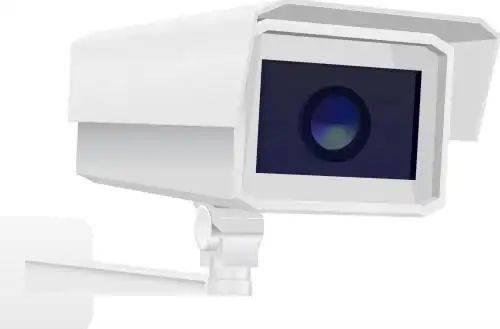
As human face recognition cameras are significantly more expensive than regular surveillance cameras, they are installed at the main entrance to the site and not in all locations。
Technical principles of human face cameras
1. Face collection and pre-treatment
In general, the camera uses the human face test algorithm to scan the collection range to determine whether there is a human face, such as the geometry of the human body and its inter se relationship, and to locate the position and size of the human face; in addition, in the actual scene, the camera pre-processes images of the human face to enable the person to meet the criteria for character extraction and to complete the collection and pre-treatment of the human face due to the fact that the person's face is affected by a variety of circumstances, such as different light environments, changes in face appearances, movement of the human body and eye mask masks。
2. Human face profiling
Once the collection is completed, it will be handed over to the back-office system for the characterization of human face images. Since the human face consists mainly of the eyes, foreheads, noses, ears, jaws, mouths, etc., these parts, and the structural relationship between them, can be described by geometrically shaped characteristics, which are designed to align the human face according to the coordinates of the five key points of the human face, and which are then calculated to translate the image of the human face into a set of values of fixed lengths, generally known as face id, which corresponds to the code name of each individual, and an id corresponds to the identity of a person. Once collected, individuals are no longer able to modify face information。
3. Face matching and recognition
Information on the identity of a person's face can only be obtained by matching the collected face information with the pre-stored information in the face library and by setting a threshold by comparing similarity with that threshold。
In recent years, as the flames of in-depth learning have developed, human face recognition techniques have continued to rise to new heights, more methods have been explored, and the sustainability of company technology bulls like google, facebook and so on, making face recognition, in-depth learning and even artificial intelligence less mysterious. 99 per cent of lfw (labled faces in the wild: human face data set) recognition is already visible, and common ai models are deepface, facenet, deepid1/2/3。
The current face recognition algorithm is largely well-trained in big data, with a high degree of algorithm maturity, and the processing of arm+dsp has become the preferred option for the ultra-low value of human face recognition in a number of contexts where the human face recognition product 315 reports is largely based on the programme, which is currently most widely used with tti, mtk, and heath。
Why is the merchant so interested in human face recognition cameras
Why is it that the merchants are so interested in pretending to be a face-recognition camera that it is as simple as they promote to measure the flow of customers? If only people were counted, there was no need to use face recognition cameras, and a few years ago there were cameras in the market that could be measured by testing human shoulders. In this, the deeper cause is probably commercial interests。
Through face-to-face cameras, which users arrive at the store and which shops, when these users ' behaviour tracks are obtained, and when combined with users ' consumption information and other information, the business will know the identity of the users with precision. When businesses access this information, they can produce extraordinary results, and they can target users for marketing, based on user preferences and personal portraits, and even carry out “killing”, which we cannot do。
In recent years, new terminology has emerged, with new retailing, big data, thousands of faces... And a host of companies condensed over, ostensibly using new technologies to bring new experiences, effectively trampling on the privacy of citizens in the guise of technology, and ultimately returning to the essence of business, using quality, value for money, service, etc. To impress consumers, rather than thinking about gimmicking them with wool。
Protection of the privacy of citizens by existing legal norms
Personal face information is a personal biometric information unique to the individual and, according to the definition in the national code for the safety of personal information in information security, personal information means information recorded electronically or otherwise that can identify, individually or in conjunction with other information, a particular natural person, including the name of the natural person, date of birth, identity document number, personal biometric information, address, telephone number, e-mail, health information, movement information, etc., while human face information is a personal biometric information and is sensitive information in the personal information, which, if leaked, unlawfully provided or misused, may endanger the safety of persons and property, is likely to cause personal reputation, physical and mental injury or discriminatory treatment。
In 2017, the supreme people's court and the supreme people's procuratorate issued a judicial interpretation of the fight against crimes committed against personal information. The penalties for offences committed against the personal information of citizens are clear: the illegal acquisition of 50 “sensitive information” is a crime. It specifies that the provision of personal information on citizens to other persons, as well as the publication of personal information on citizens through information networks or other means, are deemed to be “the provision of personal information on citizens” under the penal code, in which legally collected personal information on citizens is also made available to others without the consent of the collected person, and is “the provision of personal information on citizens”
Article 111 of the civil code of the people's republic of china, which came into force in january 2021, states: “the personal information of a natural person shall be protected by law. Any organization or individual who requires access to the personal information of another person shall obtain and ensure the security of that information in accordance with the law, and shall not unlawfully collect, use, process or transmit the personal information of another person, and shall not sell, supply or make public the personal information of another person”。
Article 253 of the criminal law of the people's republic of china provides that: “in violation of the relevant provisions of the state, the sale or supply of personal information of a citizen to another person shall be punishable by imprisonment for a term not exceeding three years or by detention, with or without a fine, in serious cases, and by imprisonment for a term not exceeding three years and not exceeding seven years and a fine”。
This means that serious cases must be prosecuted whenever the sale or violation of the rules infringes on the privacy of the individual, which reflects the existence of a state law protecting personal information, with the aim of combating the current serious proliferation of illegal sales, the illegal provision of information or the provision of personal privacy, trajectory information in violation of the rules. These technology providers, as reported at the 315th evening, claim to have hundreds of millions of face information, which is highly irresponsible and, if leaked, will have immeasurable effects on society as a whole. The state spares no effort to protect the personal information of its citizens, reflecting the importance it attaches to the personal information of its citizens, as well as the idea that we in the socialist state are in power and that we are in power。
Summary
Human face recognition technologies risk privacy, but ultimately the technology needs to be used in good faith within the legal and ethical context. History has taught us that technology has two sides. Nuclear technology can be used to generate energy and can become a weapon of mass destruction. In the hands of the bad guys, even a screwdriver that doesn't look dangerous can be a murder weapon. Human face recognition techniques are now widely used in public safety, transport travel, smart cities, etc. Face recognition techniques have been widely used in transport-related places such as high iron and airports, not only to increase the efficiency of access, but also to combat the phenomenon of cows and protect public order and the rights and interests of the population。
Human face recognition technology is now flourishing and the country is at the forefront of international technology, such as the three-year action plan for the development of a new generation of artificial intellectual industries, issued by the ministry of industry and communications in 2017, which includes video image identification systems as one of the smart products to be cultivated, explicitly proposing “to support technological innovations such as biometric identification, video understanding, cross-media integration, the development of typical applications such as human identity, video surveillance, image search, video summaries, etc., and the expansion of their application in key areas such as security, finance and so forth”. What we do not want to see is that china’s great situation in terms of video-based artificial intelligence has been undermined by the irresponsible misuse of certain manufacturers, which has led to public rejection of human face recognition techniques. Video surveillance technology is certainly essential, both in terms of security and in the fight against disease. Returning to the business itself, the camera can also measure the flow of people without looking at their faces, for example, by measuring the flow of people in their heads and shapes, thus avoiding infringement of citizens ' privacy. At the same time, it is hoped that when collecting a person's face, the vendor will clearly inform the consumer that it will make an informed choice whether or not to enter the collection. We all want this society to be safer, more accessible, and to use technology in good faith and rational ways, and business needs to assume that responsibility。
Technology is not a crime, but business must be ethical. Even if these named businesses are notified in advance in the premises, how can consumer confirmation be achieved? This business model can take a break. At the end of the day, it is not the technology that is in question, but the companies that are responsible for the illegal use of the technology, in the hope that the exposed companies will truly realize that the privacy of citizens is sacred. It is hoped that manufacturers will ensure that citizens ' personal information is not misused, that citizens ' personal privacy is safeguarded and that more valuable products will be developed on the basis of legitimate and reasonable compliance。



