


Since the opening of the electric power company platform, after-payment functions have been available, white bamboo has been purchased at a much higher frequency。
“sometimes you don't want to buy it, but you can pay it at zero. Whitejack stated that it did not begin to feel bad about the after-payment function, and that it was sufficient to wait for automatic deductions each time the goods were received. However, she was displeased with a return experience。
In february of this year, whitejack purchased a commodity on an electrician platform and, after receiving it, found that the packaging had been damaged, contacted the vendor to refund the goods. The platform showed success, but the actual refund was zero because it was a first-time payment. But a few days later, the platform still deducts the associated costs. “it's not a very good experience, but it's not going to be used again。
A first-in-first-in-first-out payment means that, when buying goods or services, consumers may first benefit from the goods or services and then make payments within the agreed time, usually free of interest. This pattern of consumption, which first originated in internet subscription services, has now expanded to such industries as online vocational training, beauty fitness and pet breeding, as well as to major electrical power platforms online。
Recently, in the analysis of complaints receivable by nac 2024, published by the chinese consumers association, a warning was given to “pay first”. There are 11125 complaints on black cat complaints platforms, including “first-in-first-in-first-in-first-in-first-in-first-out” complaints, including complaints against well-known electrician platforms such as treasure-hunting, fast-tracking and kyoto。
By disclosing a number of typical cases, the chinese consumers association noted that, as a new form of consumption, there were a number of risk risks hidden behind “leave first and pay later”。
I'll give you the painting pie first
In order to receive learning materials, zhang zhang learned about company staff for a course in a small red book。
According to the staff member, their company taught ps, ai, interior design, etc., and, given that zhang was a university student, they were entitled to pay and pay in instalments, as well as to collect and earn money at a later stage. Some of the best student cases, some of them earning $400 apiece, were revealed to zhang。
The company's registration mechanism was described as a 100-dollar registration fee, followed by a phased agreement at the “seba-beau” platform for a tuition fee of 4,800 yuan in 12 instalments of 400 yuan each, followed by online courses for students. The times news reporter enquired that kaitsu is a micro-mail service that says, “early focusing on business factoring solutions for businesses”
A month later, the staff member found a dream suggesting that she could receive an order from kyoto for the kyodong platform. With the consent of zhang, the staff member was guided by the staff member in the opening of the kyodong white bar at an original price of $2,000, which required repayment of more than 170 per month。
An occasional opportunity for zhang's dream to paint a similar experience with other people in a little red book to realize that it is a false propaganda and that after learning the full curriculum, companies find every reason to test; even if they pass, it will take a long time to complete a single card and it will be very difficult to earn a fee。
Subsequently, the staff member contacted the dream and claimed that the company would be restructured and available for full refund, on the condition that all expenses would be refunded within 10 working days after payment of the 2000 multiple material costs. So zhang was deceived again。
Kobayashi was in a similar situation to zhang's dream, where she added her morning friend to school and was subsequently dragged into a group. "let's start with the pie, and make you think you can really make money." kobayashi stated to the times journalist that her circle of friends and her voice had been pre-packaged, and that after giving that voice to the person, it had not been the same person at all。
Under the temptation of a “high return”, kobayashi signed a instalment contract, which was paid in advance. The chat records provided by kobayashi show that in the morning, it was claimed that school fees would not have to be paid, and that they would be divided into 12 classes, each month earning more than a thousand per month, and that more than 300 tuition fees would have been paid。
Fortunately, kobayashi realized that this did not seem to be the case, woke up in time on the seventh day of the signing of the contract and sought legal counsel for a successful final settlement。
Prepaid consumption packages
There is a clear difference from credit card instalments and credit loans, with first-time payments being a trade-and-buy contractual relationship and consumers using their own funds. In addition, instalments are paid in advance of almost prepaid consumption, leaving an opportunity for bad traders。

Liu qong, a junior college student in 2024 and a professional computer, received a telephone call in august 2024 from jeenambo top software technology ltd., where he offered to provide training, which would be followed by a course to improve his curriculum vitae and offer interview opportunities, at a salary of over 78,000 or more。
At noon on the same day, liu quang came to the company and stated that he could not afford school fees because of his tight hands. The company's staff advised him to borrow $21,800 from the “distributional” platform and to sign letters of authorization. The platform is operated by beijing inclusion century information technology ltd。
Under the contract provided by liu air and air, the above-mentioned borrowing rate was 6 per cent, with a total of 18 repayment periods, with the date of commencement of the borrowing as from 28 august 2024, the repayment of interest for the first six periods only being refunded, and interest equivalent for the remaining 12 periods, i. E. 196. 20 dollars for each of the first six periods and 20. 87 yuan for each of the following 12 periods。
After processing the loan, liu air found something wrong. "the class sucks, the basics are finished, followed by many years ago's recording." liu qong told the times correspondent that more than 1,000 cvs had been dropped after the course, and only five or six interviews had been invited and that most of the interview issues were unrelated to the course。
According to liu quan, some of the jobs proposed by the other party were interns who could be placed on duty without interviewing, with a monthly salary of only 34 thousand and a large difference between the previous pledge of 78 thousand。
Currently, liu kong works in a sales company. “there is no job of its own, nor of its profession.” liu qiyau lamented that the next payment was half a month away and that if it was not, it would soon be lost。
Interviewee for map
In an interview with the times journalist, a senior partner of kandeh think tank and shanghai landy law office, mr. Ting zheng ting, stated that the loan contract signed by liu kong amounted to $21,800, with an 18-phase period, and met the basic conditions for microcredit. If the company issuing the loan holds a “networked microcredit business” license, it is a legal microcredit; if it is not qualified, it may be suspected of illegal lending。
Dinhian's analysis indicates that, according to the interest agreed in the contract as well as the repayment plan, interest was only repaid for the first six periods (21800 x 6 per cent ÷12 = $109/period), but that there may be additional costs for each period of repayment of $196. 20, and that the equivalent principal repayment for the following 12 periods of $8. 87, the actual interest rate was about 18 per cent (assuming no other costs), which exceeded the upper limit of judicial protection (4 times lpr) and was suspected of being in breach。
Consumable loan trap
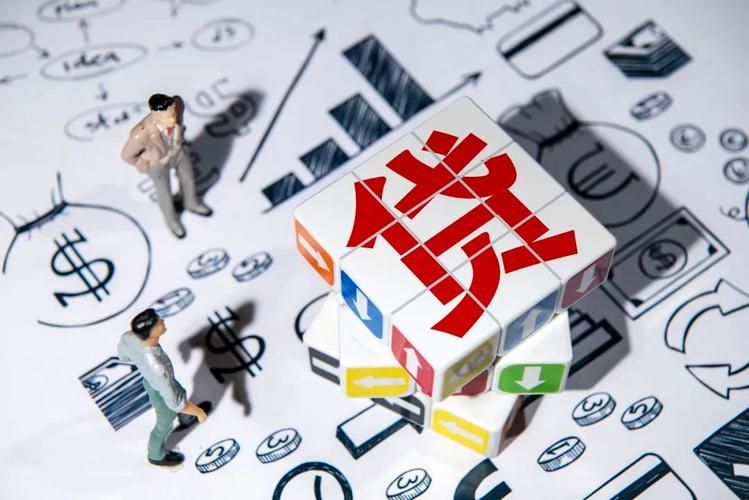
For consumers, “first-come-first-served” is somewhat more flexible and convenient. However, many risks lie behind them。
“as opposed to credit card instalments, interest or handling fees are normally not required to be paid first.” the private wealth manager, wusu wei, told the times reporter that first-time payments were a form of consumption, whereas credit card instalments were a form of payment; first-time payments were made after service and credit card payments were made at the time of consumer behaviour。
This has also led a number of vendors or platforms to proactively set up a loan consumption trap at the expense of first-in-time payments, with a slight risk of persecute。
Senior industrial economic observer leung jin peng indicated to the times correspondent that this form of consumer lending, although without a substantial borrowing process, could lead to excessive consumption behaviour for some under-funded consumers who are in urgent need of goods or services because of the use of credit for the purchase of goods or services. In particular, in the absence of adequate capacity to repay funds, risks such as late repayments and high interest rates may arise。
According to wang peng, a deputy researcher at the beijing institute for social sciences, there are several risks: first, that there may be high interest or hidden costs and that consumers may face additional economic burdens; second, that consumers may be induced to consume beyond their own economic capacity, leading to debt distress; third, that consumer personal information may be at risk of disclosure; and fourth, that there may be a trap clause in the contract to the detriment of the legitimate interests of consumers。
Despite the current lack of clear legal regulations for first-and-after-payment, the state began to tighten regulations in the face of such new consumer lending traps。
The national committee for standardization has recently approved the publication of the national standard " guidelines for controlling winds after consumer credit for internet financial personal networks " . This standard is the country's first country-level norm for focused post-lending follow-up operations, effectively filling long-standing normative gaps in the post-lending follow-up chain, severely limiting the timing and modalities of such collections and explicitly prohibiting their collection from contacts。
With regard to how consumers identify and avoid falling into a well-packaged consumer-lending trap for businesses, leung jin-peng to times correspondent argued that consumers should choose their own goods or services, depending on their economic situation and ability to repay them, to avoid excessive consumption. At the same time, the choice should be made between a platform or a business with good reputation, a business code, a reasonable fee. In addition, consumers should keep records of transactions and relevant documents in order to defend their rights in the event of disputes。
"bake, zhang's dream, kobayashi, liu kong"



