


As a traditional anti-inflammatory drug for the treatment of gore, autumn porridges have shown important clinical value in recent years in the management of the sclerosis of cardiovascular disease (ascvd), which has become one of the key options for ascvd level ii prevention through the targeting of inflammation。
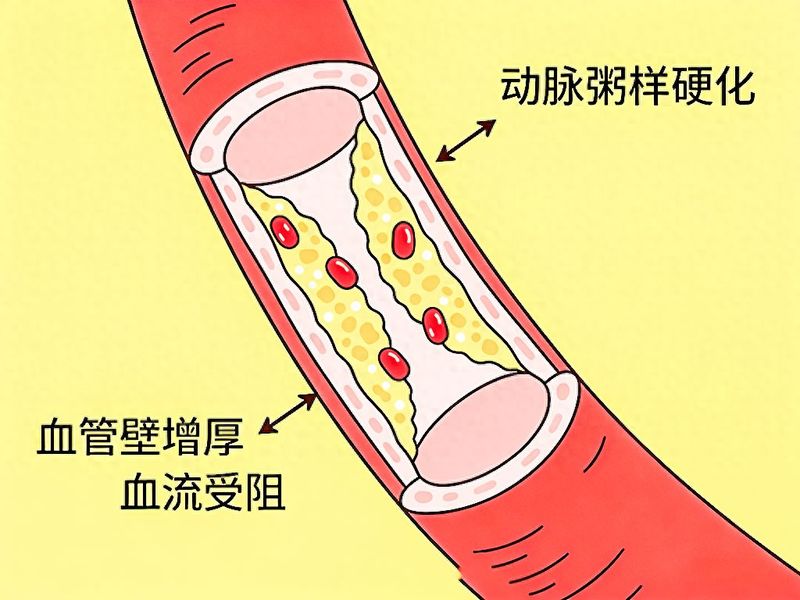
I. The central role of autumn pixel in the hardening of anorexia: inflammation and stability
One of the core pathological mechanisms for the sclerosis of the artery is chronic inflammation, impregnation of vascular walls by inflammation of inflammation cells (e. G., neutral particle cells, megacorrostal cells), release of inflammatory factors (e. G., il-1 β, il-6, tnf-α) and promotion of the formation, progress and rupture of plasters, which are the main causes of acute coronal syndrome. Autumn cuisine reduces vascular filaments and stabilizes the sclerosis of the porridge by inhibiting the synthesis and release of inflammatory factors by inhibiting the small body of nlrp3 (the “switch” of the inflammation response)。
For the first time in the chinese population, a study of 4745 recent cases of myocardial infarction confirmed that a one-year treatment of low-dose autumn alcophagus (0. 5 mg/day) could stabilize the coronary plaque of acute coronary syndrome patients and reduce the risk of scavenger rupture. In addition, another case, which included 5522 chronic coronary diseases, showed that the autumn sensor treatment reduced the risk of major cardiovascular events by 31 per cent, further confirming its effect on the stability of the patches。
Ii. Clinical efficacy: reducing the risk of cardiovascular incidents
Multiple large-scale clinical trials and mThe analysis of eta confirmed that low-dose aqueous pixieline (0. 0. 5 mg/day) can significantly reduce the risk of major inconscienceous angiogenesis (mace) for ascvd patients, including myocardial infarction, mid-pital, cardiovascular death and emergency coronary blood transport rehabilitation:
• colcot test: the autumn alkali group mace risk is 23 per cent lower than the placebo group (hr = 0. 77, 95 per cent ci: 0. 61-0. 96) and, in particular, the total burden of relapse events is reduced by 34 per cent in sub-groups that combine diabetes。
• lodoco2 test: mace risk is reduced by 31 per cent (hr=0. 69, 95 per cent ci:0. 57-0. 83) when patients with chronic coronary aneurysms use acne。
• umbrella evaluations (included 48 mAnalysis of eta: low-dose autumn aqualine reduces the risk of coronary heart disease by 27% (rr = 0. 73, 95% ci: 0. 64-0. 83) and a significant 44% reduction of mace risk in secondary prevention (rr = 0. 56, 95% ci: 0. 47-0. 67)。
• annual esc update 2025: m containing 21,800 patientsThe analysis of eta shows that the long-term use of the autumn spectrum reduces the mace risk by 25 per cent (by 29 per cent myocardial infarction, 37 per cent ischaemic and 33 per cent emergency blood transport rehabilitation)。
Iii. Recommendations of the guide: progressive establishment of status
On the basis of sufficient clinical evidence, the autumn spectrum has been incorporated into the ascvd management recommendations:
• 2024 guidelines for the chinese coronary heart disease: autumn cuisine is recommended for treatment for persons with non-st elevated acute coronary syndrome (nste-acs) (including unstable heart pain and acute myocardial infarction) and chronic stable coronary heart disease。
• approved by the united states fda in 2023: low-dose autumn sensine (0. 5 mg) became the world's first approved anti-inflammatory drug to reduce the risk of cardiovascular residuals。
• the 2024 esc guide: recommends a combination of chronic coronary syndromes for coronary scalable coronary disease in an artery sample, with a low dose of aqueous alcophate (0. 5 mg/day) based on standard treatment to reduce the risk of haemorrhage events (recommended iia, level a evidence)。
Iv. Safety: advantages at low doses
Compared to the high dose (1-2mg/day) of pain therapy, low-dose aqueous pixieline (0. 5mg/day) shows better safety in cardiovascular applications:
• gastrointestinal response: the incidence is 62 per cent lower than the traditional dose for the treatment of pain, and most patients are gradually resistant。
• no serious adverse effects: no severe adverse effects such as bone marrow inhibition, hepatotoxicity, myotoxicity, or increased risk of infection or cancer were detected in long-term follow-up visits。
• low level of drug interaction: not visible interaction with standard anti-sculpture drugs (e. G., aspirin, chlorplygray) and lipid-reducing drugs (e. G., tatin)。
People with taboos: severe kidney failure (estimation of filtration rate of kidney balls v, time of use: need for further study and clarification
Although the efficacy of the autumn daemon has been proven, the timing of the launch remains controversial:
• stable patients: the lodoco2 trial (6 months of clinical stabilization at entry) shows that the autumn alcophate significantly reduces the risk of the ascvd event, suggesting the benefits of long-term use during the stabilization period。
• after an acute event: the colcot test (started within 30 days of myocardial infarction) showed a 23 per cent reduction in the mace risk, but the clearsynergy test (started within 72 hours of myocardial infarction) was not reported as a non-lethal event due to the covid-19 pandemic and was neutral. Further research is needed to identify the optimal start time after myocardial infarction。
Concluding remarks
Autumn cuisine has become an important drug for ascvd level-ii prevention by stabilizing the porridge through anti-inflammation activities and by reducing the risk of cardiovascular events. Safe at a low dose (0. 5 mg/day) and recommended for chronic stable coronary heart disease and acute coronary syndrome in several guides. Further research is needed in the future to identify its optimal timing and value in primary prevention in order to optimize the ascvd management strategy。
Documentation
1. Tardif jc, et al. Efficacy and safety of low-dose colchicine after myocardial action. N engl j med. 2019; 381(26): 2497-2505 doi: 10. 1056/nej moa1912388
2. Nidorf sm, et alNic coroNejmoa2021372
3. U. S. Food and drug adminization. Fda approves lodoco (colchicine) as first anti-inflammatory drug for cardivascular disease. 2023.
4. European society of cardiology. 2024 esc guidelines for the management of chroNic coroNarrator: narrators. Eur heart j. 2024; 45 (38): 3613-3732. Doi: 10. 1093/eurheartj/ehae480
It needs specialist guidance



