[summary]: figure 2-35 siphoning of rainbow siphoning, figure 2. 9. 2 the siphoning of rainbow siphoning is mainly due to gravity and the attraction between liquid molecules and molecules. Please describe briefly the engineering applications of iris. Please describe briefly the rationale behind this phenomenon。
Rainbow ingestion is a phenomenon that uses the catheters to lead liquids from higher surfaces to lower levels, and it is widely used in everyday life, mechanical engineering and architectural designs, such as the drainage of fish tanks, the extraction of oil, and the design of building drainage systems。
2. 9. 1 definition of rainbow uptake
As shown in figures 2-35, the insertion of a hose or a trachea (wine straw) into a liquid and the filling of the tube with liquids continue to flow from the opening to a lower position through the rainbow straw, which is called siphonage。
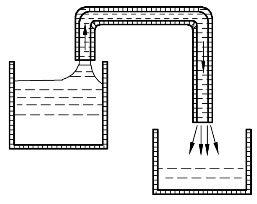
Charts 2-35
2. 9. 2 the rationale for rainbow uptake
Rainbow ingestion is mainly due to gravity and the attraction between liquid molecules and molecules. The highest point liquid in the tube of the device moves to the lower level of the tube because of its gravity, while negative pressure is generated inside the u-shaped tube, combined with the attraction of liquid molecules and molecules, which leads to liquids in the upper tube being inhaled into the u-shaped tube and reaching the highest point along the wall, and then to the lower point because of the effect of gravity, which keeps the flow of liquids flowing into the lower-position container until they dry up to the same surface or high-position container。
After-school exercises
(1) what is the hypothesis of a continuous medium? Is that a reasonable assumption? Can the aerodynamics of a vehicle at any altitude be studied to apply the continuous medium hypothesis
(ii) what are the benefits of the presumption of a continuum medium for scholars studying aerodynamics
(3) what are the conditions and formulas of the static pressure theory
(4) what is silent pressure theory
(5) when designing a teapot, why must its mouth be slightly higher than its mouth
(6) the mercury column height and pressure unit pa is requested to indicate the atmospheric pressure at patm in a standard state。
(7) please provide examples of immersion and non-immersion in capillary。
(8) the concept of capillary contact angle describes how to determine immersion and non-immersion in capillary。
(9) please map indicating the mercury pressureometer and explain how it works。
(10) the measurement error of the liquid column barometer is usually caused by a cavity phenomenon, and it is asked under what circumstances the measurement error caused by the cavity phenomenon is negligible
(11) what is the relationship between the measurement error of the hydraulic column barometer and the plume? (https://www. Chuimin. Cn)
(12) please describe briefly the pascal principle and list its application formulae。
(13) please describe briefly the floating principle and list the floating formula。
(14) please use the floating principle to briefly list the conditions under which the object is determined to sink within the liquid。
(15) if the weight of a liquid is s = 0. 8, determine whether the liquid will surface in water。
(16) as shown in figures 2-36, the ice is in the cup. If the ice melts, the water will rise or fall. Why
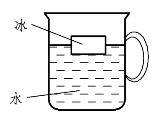
Figure 2-36 ice
(17) if the size of the balloon is v, the internal air density is 1 and the atmospheric density is 2 years, what is the load of the balloon, as shown in figures 2-37
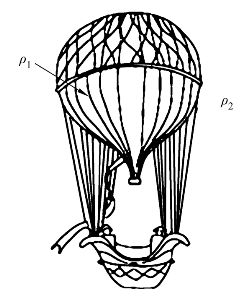
Figure 2-37 thermal balloon stress
(18) as shown in figures 2-38, extrapolate the relationship between pressure differentials within and outside the thin film of the cylindrical surface to the surface tension coefficient of the thin film of the cylindrical surface。
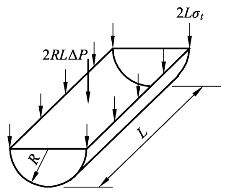
Figure 2-38 possibilities on the surface of the cylinder
(19) what are the factors influencing surface tension of liquids
(20) what is the effect of temperature on surface tension of liquids
(21) what is the surface tension between the bubble and the bead
(22) please describe briefly the engineering applications of iris。
(23) please describe briefly the rationale for the phenomenon。
(24) please describe the difference between solids and fluids by the reaction of the object to the stress of the shear。