Scrolls of water
The intestines are an important part of the digestive system and are responsible for digestion, nutritional absorption, barrier defence against intestinal microorganisms and immunization control. As age increases, the intestinal function declines, as evidenced by the impairment of the integrity of the upper skin barrier, the weakening of the worm and changes in symbiotic strains. However, the mechanism of intestine ageing at cell and molecular levels is not yet clear。
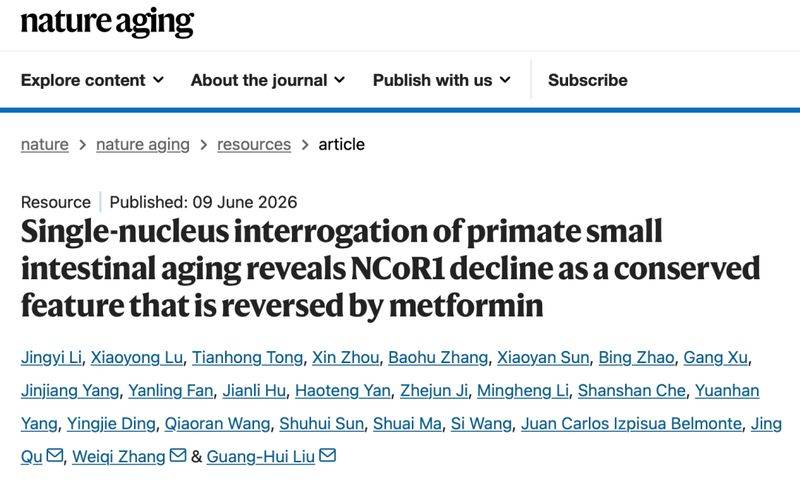
On june 9, 2026, the liu guanghui team of the institute of animals of the chinese academy of sciences and the zhang weiqi team of the beijing genomic institute of the chinese academy of sciences published in the nature sub-authority: single-nucleus into sovereigntyNo, no, no, no, no。
Through a single-cell nuclei analysis of the intestines of young and old primate animals, the study found that the transfer of the co-inhibitors ncor1 was a key regulatory factor for the aging of small intestines and that their expressions were conservative in human intestinal aging. The study further found that diaphragms restore ncor1 expression levels in the intestine of non-human primates and slow intestinal aging。
In this latest study, the research team analysed the small intestines of young and old primates and found that aging can lead to intestinal barrier dysfunctions, chronic inflammation, and divert stem cell dichotomy from absorbing cells to endocrine cells. By integrating multi-modular analysis, the research team identified the transfer of the co-repressor factor ncor1 as a key regulatory factor for the ageing of the small intestine, which is expressed as being conservative in human intestinal decay. In human intestinal skin cells and types of organs, accelerator of the ncor1 gene can re-emerge aging forms, including cell ageing, disruption of the connection structure and spectral imbalance; overexpression of the ncor1 gene can mitigate these phenomena。
The research team further found that a potential anti-aging drug, diaphragms, can restore ncor1 levels of older non-human primate animals and slow their intestinal aging。
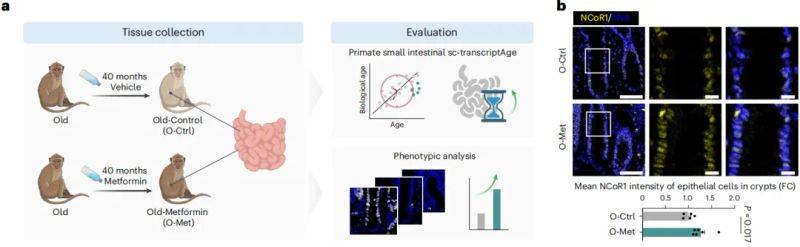
In general, the study revealed that ncor1 is a central regulatory factor for the ageing of the small intestines and suggested a viable strategy to counter age-related intestinal decline through drug interventions (two-acre larvae)。
Paper links:
Https://www. Nature. Com/articles/s43587-026-01131-0