


I. Project characteristics
The ability to generate high energy, high power, high repetition-rate laser pulses and the advantages of beam quality, miniaturization, easy heat dispersion, among other things, have important application value in areas such as ultra-precision nanoprocessing, military, biomedicine, light communication, and is a major area of focus for the world's major laser manufacturers. As the technology for double-packed fibre-optic lasers matures, an average power of dozens of watts, peak power of up to several hundred mw and pulse width of just a few nanoseconds has been obtained。
Currently, q-fibre lasers are divided into two main categories: 1) acoustic q or electro-optic q technology to obtain active q-fibre lasers; 2) accumulation effects (e. G. Cr4+ crystals, semiconductor quantum and carbon nanopipe materials) to achieve passive q-fibre lasers. Passive q-fibre lasers usually have advantages in terms of low cost, simple structure and flexibility of design compared to active q-fibre lasers. As a result, passive q-fibre lasers have greater potential for practical application. New nanomaterials - graphite displays a number of unique physical properties (including zero zone energy, strong bubble resistance, etc.) due to its unique two-dimensional atomic structure. Its broadband saturated absorbent properties can be used to achieve high performance pulse lasers in the wide band passive q. The use of graphite as passive q in comparison to the acoustic q and semiconductor saturated q machines, which are already monopolized abroad, can significantly reduce the cost of pulse lasers。
Ii. Technological maturity
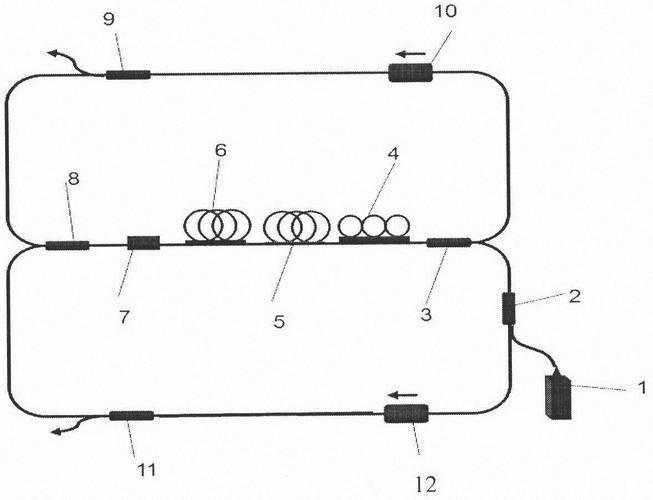
We use two main techniques for producing fibre-optic-compatible graphite q: 1) photo-inducing the deposition of graphite to the fibre-optic end; 2) plasma-spattered sedimentation equipment to plating graphite to the fibre end. Using the above method, homemade graphite modems, we've been embroiled with er-fibre and monomony. Both small power-to-q pulse lasers have been achieved in yb-optic fibres, with a pulse width at a microsecond level, with an average output power of several milliwatts and a stable long-term operation. The priority project of the department of science and technology of fujian province has been completed. Yb double-packed fibre-optic laser research" has authorized the use of new patents: yp chen chun, fan won-hoon, wu gae-jin, luo zhengcheng, cai zhiping, "the wavelength can be transposed to yb double-packed fibre-optic lasers", patent no. Zl 2008 2 0229588. 8. Work is currently under way on the development of a high power graphite-modified q with yb (and tm) double-basket fibre-optic pulse laser, which has been initially achieved in the laboratory with an average power of w class 1 μm-band q pulse laser。
Scope of application
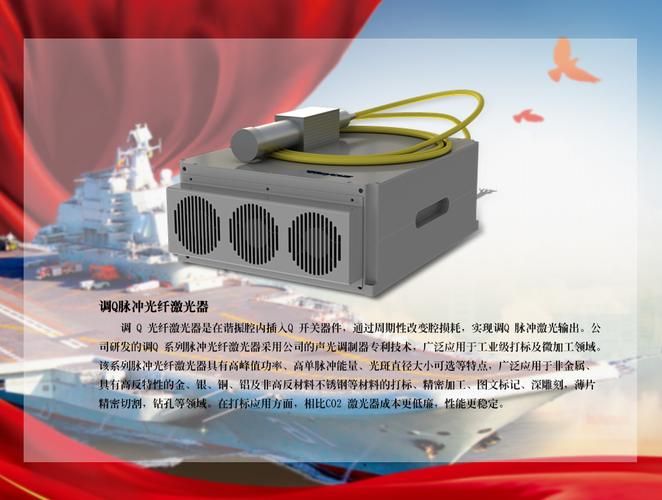
An average power of just a few watts and a peak power of more than a few thousand qna-second pulsed fibre-optic lasers are widely used in industrial fine microprocessing, marking, cutting, welding and laser medicine。
Iv. Conditions and expected economic benefits
High purity graphite, the main raw material for graphite, is available in the domestic market. The two-packed fibre-optics required for the production of high-power q-fibre lasers have already been supplied by a number of enterprises (e. G. Nufern, united states of america, domestic enterprises such as the china electronics and technology group 46 institute, wuhan chang flying). The faculty of electronic engineering of the university of xiamen has been equipped with the sct s500 plasma plating machine, which is capable of producing laser cavity lenses (e. G., amplification, high reflector, etc.) in various bands. An investment of $2 million (excluding plant, utility, etc.) in equipment is projected for the prior period. For the size of the 100 lasers produced annually, a profit of $2 million is expected。
V. Modalities of cooperation
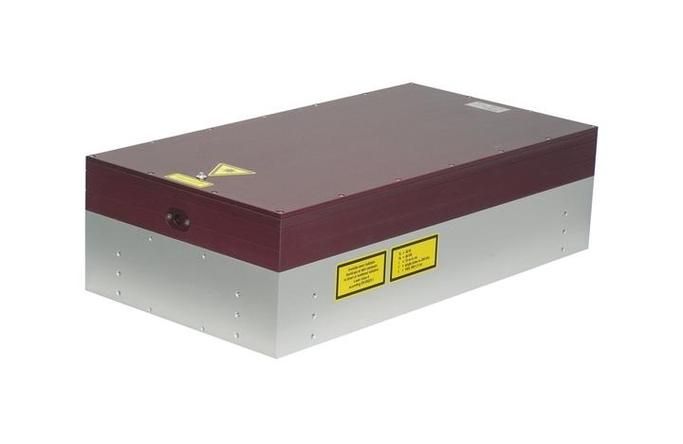
Technology transfer or co-production, specific forms of cooperation may be negotiated。



