Focus on mechanics, professions, job information sharing
Services in the manufacturing industry division
The spring is an elastic element that is widely used in the mechanical and electronic industries, and can produce greater elastic transformations when carried and transform mechanical or kinetic energy into deforming energy, while the deformation of the spring after discharge disappears and returns to its original state, while the deformation can be converted into mechanical or kinetic energy. The ratio of spring loads to deformation is called spring intensity, and the greater it is, the harder it is。
The role of springs
Classification of springs
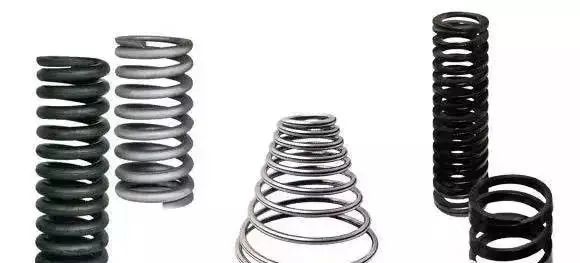
The springs are divided by the nature of the force: stretch springs, compressed springs, reverse springs and bend springs。
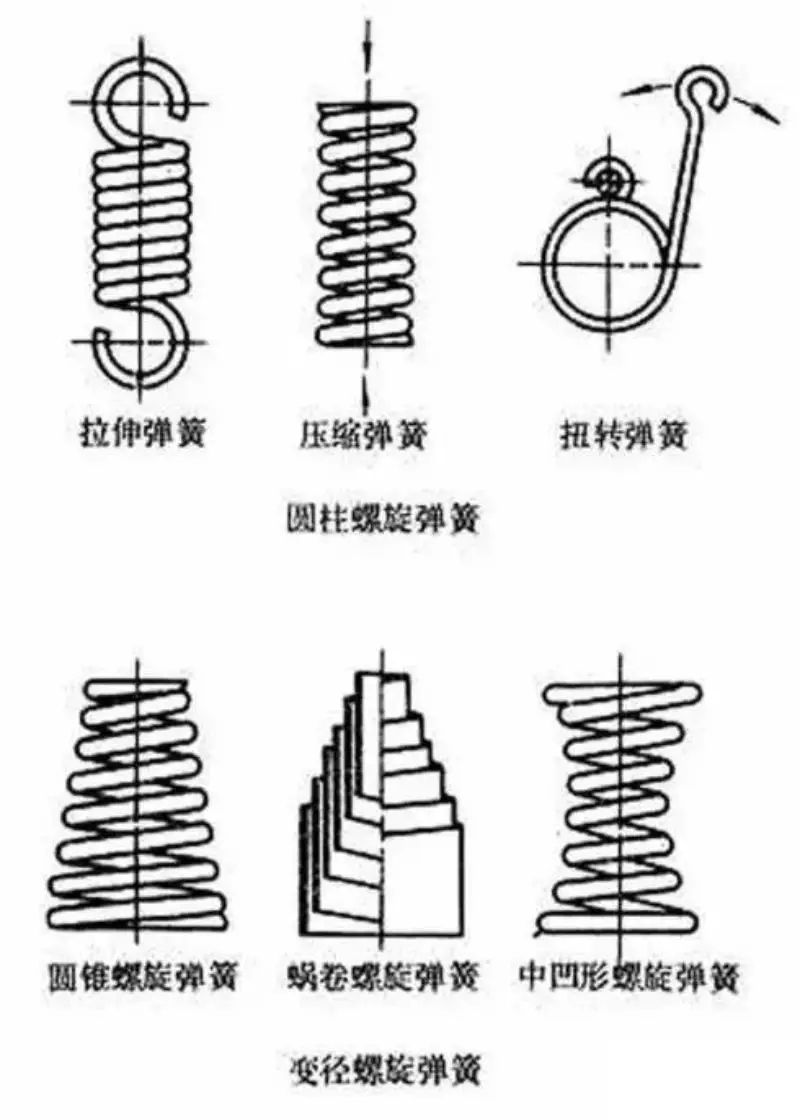
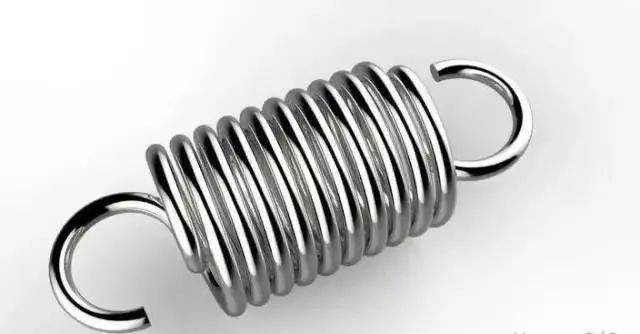
The stretch spring (known as the zipper spring) is a spiral spring that withstands axle pull, which is generally made of round-sided materials. When the load is not carried, there is generally no gap between the circle that stretches the spring and the circle。
Compressed springs (abbreviated springs) are spiral springs under pressure, which use many contours of material, which are also rectangular and multi-smelted, which are usually equidiscreted, and have a certain gap between the condensed springs and their circles, which are constricted when exposed to external loads, and store transformation energy。
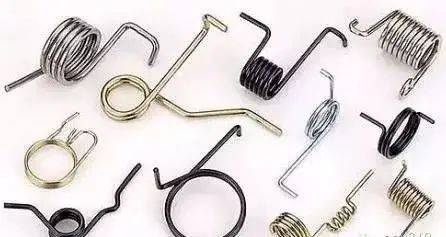
Reversing the spring is a spiral spring. Reversing springs can store and release angular energy or stationary fixation of a device by the rotational arm of the axis in the spring. The end of the reverse spring is fixed to the other components, which, when the other components rotate around the centre of the spring, pull them back to their initial position and generate a twist or rotational force。
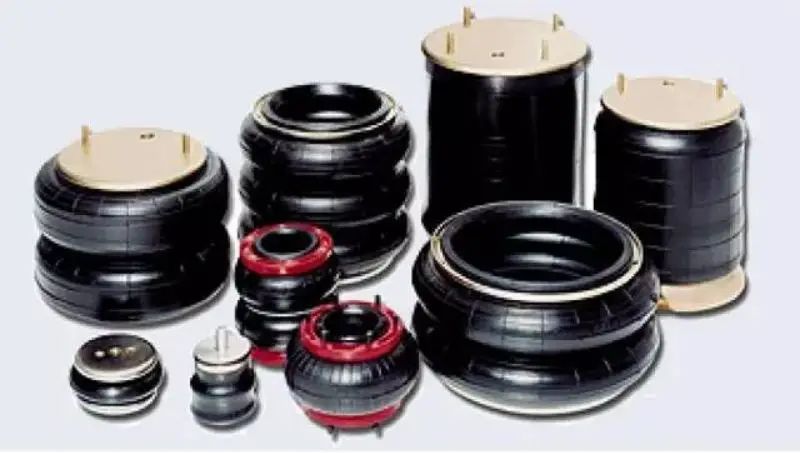
There are also two unusual air springs and carbon nanobaric springs
Air springs, a non-metallic spring that introduces pressure air into soft, closed containers, uses air compressability to achieve elasticity, and is used in suspension devices for high-end vehicles, which can significantly improve the smoothness of vehicle operations, thus making the springs widely used in cars and railways。
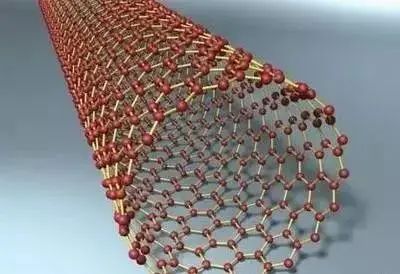
Carbon nanoplug springs: the carbon nanoplug film needs to be prepared first, and the carbon nanoplug film needs to be rolled into carbon nanoplug springs using spinach technology. The diameter can reach hundreds of micrometres and the length can reach a few centimetres. It is expected to be applied to scalable conductors, soft electrodes, micro-resilient sensors, super capacitors, integrated circuits, solar cells, field sources, energy-diffusion fibres, etc., as well as to medical devices, such as force transfer bandages。
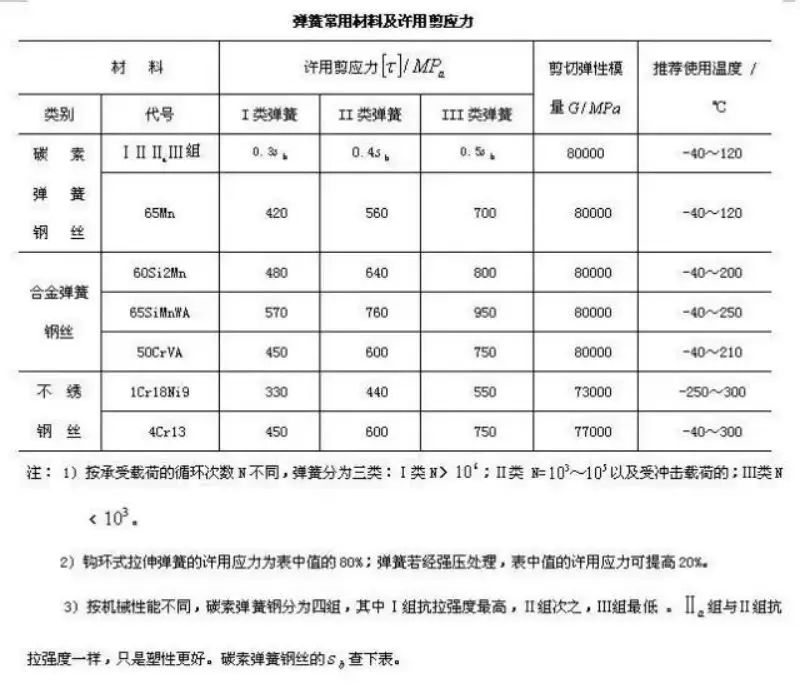
Iii. S spring materials and promised strength
The springs, which are often subject to intersectional and impact loads at work and require greater deformation, should have high tensile strength, elasticity limits and fatigue. The process should be of a certain degree of permeability, not easily decarbonized, and have a good surface quality。
Iv. Manufacture of springs
The manufacturing process of the spiral springs consists of scrolling, bonding or theatrical processing, thermal treatment and process performance tests。
When produced in large quantities, they are scrolled on the atm; when produced in single pieces and small batches, they are made on the ordinary carbed or handmade. When spring wires are less than or equal to 8 mm in diameter, cold rolls are commonly used, heat is to be processed before the rolls and low temperature is to return to fire. When the diameter is more than 8 mm, thermal voltage (thermal voltage temperature of 800°c ~ 1000°c) is followed by thermal voltage, which is treated by acoustic fire and by a medium temperature return fire, and when springs are formed, surface quality tests are performed, which are characterized by glitter, injury-free and carbon-free defects, etc.; springs subject to a variable load are also treated with surfaces such as spray pills to improve the life of the spring。
V. End structure of springs
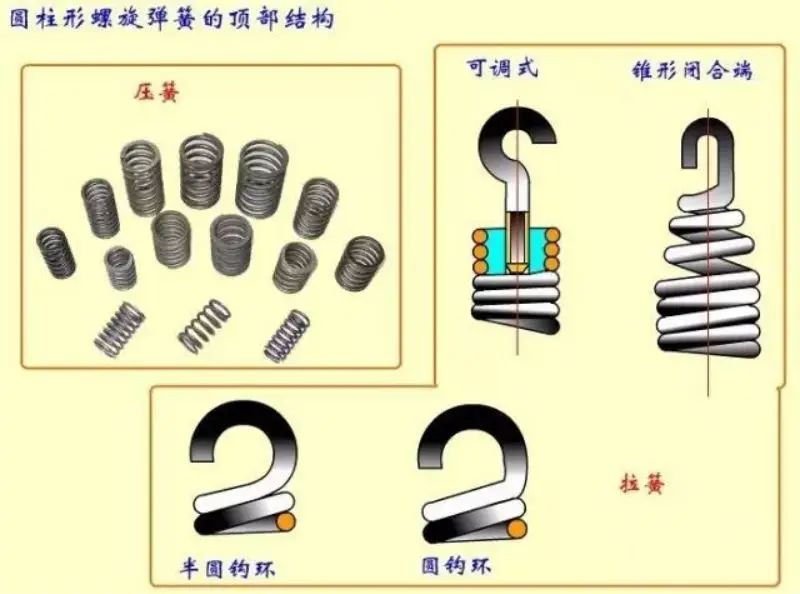
Compressed springs, in addition to the number of active circles involved in deformation n, are known as death rings or backslides, in order to achieve even stress during compressed spring work, ensuring that the central line of the spring is vertically to the end, with 3/4-7/4 to 7/4 loops at each end of the spring and a tight bearing, while working without deformation。
The end of the stretch spring is linked for installation and loading. The end structure is commonly used in four forms; semi-circle rings, ring rings are easy to manufacture and are widely used, but only springs with d≤10 mm diameter are suitable for use because of the great bending force generated by the transition of the hook. Modem and transferable pegs are better and can be moved to any location to facilitate installation。
Vi. Equipment of references in the street
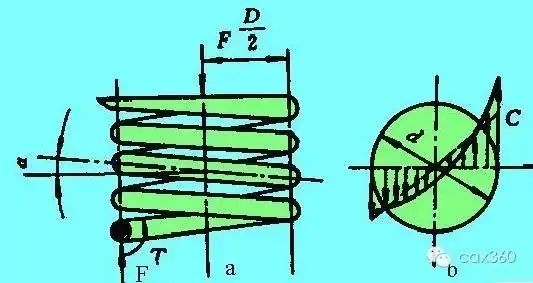
Compressed spring stress analysis
Figure (a) is a cylindrical spiral compressed spring, bearing the working load of the axis f analysed by cross-section and informed of cutting f and twisting t = fd/2, resulting from twisting:
When considering the effect of shear f on the shear and the effect of the spinal ratio of the spring silk, the maximum shear t occurs in the inside side of the spring (b), the value and strength condition shall be:
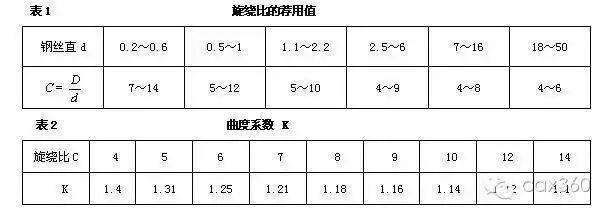
C - rotation ratio, c=d/d, selected by table 1
K - spring curve coefficient
K can also be identified directly from table 2, which is shown to be the larger c, the smaller k's influence on t
F - workload n for springs; d - mid-blade mm; d - materials mm in diameter。
In model 1, replace the formula f with the maximum working load of the spring with f2, which calculates the diameter of the spring wire by strength condition:
The stretching spring strength calculation is the same as the compression spring
Vii. Lack of springs and reasons for their failure
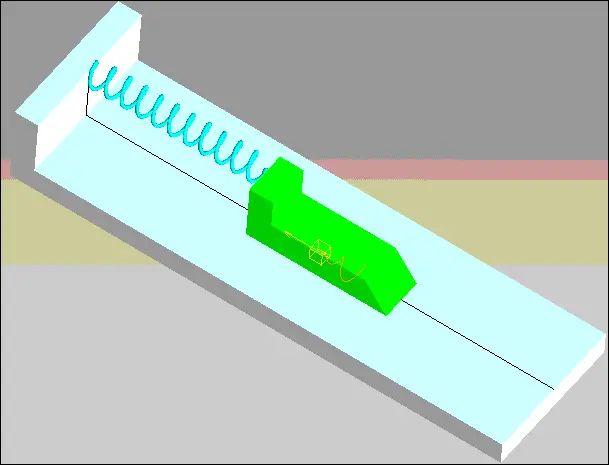
In practice, we often encounter springs that can't push a moving object into a given position, which means that the calculation of the springs is shorter. This is mainly due to the fact that, without initial compression, a spring created by a fabrication was reduced to his compressed height or to a tight height (if necessary) and could not be restored to his original free length operation. The reduction is referred to as “initial compression”. After a general repetition of 3-6 compressions, the length is no longer shorter, i. E. The spring "position". Permanent deformation of springs after initial compression。
Viii. Spring preventive measures
In practice, the clinker should be able to maintain the length of its work even if it is subjected to force beyond material elasticity. Therefore, the length of the prepared spring should be equal to the calculated length of the spring with an initial compression amount, which would avoid the spring not being in place so as to prevent the reeds and the dangerous stress at times, leading to an abnormal failure of the spring signal line. In the heat process, especially in the hard and backfire process, the finished springs must be placed in the oven in order to prevent the impervious operation of the spring from becoming shorter due to self-heavy。