It's really scary that a list never gets longer。
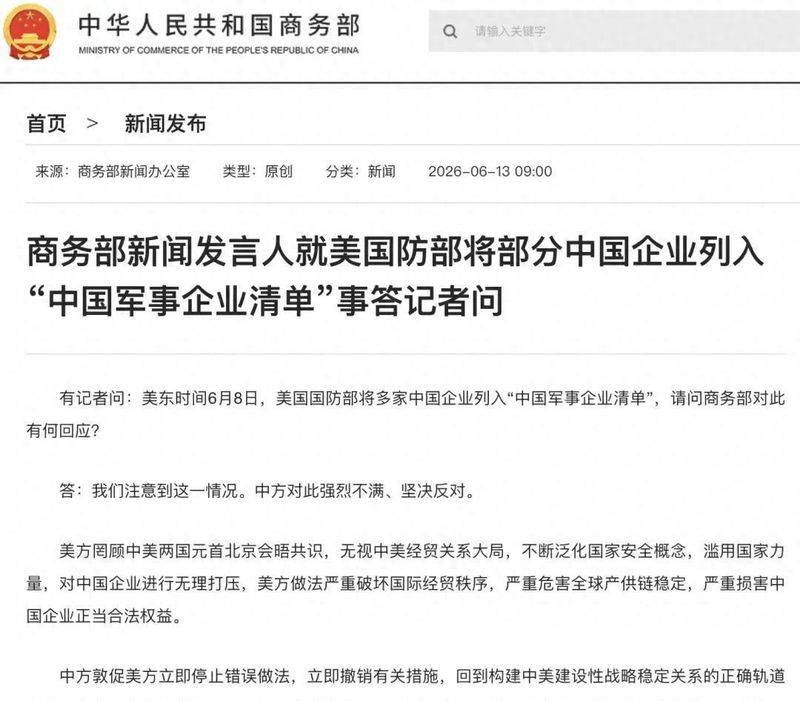
It is terrible that the names on the list have not yet been read out, the banks are nervous, the insurance is back, the shipping companies hesitate, and the partners hang up the phone. This time, the united states has put a few chinese businesses and individuals on the sanctions list, ostensibly as routine updates, and is actually reminding everyone that it wants to move, not just by name, but by the entire business chain。
This is the trouble。
The first reaction of many would be that the united states had its own executive order, and why would it allow other companies to shake? The problem is that today's international business is not as simple as "you sell, i buy." as long as the chain touches the dollar, the united states financial institutions, the very flexible concept of “security” in its mouth, the risk will continue to flow like electricity. You're in a third country, the contract is signed in a third country, and the goods are not in the united states, which could be compromised。
The united states party refers to executive decrees 13382 and 13902. It's just a few things that come to business: assets may be frozen in the united states, individuals and institutions in the united states cannot deal with you, and foreign financial institutions may be subject to “secondary sanctions” if they continue to do so. It sounds like a few targets, but the real effect is often that a large number of market players outside the list are beginning to escape ahead of schedule。
Nobody wants to be that bitch。
So in reality, a business is sanctioned, and losses are often not as simple as “less business”. Payments are blocked, insurance policies are withdrawn, cargo ships are not docked, supply is suspended upstream, the firm suggests that the compliance department should wait, and that the front line business would have to step on the brakes immediately after “high risk”. Many agencies do not even communicate directly with the united states, and will choose to withdraw. It's not that they do what they do, it's that they're too afraid of things. United states dollar liquidation, account security and overseas market access are more costly than the wrongful killing of an order in case of problems。
To put it simply, the best thing about the united states is not to punish everyone personally, but to wave its hand and the market itself begins to take a collective risk。
It's not just a legal issue anymore, it's more like a magnifier of a whole financial and commercial system. Executive orders are only switches, followed by regulators, law enforcement agencies, banking systems, law firms and compliance companies. In many cases, it was not clear whether or not the law had been violated. The business had stopped, the money had been frozen and the client had fled。
When you react, the wound is bleeding。
The reasons for this list are in the name of iranian military procurement. But everyone with a little experience understands that today we can talk about iran and tomorrow we can change the lead. The emphasis has never been on what is written, but on the fact that the united states is becoming increasingly skilled in spilling its own rules into global commercial discipline. It does not focus on a particular case, but rather on a replicable path of pressure。
The ministry of foreign affairs has made it clear that such unilateral sanctions have no basis in international law and are not authorized by the united nations security council. China will take the necessary measures to safeguard the legitimate rights and interests of enterprises and citizens. That attitude must, of course, be clear, borders must be clear and positions must be clear. But there is also a reality to be recognized: the washington sanctions machine does not automatically end up listening to protests. It has long been institutionalized and is very inertial. Congress, the white house, the treasury, the intelligence system, financial institutions, like gears, bite together. More crucially, it works too well in domestic politics in the united states, at low cost, with hard postures and quick results。
A particularly twisted situation arose: the united states, while requiring the world to continue to believe in the dollar system, was weaponizing it more and more frequently。
It's not a small contradiction。
As mentioned in the original text, the total united states federal debt has exceeded $39 trillion and is approaching $40 trillion. This figure does not, of course, mean that the united states dollar failed immediately, nor does it mean that the united states financial hegemony is lost. But it's all coming up. The higher the debt, the greater the need for global capital to continue to pay and for dollar assets to remain creditable and liquid. The question is, if you turn financial corridors into geopolitical instruments every day, what do you think in other countries? What would the company think? Who would like to tie their lives to a system that could change rules at any time
Think about it, it's gonna build up。
Moreover, the united states is doing a bigger and bigger pocket on “safe”. Dual-use electronic components can be targeted, oil trade can be targeted and shipping services and financial settlements can be targeted. Business is not afraid of cards, but of dark lines. Commodities appear to be safe and end-users have problems; the subject of the transaction looks normal and the equity relationship is problematic; the payment path is considered safe and the clearing node is stepped on. Many of the risks are not on the first page of the contract at all, but are hidden in the structure of the transaction and the payment corridor。
This is not an easy answer to the phrase “enhanced compliance”。
So what really has to be stronger is not just the sound of the diplomatic arena, but the reaction of the enforcement chain. United states sanctions can be put on the ground through the specific links of banking, insurance, suppliers and intermediaries. If those links were accompanied by unilateral sanctions in china, arbitrary suspension of contracts, freezing of funds and refusal of performance, at little cost to the united states, the united states’ hands would naturally stretch longer。
China is not without tools. The anti-foreign sanctions act and the related regime that prevents the inappropriate extraterritorial application of foreign laws and measures are already in place. The question is not whether there is paper, but whether the business can really be used and whether courts and regulation can make it work. It is hard to see which institutions in the chinese market have wrongfully broken down their contracts as a result of united states sanctions, which businesses have suffered as a result, whether relief channels can be faster, and whether litigation, financing, insurance, and legal aid can keep pace。
In a word, the injured must see the exit, and those who dance with the sanctions must feel pain。
In a deeper perspective, the fire cannot be extinguished in front of the eyes. The longer-term and more difficult task is to weaken the transmission capacity of united states dollar sanctions. There are now many cross-border trades, finance, settlements, shipping services, or dollar-based and united states-led financial infrastructure. As long as this structure remains, the united states will always be able to magnify a paper-based domestic order as a global business risk. Alternative payment channels, local currency settlements, single dependency, all these years, have been talked about, and everyone understands, that systems are being built slowly and business losses are occurring quickly。
So this has to be seen separately. In the medium term, the cost to the other party of implementing the sanctions will be raised by stopping the bleeding and slowly dismantling its most successful relay lever over the long term。
The list will continue to be updated, which is almost predictable. What is truly alarming is that not one firm is on the list today, but those who do business around the world are beginning to acquiesce: american domestic law has become a business variable that must be calculated in advance。
That's the change。
Today is a few chinese enterprises and individuals, and tomorrow may be more industries, more transactions, more third-party institutions being involved. The rhetoric goes on, of course. But if the other party is used to reading it back, then the response cannot always stop at words. Whether or not to allow those who helped the sanctions fall back to account, whether or not to keep the stuck chinese business from falling into an instant vacuum, and whether or not a list can no longer easily cut off a whole business link will determine where it goes。
After all, external pressure never disappears。
Those who can truly twist laws, finance, industrial chains and market resilience into a single line are entitled to be less passive before the next wave. As for the list, the next time it's going to be longer, i'm afraid a lot of people know it。