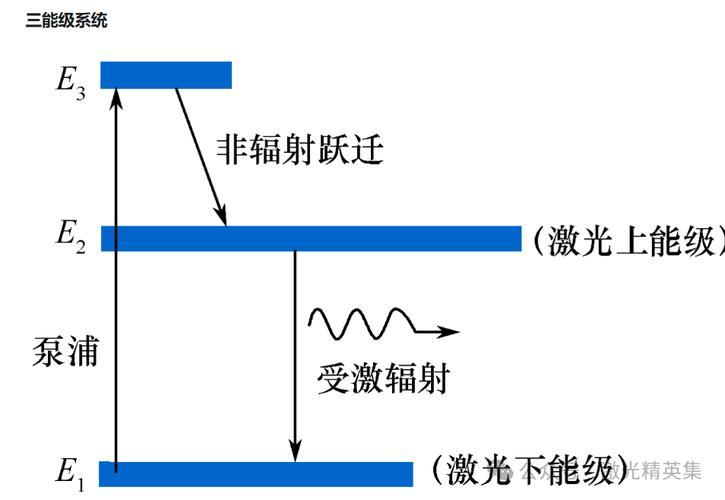
Laser is defined as a special photon produced by extra-nuclear electrons at photons with high brightness, high monochromaticity, and high correlation, in the forward reference to laser generation and characterization for laser generation, 01. Laser working material means substances capable of producing lasers, usually a transparent medium with high purity, density and evenness. Laser leaps to laser leaps mean that when an atomic extranuclear electrons leaps from a high-energy to a low-energy level, they release a photon, which in turn triggers other atomic extra-nuclear electrons leaps, creates a chain reaction and eventually produces a laser. Laser basic knowledge gas laser is one of the most common lasers whose working material is gas or vapour, stimulating atomic extranuclear electrons, such as discharge or combustion, and producing lasers. Gas laser liquid lasers use liquid as a working substance to stimulate atomic extra-nuclear electrons, such as pumps or electric fields, to produce lasers. Liquid laser solid lasers use solids as work material, stimulating atomic extra-nuclear electrons, such as heat or light stimulation, to produce lasers. A solid laser laser generation method optical amplifier is a device used to magnify lasers by increasing their energy and power to increase their brightness or penetration. Optical amplifier fibre-optic amplifiers are a device used to magnify lasers and to increase the transmission efficiency and output power of lasers by increasing their energy and power when transmitting lasers in fibre-optics. Fibre-fibre amplifier laser magnification technique 02 laser characteristic lasers have very small dispersing angles and are almost an ideal set of parallel light with long distances of transmission. The laser has a single wavelength, a pure frequency height and a pure colour. Since the laser launch is a light, it is very relevant. The brightness of the laser is very high and can be tens or even hundreds of times greater than the brightness of the sun. The characterization of directional monochrome, which is relevant to each other, has high brightness lasers and directly uses telecommunications to control the strength of the lasers, thus achieving a modem. Modifiers for lasers, such as the use of acoustic, electric, etc. The laser mode of modem indirectly regulates the adc information processing directly using the relevant characteristics of the laser and allows for high accuracy and speed. Communications can achieve long-range, high-speed and high-capacity communications using the characteristics of high laser brightness, directional orientation and monochrome. High precision measurements, such as laser ranging, laser interferometry, etc., can be achieved by measuring the relevant properties of lasers. High-energy, high-precision characteristics such as lasers can be used in manufacturing areas such as laser cutting, laser marking, etc. Experimental purpose for the generation of lasers and their properties in the field of application of lasers: to understand and master the creation mechanisms and characteristics of lasers. Content 1. Comparison of the principles and characteristics of the generation of different types of laser. Measurement and assessment of the characteristics of the output power, wavelength, beam mass, etc. Of the laser. 3. Laser-material interactions and effects on substances. The purpose and content of the experiment include various types of lasers such as gases, semiconductors, fibre optics, etc. Laser experimental equipment and materials are used to measure laser beam mass and output power. The beam mass analyser is used to measure the wavelength of the laser. Monochromes are used to observe the interaction of lasers with substances and their effects on them. Optical microscope 03010604021. Prepare experimental equipment and materials to ensure normal operation of power supply, control systems, etc. 2. Select the right laser, adjust the working parameters, activate the laser and observe and record the output characteristics of the laser. Use beam mass analysers to measure beam mass and output power of lasers, record data and compare. 6. Compilation of experimental data, analysis of results, preparation of experimental reports. Under the optical microscope, observe the interaction of lasers and substances and their effects, and record and analyse data. 4. Use of single colours to measure the wavelength of the laser, record data and compare. Experimental step and operation of 04 laser generation mechanisms and properties research forward research and development of super-fast lasers at the skin-second, flight-second level for high precision material processing and observation of super-fast phenomena. Super-fast laser-efficient laser-production technology research and development of efficient, high-light laser-generation technology for energy, communications and medical applications. Research and development of accurate and fast laser control techniques for high accuracy material processing and photochip production. 030201 forward development of laser technology research and development of new applications of lasers in the medical field, such as laser surgery, laser beauty, laser diagnostics, etc. Laser medical research and development of new applications of lasers in manufacturing fields, such as laser cutting, laser welding, laser marking, etc. Laser manufacturing research and development of new laser applications in the field of detection, such as laser radar, laser guidance, laser spectrum, etc. The front-line research on laser detection applications combines artificial intelligence with laser technology, such as machine learning, deep learning, to achieve more intelligent and automated laser processing and control. Green-friendly laser technologies research and develop green-friendly laser technologies such as low-energy and low-cost laser generation and control methods to reduce environmental impacts. New laser materials and devices are developed and developed new laser materials and devices, such as 2d materials, photo crystals, quantum points, etc., to improve laser performance and reliability. Research on the mechanism of laser generation, reference to future trends and challenges 05: author, year of publication, journal name. Study of laser characteristics: author, year of publication, journal name. List of main references to the literature, bibliography 2 research on the mechanism of laser generation: author, year of publication, journal name. Study of laser characteristics: author, year of publication, journal name. List of major references to the literature 3 research on the mechanism of laser generation: author, year of publication, journal name. Study of laser characteristics: author, year of publication, journal name. Thank you for the list of main references to the literature