In 1996, the fujian pymnasium gang was officially launched, and in the same year, the town of guanin was located on a dry beach “no bird in the air, no grass on the ground”. Thirty years later, there was a 66,000-strong town on the gobi desert, with an annual per capita income of $500 to $20292。
The 30-year-long axis, which is more than a memorable number in the entire system of east-west collaboration, attests to the entire process of a national system, from “capability” to “sustainability” to “replicability”. The mechanism behind a twinning relationship, which can last for 30 years, is usually more explanatory than the success or failure of a single project。
Understanding this set of experiences requires first seeing what it has accomplished in four phases。
Four phases, four key overlaps
The vertical pull-down of a time axis is a four-pronged mechanism。
The years 1996 to 2000 were institutionalized. Previously, cross-regional support had been based on sporadic support, and in 1996 the state council had formalized a framework for collaboration on poverty alleviation, turning the spontaneous “good work” of the various localities into a “manager task” for national integration. This step addresses the question of who does what and who does what。
The period 2001 to 2010 was a major extension. In line with the implementation of the china rural poverty reduction and development programme, the main actors of the partnership are the government, which is responsible for a one-dollar transformation of the government, the market and the community. The market dimension of industrial cooperation, labour exports, etc., has been drawn into the market and is no longer driven by executive orders alone。
Between 2011 and 2020, the poverty-eradication campaign took a leap forward. In 2016, after the sinchuan symposium, the relationship sank down to the county, where the system, the funding, the focus of the collaboration system were optimized, and it was applied with precision and in a direct manner. This move moved the collaboration from “widening coverage” to “targeting”。
The year 2021 is the most critical version switch. The two issuances formally upgraded “west-west poverty reduction collaboration” to “west-west collaboration”, eliminating the word “poverty reduction”, adding two-way dimensions, such as industrial collaboration, consumer collaboration, and moving from a one-way blood transfusion to a competitive, mutually beneficial, win-win normal track。
The four-stage operating systems were completed, and quantifiable results were handed over during the transition period: the east led firms to invest more than 750 billion yuan in the west, built nearly 800 industrial parks, provided employment for more than 5 million rural workers in the west and procured and sold nearly 570 billion yuan in agricultural products in the west。
The bottom logic of the five mechanisms is to give power to both sides
The operational system runs through five mechanisms that the ministry of agriculture and rural development has clearly outlined: joint promotion, twinning, financial support, talent exchange and social participation。
What really distinguishes the system from traditional counterpart support is not the number of “five mechanisms”, but the orientation of their internal incentives。
Twinning has long been established, with 325 economically more developed districts in the east pairing 447 poverty-free districts in the west, with no arbitrary adjustment and a “long-term partnership” psychological expectation on both sides. The joint conference system is held once a year and the governments of the two provincial party committees are primarily responsible for gay leadership, signing agreements, deconstructing tasks, coordinating difficult situations, linking political and human accounts。
More importantly, the appraisal is two-way. In the east, investment, selection of cadres, job placement in industry, and in the west, resources are transferred, the population benefits, and domestic capacity is improved. No one can simply “pay for nothing”, no one can “take money for nothing”, and power systems are designed to be closed。
As a result of the system's design, there have been no large disruptions for 30 years as a result of the change of office — a point that many countries have failed to achieve in cross-regional assistance programmes。
Banning, su-soo, zhu, three different paths cover different scenarios
After the national mechanism had closed the bottom line, the different twinnings had led to three differentiated landing patterns, which had coincided with a collaborative landscape covering most of the western districts of the country。
The zang ning model is appropriate for the development of migrants in ecologically fragile and less developed areas. Beginning with the establishment of a joint ecological migration site in 1997, the industry was introduced in parallel, and the “displacement” of the population was seamlessly linked to “stable employment”. In addition to the direct presence of fujian bianning experts, agricultural technology for facilities along the south-east coast was passed on to the north-west dry sand region, and the “northern fruit species” were literally transformed from industry。
The key word for this model is “sync” — where migration and industry cannot be sequenced in order to be internalized。
What fit the slugger pattern is a shift in manufacturing gradients. Jiangsu's strengths lie in the advanced manufacturing, auto parts and new energy industry chains, the precision of the west-west subregion: the advanced manufacturing at the close, the energy chemical at the north, and the development of velvet toy and biomedicine at the south. From scratch, ankang gathers more than 800 velvet toy enterprises, producing more than 1 million daily, with an annual value of 10 billion yuan, and absorbing nearly 20,000 jobs。
This is a typical combination of “eastern r & d plus channel, western manufacturing plus land”。
The model is suitable for the realization of cultural resources in border areas. The above-mentioned market, branding and standardized capacity to connect to the south african heritage industry, chu hsiung embroidery has moved from casual manual work to a total production industry of $1. 15 billion, registered the country's first collective brand of non-removables, and developed the country's first national standard for embroidery manual embroidery technology, with an average price increase of 20 per cent and an annual increase of $3860 per capita for 62,000 embroidery girls。
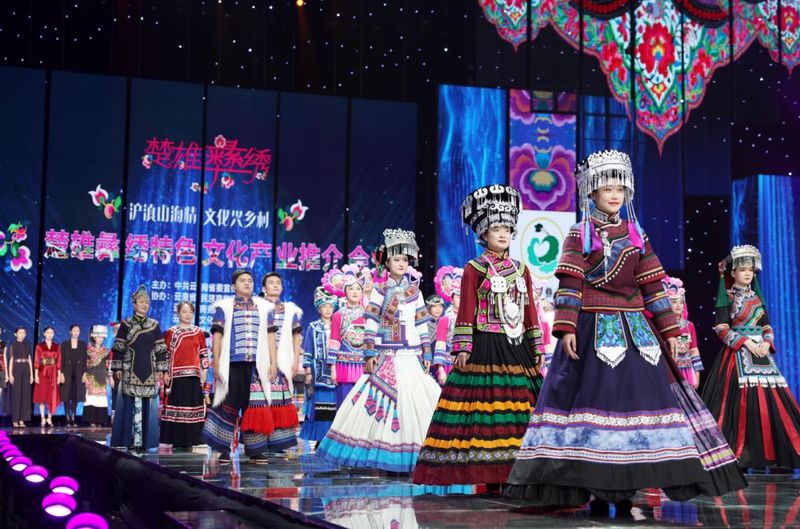
The costumes of chu hsiung's specialty cultural industry promotions show
The model runs through the “cultural resources standardized product” and “cultural markets on the front line”。
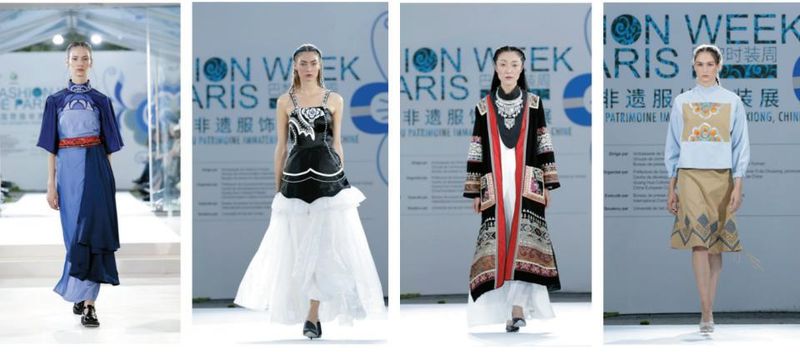
Chinese non-removables presented at paris fashion week
The three paths, the resource endowments, are completely different, but they all come down to the same bottom logic: instead of a “strength of industrial collaboration” to find the combination where the east can make money, the west can take over and the population can grow。
What happened to something like that in history
The value of any experience lies in the fact that it is possible to see where similar errors are repeated。
The last attempt by a large country to systematically address regional imbalances in development was accompanied by a combination of rapid urbanization, large-scale industrial transfers and labour collaboration variables, probably dating back to the regional balance plans of some federal states in the late twentieth century。
Most of those attempts have been faced with the same dilemma in a decade: a shift in the political cycle has led to a policy gap, a lack of real local involvement by the central treasury, a shift in industrial transfers into pollution transfers, and a rapid return of recipients to poverty after the withdrawal of funds。
The east-west collaboration around the pits became clear in the historical coordinates。
The long-term fixed-term twinning and joint conference system combines it with resistance to the political cycle; a two-way appraisal and benefit-sharing mechanism gives local governments real motivation to participate, rather than central pressure to dry; a shift in the industrial gradient emphasizes “compatible” rather than simple relocations, and ancomfort toys and chu xiong-soo have grown out of local labour and cultural resources。
However, the differences are similar, and the differences may be more critical in this case. In the past, cross-regional interventions in other countries have largely stopped at “saturation” or “maintenance of parity in basic public services”, and east-west collaboration, in 2021, brought the goal directly to “elementality, two-way empowerment” — not just to help the west catch up to the east, but to allow markets, technology, resources, and labour to move in the same system。
In 2026, the first year of regularization assistance, the ministry of agriculture and rural development clearly stated that it “continues to uphold all proven successful practices and effective mechanisms”. Five major mechanisms, four industrial collaborative paths and five standardized workflows validated over 30 years have been incorporated into the policy and no more question marks are required。
Whether the participation dynamics of the larger variables in the east will continue to be driven by market logic and where will the next stage of growth be after per capita income is drawn from $500 to $20,000. All of the successful cross-regional collaborations in history have continued in the wake of the decline in “help”。
The collective economy of six villages in guanning town, with a total of over $1 million, and the value of chu's embroidery industry exceeding $1. 15 billion, indicate at least that in some places business has begun to shift itself。