The baby's developmental problems are very important to new mothers, making a graphic, simple and clear, and not tired。
There are individual differences in the development of each baby, the time referred to below is average, and the development of one's own baby is normal a little earlier or later。
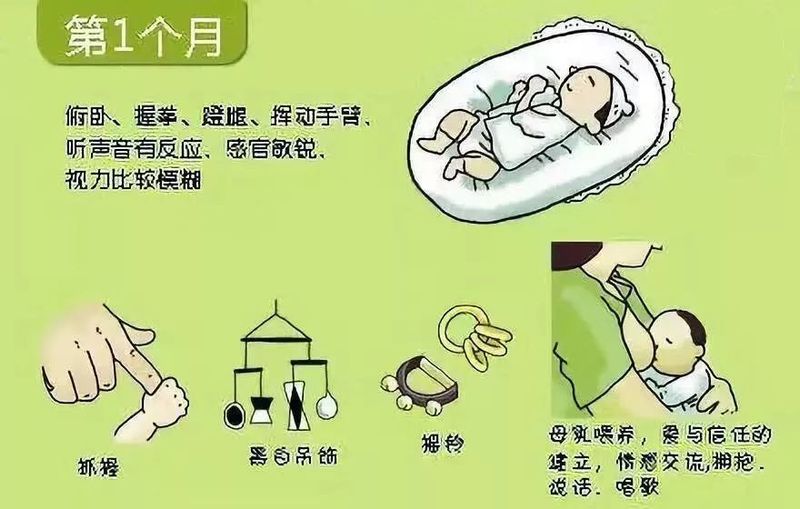
Month 1
In the first month, the baby lays down, shakes his fist, stomps his leg, swings his arm, hears his voice and reacts, senses are sharp and his eyes are blurred。
Month 2
You can start learning to look up, you can find your hands, you can smile sometimes, and you can react in a variety of emotions。
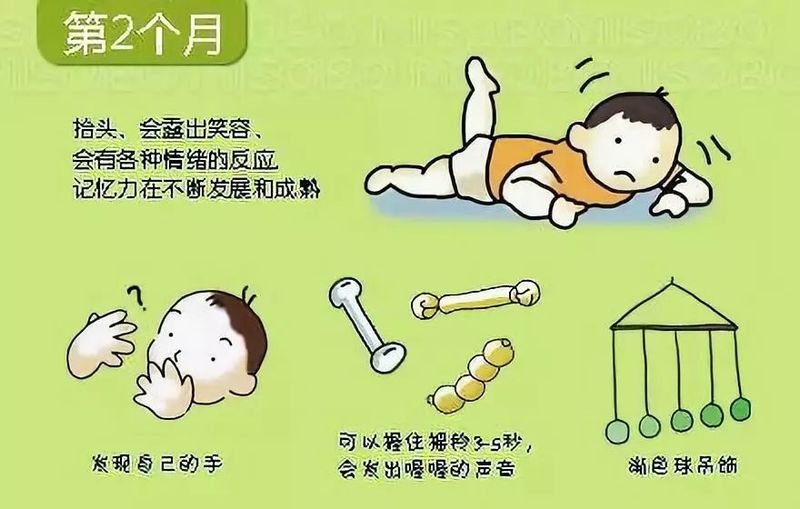
"one head up, two chests up" means that a baby can do a head-up when he falls down for a month, and not only when the baby reaches two months, but also when the chest can get out of the bed。
A baby lying down can promote the further development of the muscles on the back of the neck, can contribute to its rise and can promote greater control of the motor function in the brain by stimulating muscle coordination throughout the baby's body. The baby is often lying down, and it also relieves the symptoms of intestinal galloping。
If the child is three months old and can't get his head up when he's down, there may be two more reasons:
One is that parents are too fond of their children, holding them in their arms every day, and never let the baby try to “down” positions, resulting in insufficient training opportunities; the other is that the child may have a neurodevelopmental problem, which has nothing to do with the formula, calcium or vitamin a+d。
Month 3
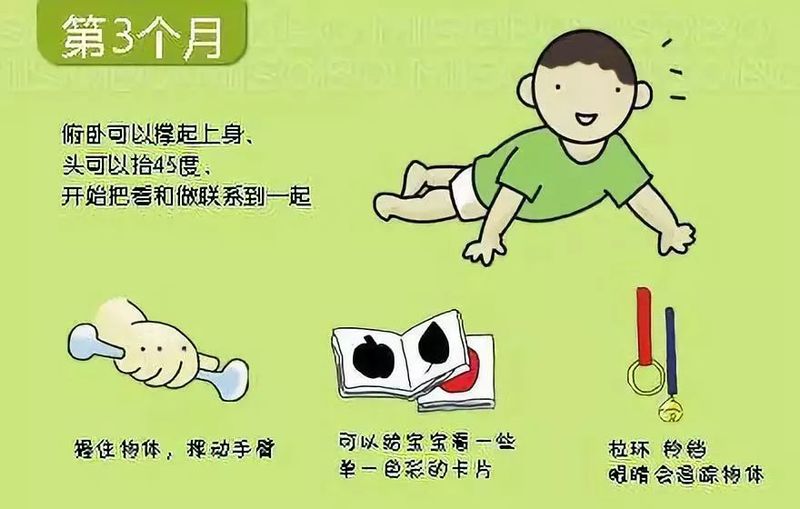
This month-old baby can get up on the top when he's down, get his head up to forty-five degrees, get a connection between seeing and doing。
As a rule, if the baby grows normal, it's going to flip in three months, even now。
Some parents, however, said that their children had been holding their heads for three months, with occasional back-ups. Some parents have been responding to their children for more than three months and will be backstretching. The fact that the baby's neck muscles are not sufficiently developed to support the vertical head is shown when the baby's backsliding occurs。
If this happens, stop holding the baby, and as much as possible allow the child to lie on the bed and exercise the child's neck and back muscles through head-on moves。
Only when the child's neck and back muscles are strong enough to withstand the weight of the head when held up can he or she be held up. The baby in six months is not recommended to hold。
4-5 months
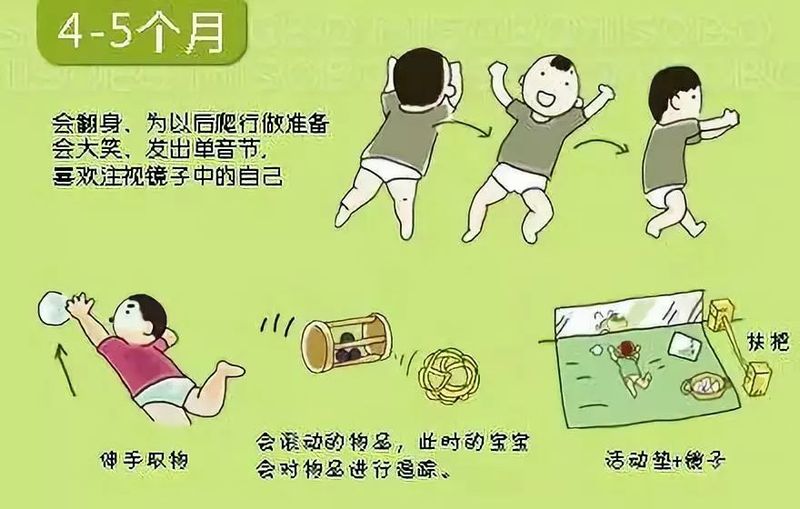
It turns over, it laughs, it looks at itself in the mirror。
5-6 months
Sitting alone for a while, drawing attention to yourself, rolling the body in different ways while lying down。
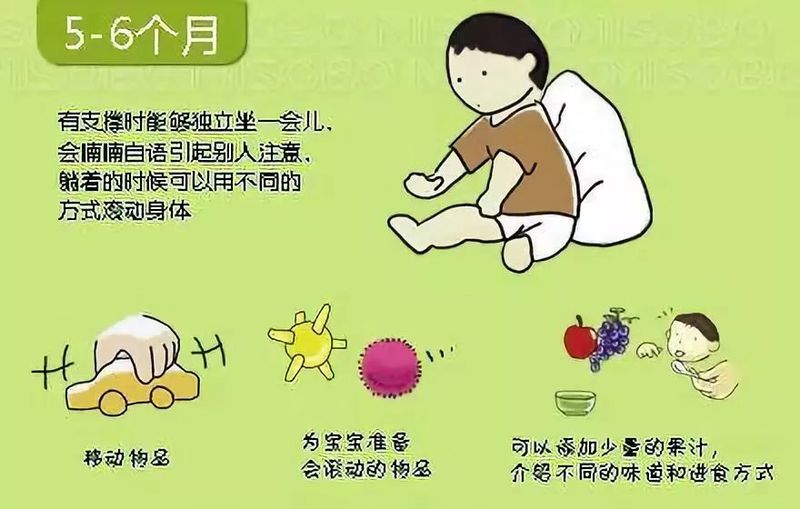
Under normal circumstances, the baby will not be able to rest in peace after five months, and it will be necessary for the parents not to allow the child to sit alone on the couch or with the support of the child, which is detrimental to the development of the child's spine。
It is also time for children to be on their backs, to be on their backs, to develop their brains, and to ease the desire of the baby to sit。
When a child is able to sit alone and to balance his or her body, attention is paid to the child, which means that the child has the ability to sit alone, as long as he or she completes the skill of sitting alone nine months ago, it is normal to develop。
If the child should learn to sit alone at the age of the month or not, the child should be encouraged to stay on his or her back more often because of his or her ability to exercise the muscles on his or her back and to improve his or her body balance, which can also help to control weight growth。
6-7 months
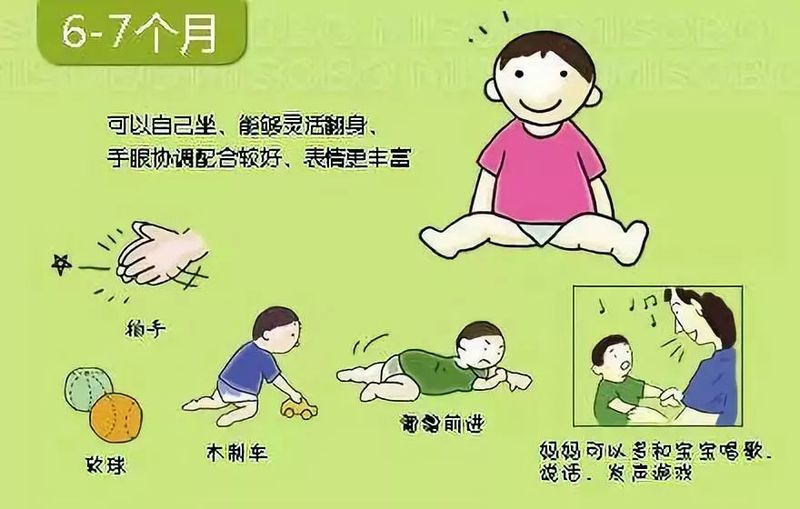
You can start sitting on your own, you can turn around with more flexibility, and you have a richer face。
7-8 months
The baby starts crawling, making a variety of voices and making it more understanding of adult languages。
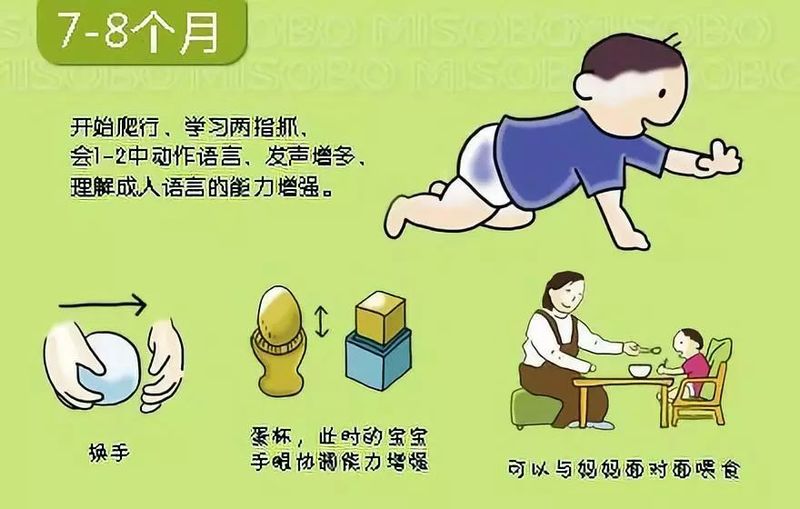
At the time of the medical examination, the doctor would have the baby lying down and facing its feet to see if the baby had the desire to climb, in order to test the baby's neuroreflection。
For a normal baby, there is no need to force the training to climb until six to eight months before the baby has the desire to climb autonomously。
If the baby is not able to climb in 10 months, it is not a problem for parents to take the child to hospital to examine his or her death and to be able to deal with it in a timely manner。
If a child does not climb in a standard manner, i. E. On his or her knees, he or she can be given more opportunities to practice climbing, and if the child does not like climbing, he or she simply wants to stand up to show that there are no problems with the child's development。
But it's important to create as many opportunities as possible for the baby to climb。
8-9 months
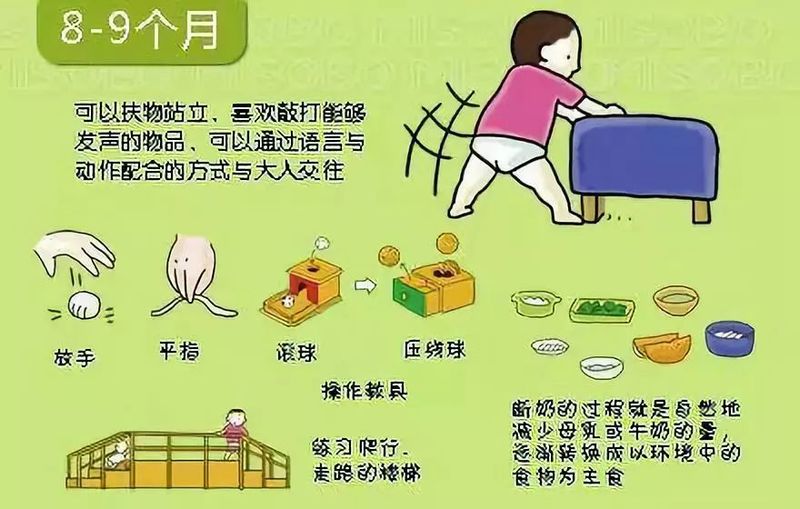
At this point, the baby is able to stand up and like objects that can knock on sound, and the hand moves more flexibly。
Tenth month
You can stand up, you can walk a few steps, you can drink water with your own cup。
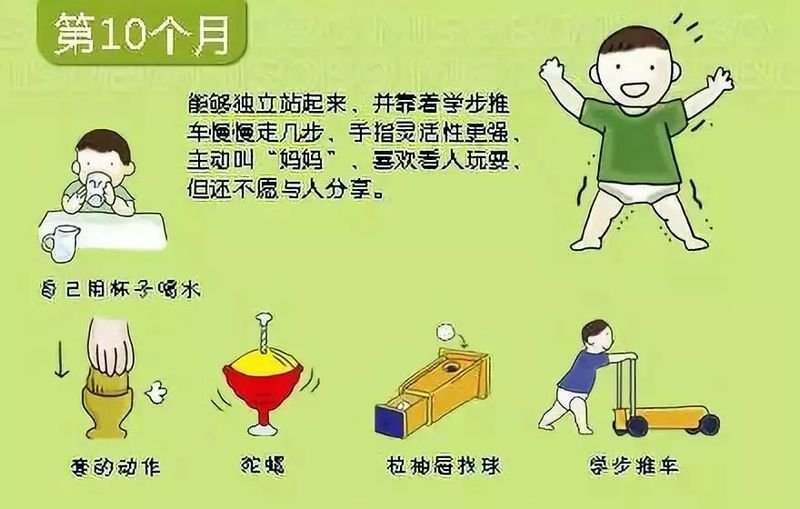
The ability of children to stand, in addition to their awareness and ability to stand, is given greater attention to their position。
A child can be encouraged to practice standing action if his or her feet are easy on the ground and if he or she is able to stand with the object。
Usually the baby has the ability to do so 10 months later, and it also needs to stand on a big premise that the child needs to be able to balance the body's autonomy。
As long as the baby's feet are easy to ground and the body is well balanced, there are no developmental problems with the lower limbs。
When a child stands, be careful to observe that, if it is a toe, it means that it has not reached the stage of standing, not trying to hold the baby on its feet, otherwise it is not conducive to the development of the child's ankle and lower limb muscles. When the child stands, if it is on the toe, it means that it has not reached the stage of standing, so that the baby does not stand, otherwise it is not conducive to the development of the baby's bow and lower limb muscles。
Moreover, if a foot-toed standing habit is developed, it affects the position of the baby after walking. It is still time for the baby to stay down and learn to climb so that the baby can gradually learn to sit, stand and walk。
Normally, the child learns to stand before the age of one, and the development of big moves is normal。
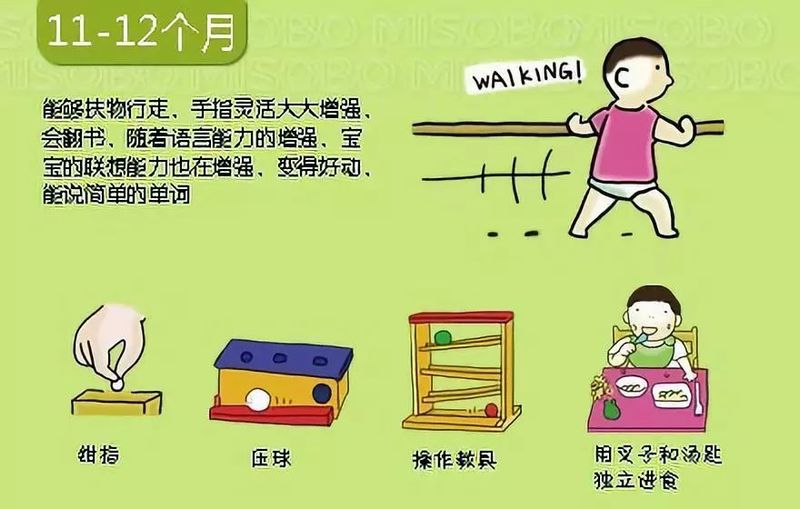
11-12 months
The ability to walk on an arm, the flexibility of the finger is greatly enhanced, it becomes moving and it speaks simple words。
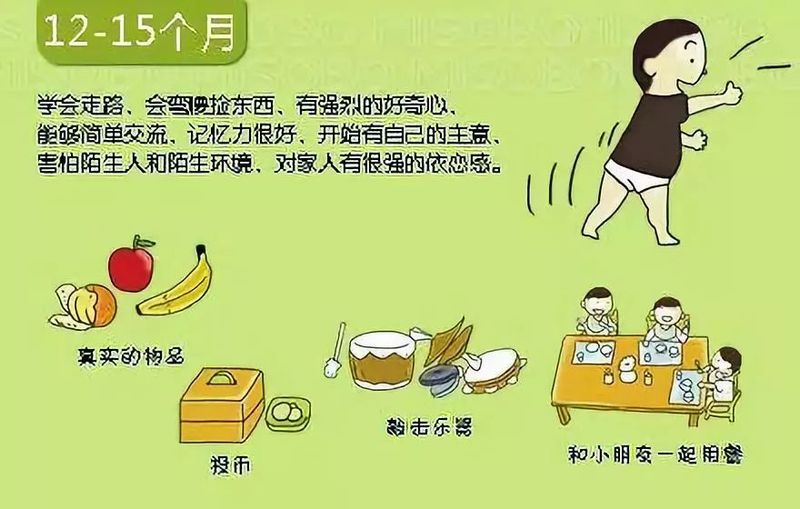
12-15 months
Learn to walk, bend over to pick up things, have a strong sense of curiosity around, and have easy communication。
15-18 months
You like to try everything, wash your hands, wash your face, sit down and organize simple sentences。

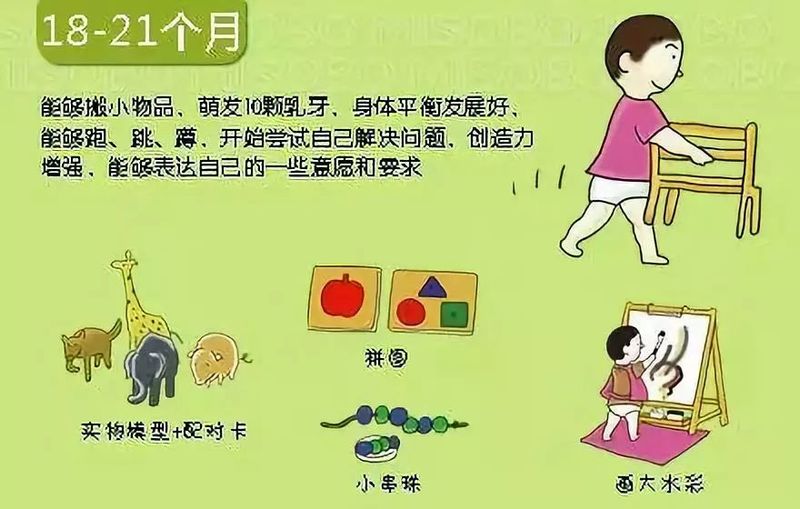
18-21 months
The ability to move small objects is well balanced and can begin to try to solve problems on its own and express its will and demands。
21-24 months
Being able to do things on its own, like washing hands, going to the bathroom, and so on, and being able to look at the eyes of a hand, and helping to do simple household chores, like cunning, rubbing tables and so on。

The basis for leaving is to stand and be able to move at night without falling and to do so before the age of two。
Parents need to pay more attention to whether the child will stand and walk, not just to see whether the child will stand and be able to move forward, but to see whether the child's standing and walking position is standard。
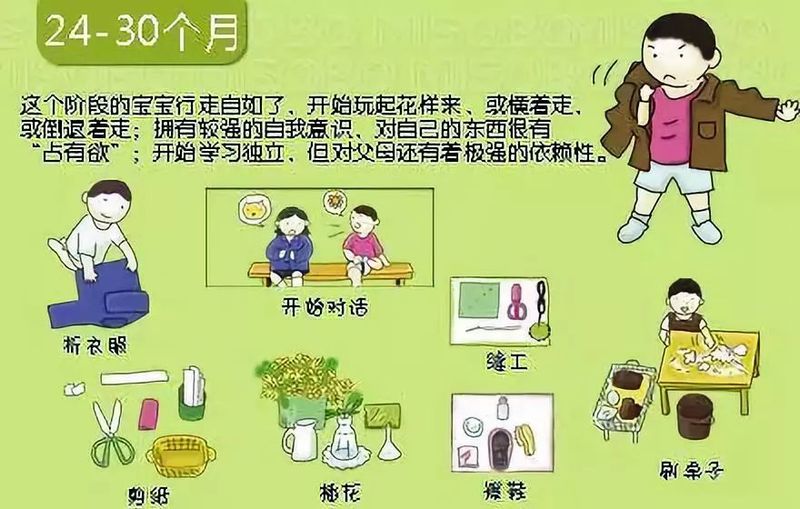
24-30 months
The baby is beginning to be able to wear clothes independently, fold clothes and help with simple household chores such as shoe polishing. Language skills can be further enhanced and dialogue with others can take place。
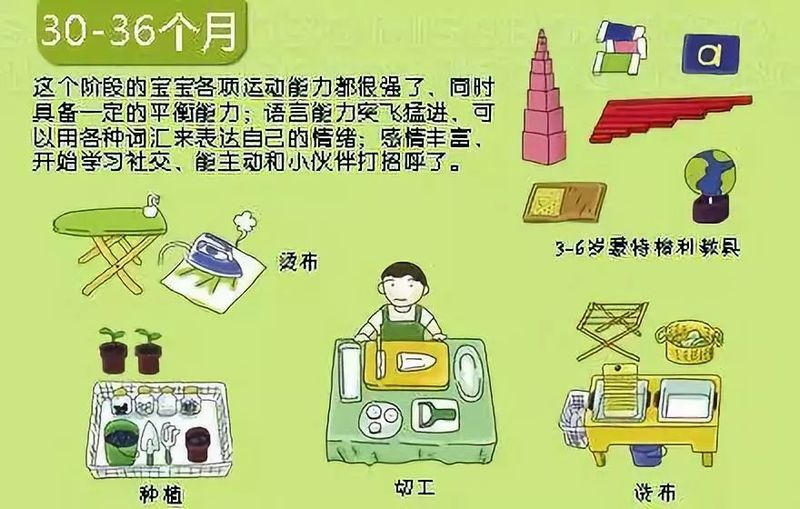
30-36 months
At this stage, children are able to work independently on cutting, washing, planting, etc., to express their emotions in a variety of terms and to begin greeting their small partners。
When a child is born, it begins with a major movement, such as the birth of a newborn, where doctors check his newborn reflexes, which are all part of the movement。
We often see babies stretching their arms and legs, and it's a big sport. Overweight is one of the reasons for the delay in large physical growth。
"sit, stand, walk" and so on and so on and so on and so on and so forth and so on and so on and so on and so on and so forth, it can cause unnecessary damage to the spinal cord and lower limbs of the baby, some of which are the result of premature standing