When it comes to sports, many think first of all about projects such as football, swimming and running that require a lot of sweat and skill, which is considered to be exercise。
In recent days, a new study has found that walking can significantly reduce mortality rates。
The times of life, in conjunction with new research, tells people about the most healthy and efficient way of walking for different groups of people。
Keep walking. It's the lowest death rate
This study, published in british journal of medicine, followed by 70,725 women and 40,742 men for 30 years, showed the strongest correlation between walking and reducing the risk of all deaths in all the individual campaigns analysed, all due to a 17 per cent reduction in the risk of death。
The study found that the benefits of reducing the risk of death no longer increased significantly when walking to a certain level. The threshold for this optimal effect is around 7. 5 met-hours/week, walking about 20 minutes a day。

The study also assessed the effects of other campaigns, the percentage of which were reduced due to the risk of death as follows:
Tennis/paintball: 15 per cent reduction
Boating/building: 14 per cent reduction
Strength/restraint training: 13 per cent reduction
Run: 13 per cent reduction
Jogging: 11 per cent reduction
Climbing the stairs: 10 per cent reduction
Bicycling: 4 per cent decrease
In addition, research has found that the diversity of movements is equally critical. The risk of premature death is reduced by 19 per cent for the most diverse population groups compared to the singlest category of sports。
How many steps do you take every day
Sport is like taking medication to treat a disease, and benefits are associated with a “dosage”. High doses are detrimental to health and insufficient doses are difficult to treat。
The american medical association magazine online published a study in which researchers divided 2110 participants into three groups based on average daily steps, namely: 1. Smaller steps (less than 7,000 steps per day); 2. Medium steps (between 70 and 10,000 steps per day); and 3. More steps (more than 10,000 steps per day)。
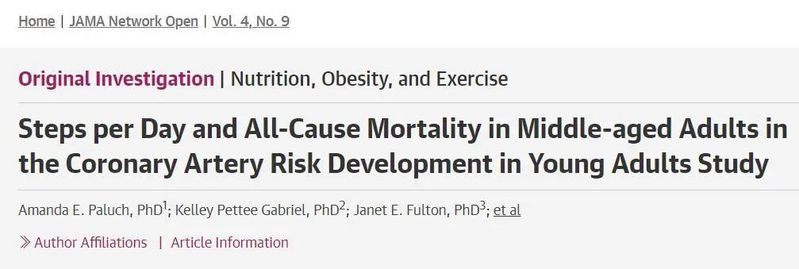
Ten years after these individuals were tracked, it was found that the risk of death in the intermediate step group was 72 per cent lower and the risk of death in the higher step group was 55 per cent lower than the rate of less than 7,000 per day. The study concluded that 70 to 10,000 steps per day were the lowest risk of death。
The safest and most efficient way for different groups
Professor soho of the school of physical education and physical sciences of beijing university of physical education stated that walking also required different groups of people。
Healthy youth
Walking 5-6 km per day, reaching 135 steps/minutes (about 20 steps in 10 seconds) with a slight body sweat and a slight acceleration of breathing。
Older persons
Walking 3 to 4 kilometres per day at a pace of 125 paces/minutes, with a slight body sweating and relatively rapid breathing, approximately half an hour. In the event of a longer walk the day before, such as walking to the park, climbing, etc., the exercise time and distance should be reduced the following day, as a criterion for pain-free joints。
Weak
At the beginning of the exercise, 30 minutes can be divided into three periods of 10 minutes each. Once you're fit, you're done again。
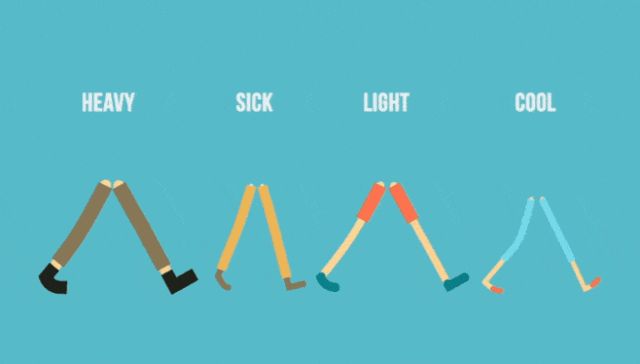
Professor lu won-jin of the faculty of physical education and sciences of the university of chinese pedagogical education stated that walking positions were also important and were as follows:
Both eyes are facing the front, with a slight vertebrae, a clean neck, a natural uplift to the chest, a straight waist, a small abdomen and a slight backsliding to the hip; a slight bend of the arm, with the natural swing of the pace; while walking, the rear-string focus is on the inside of the front of the toe; the step can be sufficiently large to mobilize the thigh and hip muscles。
It's better to walk with a few moves
Zhang yim, a professor at the faculty of physical education and physical sciences of beijing university, said that walking with simple moves helped to strengthen the bones, reduce weight and exercise better。
1. Little vertical jumps
Stop while walking, with your hands fork over your waist, jumps vertically up in place, your feet just a little away from the ground and your hands mimic the jump rope. 10-30 seconds each, 2-3. Keep your body tight and your abdomen tight。

2. Kicked away after
In progress, hands fork over the waist, one leg to support, knee to the side of the thigh, foot to the heel as close as possible to the buttocks, alternating. 10 steps per group, 2-3 groups。
Pay attention to the integrity of the body and to the point of the kick when the knee is kneed; at the beginning, it is small enough to wait until the muscles have some exercise before the kick is increased to prevent pull。
Twisting
Long-term sittings, inactivity of the internal organs, and a gradual decline in the functioning of the body allow the internal organs to be fully stretched and defecated by twisting (like a race)。
4. Swinging hands
It's good to walk for 10 to 15 minutes each to stretch the muscles on the back of the waist and protect against the camelback。
5. Swingover
The run rate can be kept at 1:3, for example, 15 seconds, 45 seconds, 60 seconds, 3 minutes, alternate. On walking, the upper body was straight, the head was raised, the length of the arms was roughly the same, and the arms were thrown back and forth。
The method is more dynamic, and you have to walk up to the body. It's about 20 minutes a day。
“10:10” walk
Heads up and arms up to the 10-10 angle. Keep your eyes on walking at a reasonable pace, and when you reach 200 to 300 steps, your arm will drop。
Reminds us that the strength of exercise is appropriate to be slightly sweaty and able to speak normally. If there is a heart disease or a knee joint disease, a doctor is consulted before exercise。