Shenzhen jiwei automations ltd.
Shenzhen calculated automated technology ltd

Foreword
Limited switches (limit switch) are an important industrial control device that is widely used in automation equipment to detect the location or motion of objects and thus to achieve automatic control of the system. It enables the conversion of mechanical transposition signals to telecommunications, thus providing real-time monitoring and control of the operational state of industrial equipment. This paper will explore in depth the working principles, classifications, application scenarios and technological advantages of limited switches, combining relevant standards and technical requirements to ensure their reliability and accuracy in different industrial environments。
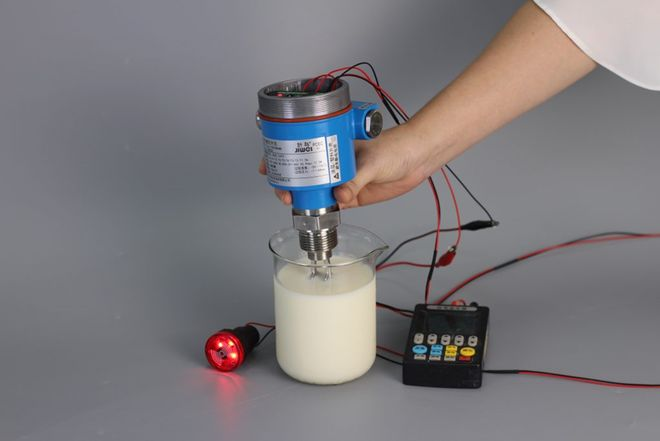
It's also a limited switch
Rationale
The operation of the limit switch is based on a mechanical trigger mechanism. When the object is detected in a pre-set position, the mechanical structure in the switch is activated by external force and the contact point is triggered, thereby creating a switch signal. The signal can be used to activate, stop or reverse the power, as well as for other control circuits to ensure that the equipment is operated according to the established logic. The limit switches usually use spring-mounted levers or pushers to ensure that the switches are quickly restored to their initial state when external conditions change and thus have the ability to trigger again。
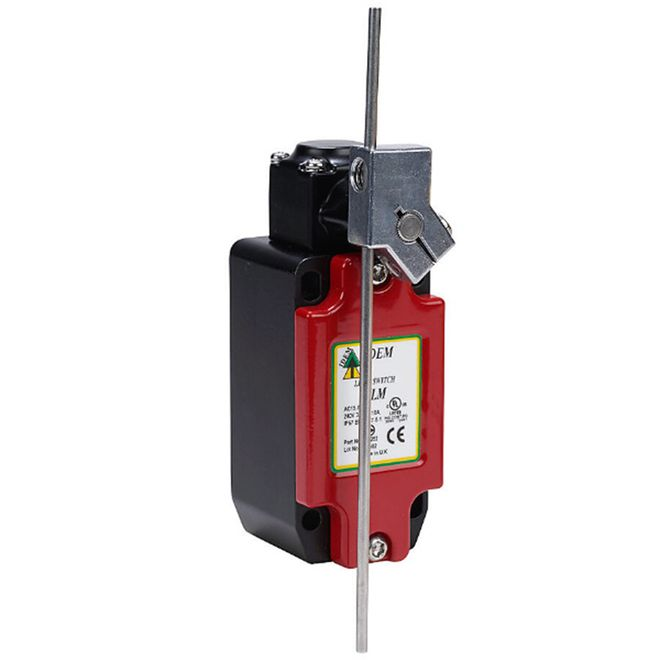
Limit switch
Classification
Depending on the structure and function, the limit switches can be divided into the following categories:
1. Direct motion limit switches: the trigger lever or pole is directly pushed by the object being detected to close or disconnect the contact point. For simple mechanical location tests。
Rolling wheel-limited limit switches: triggering the switch by driving the wheel by the object being tested is suitable for applications that require longer journeys and softer and triggers。
3. Micro-motion limit switches: rapid response speed, high accuracy, applicable to micro-small migrations that require precise control。
Non-exposure limit switches: the location of the object is detected through sensor technology (e. G., capacitation, sensory, etc.) and does not require direct contact with the object and is suitable for applications requiring no damage detection or special circumstances。
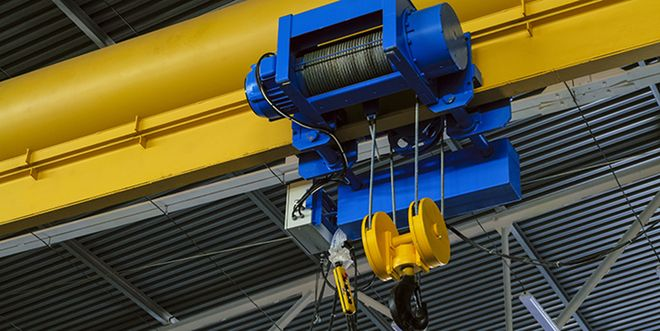
Roller limit switches
Apply scene
Limit switches play a key role in a number of industrial areas, with the following main applications:
1. Automation production lines: the limit switches are often used to detect workstations, position of works and trigger actions for the next process. It ensures that the various processes are carried out according to the time and sequence set, and increases productivity efficiency and accuracy。
2. Machine-bed equipment: the limit switch is used to detect the course and location of the machine-bed, prevent movement of the machine-bed beyond its intended range and avoid damage to the equipment and injury to personnel。
3. Lifting equipment: limit switches are used to detect upper and lower limits of equipment such as lifts, cranes, etc. To ensure the safe operation of the equipment. The limit switch automatically sends a stop signal when the device reaches the predefined maximum or minimum point。
4. Gate control system: in systems such as automated doors, roll doors, etc., limit switches are used to detect the level of the door switch and to ensure that the door is operated smoothly and accurately。
5. Protection in hazardous situations: in the case of hazardous substances such as chemical plants, mines and so forth, limited switches are used to monitor equipment movements and prevent equipment from malfunctioning or accidentally triggering potential hazardous events。
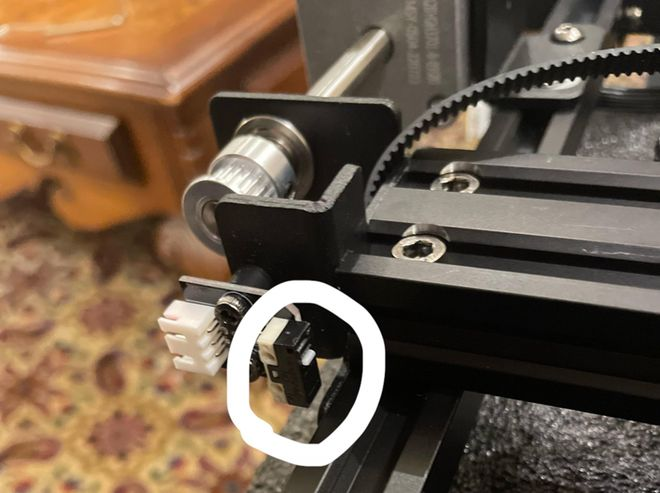
Technical advantages and challenges
As a mature control element, a limit switch has the following technical advantages:
1. High reliability: the limited switches are designed to be robust and capable of operating over a long period of time in a harsh industrial environment, with low maintenance costs。
2. Speed of response: an instant response to mechanical structures allows the limit switch to provide real-time feedback on location information and is suitable for rapidly changing production environments。
3. Adaptation to multiple environments: the limit switches have a variety of shell protection levels, such as ip67, ip68, which can cope with bad conditions such as damp, dust, corrosive, etc. To ensure long-term stability。
However, limited switches also face technical challenges:
1. Harm: due to the frequent use of mechanical triggers for limit switches, mechanical components may be worn over long periods of time, leading to failure or decrease in precision of the switches。
2. Movement schedule limitations: for applications requiring long-distance or wide-scale motion detection, mechanical limit switches may be limited by the duration of the journey and difficult to meet。
3. Sensitivity and precision: in some high-precision settings, the mechanical trigger of the traditional limit switch may not be sufficient to meet the very high precision requirement and will require increased detection accuracy through micro-action or non-contact limit switches。
Standards and norms
In industrial applications, limited switches need to meet multiple international standards to ensure their performance and safety. For example, iec 60947-5-1 is an international standard for limit switches, setting out their design, performance requirements and test methods. At the same time, different industries may have specific standards, such as the standard blast-protection level used in the petrochemical industry atex and iecex, to ensure the safe use of limit switches in hazardous environments。
Conclusions
As an important location signal detection element in industrial automation, the limit switches are an integral part of modern industrial control through their simple and reliable design and extensive adaptability. Although the structure of the mechanical limit switches is relatively simple, their performance and reliability have been significantly enhanced with the development of non-contact technologies in different applications. In the future, the limit switches will continue to evolve in the context of industry 4. 0, moving in the direction of more intelligent and sophisticated, and will contribute to the automation of various industrial equipment。