There is an official threshold of 1. 2 million for the opening of more than one full budget. This amounts to a busy running of two snacks at the same time in the county town, or a load of coffee in the form of 24 shops。
But in 2026, those who wanted to take the money to join the alliance were still in line from hangzhou to nanchang. At the beginning of the year, the union's intent form will be completed and a call from headquarters will not be received until a month later。
Recently, the “fresh snacks” shop, which is well represented, became a star on the track。
On the b1 level, north vientiane, hangzhou city, there was a typhoon at noon, and the front line turned around. The customer has 39. 9 dollars in herbs and 20 dollars in herbs. The price is not low, but no one goes out empty-handed. The wall is marked with “0 preservatives, cleaner table and fresh production dates”, and the a-f table of food purification levels at the door - this set, which emphasizes clean materials and value for money, has a mixed sense of sam and fat tung, and has precisely stepped on the current retail vent。
More than a dozen stores quickly seized the gold points of a second-line business circle, which also led to the entry of many allies. But for the gold miners, the first block in front of them is not a location, not a call, but a 1. 2 million ticket. There is also the most real question: what kind of business is it
One, 1. 2 million dollars. Where's the money
The experience of many of the allies in selling snacks is often the first step on the pit。
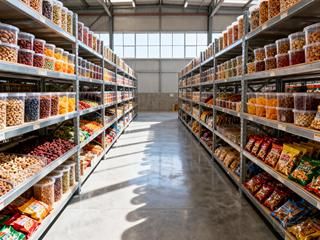
The profit-making formula for ordinary groceries is very simple: low-cost “big snacks” to attract customers into the store, and high-mori “white snacks” to finish the profit harvest. The threshold for genuine exercise is also low in the case of unionists: a street shop, a few rows of iron racks, and three or five people hired to pay for the goods, which can be sold in basic terms. One set of landings, hundreds of thousands。
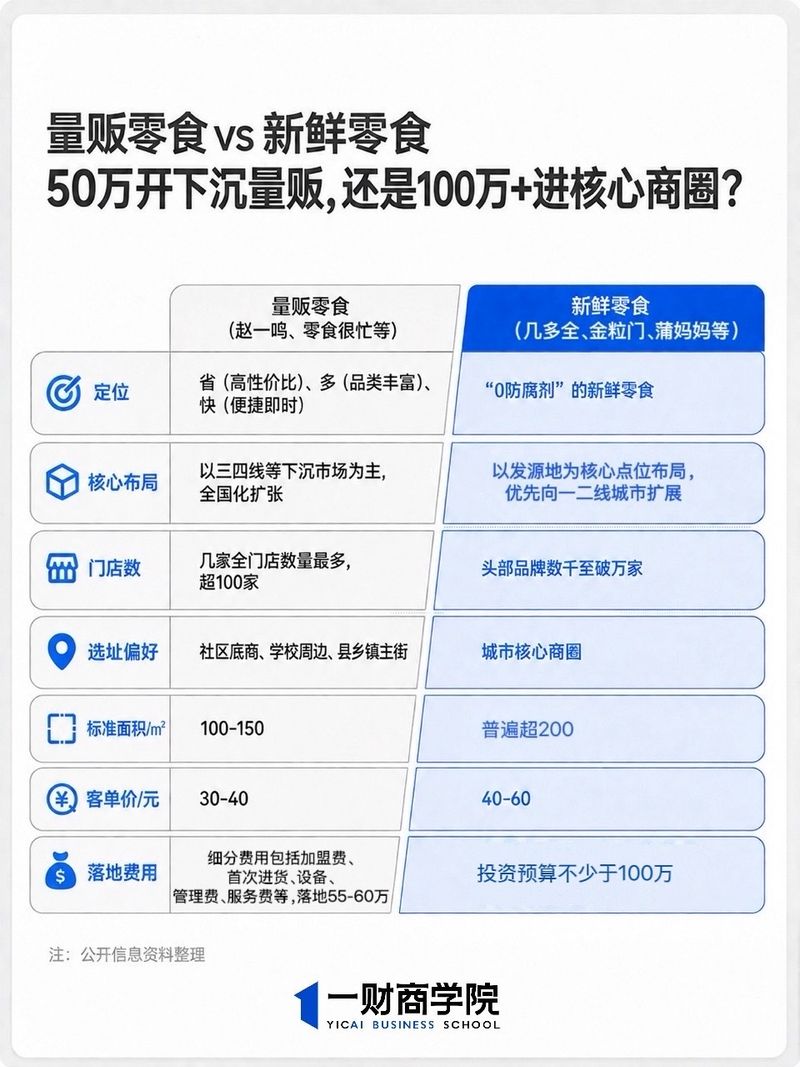
But it's almost completely different. Its core label is "fresh short" and "less add." this means that the association is not dealing with a wife's and wife's shop, which can be bought and sold, but with a complex “mini-food complex”。
This explains the fact that there are a few official high-intensity thresholds: the explicit requirement to open a shop is not less than 250 square metres; the investment budget for a single store is not less than $1. 2 million, even with a harsh condition - • no fewer than five business shops are currently invested and managed by the union。
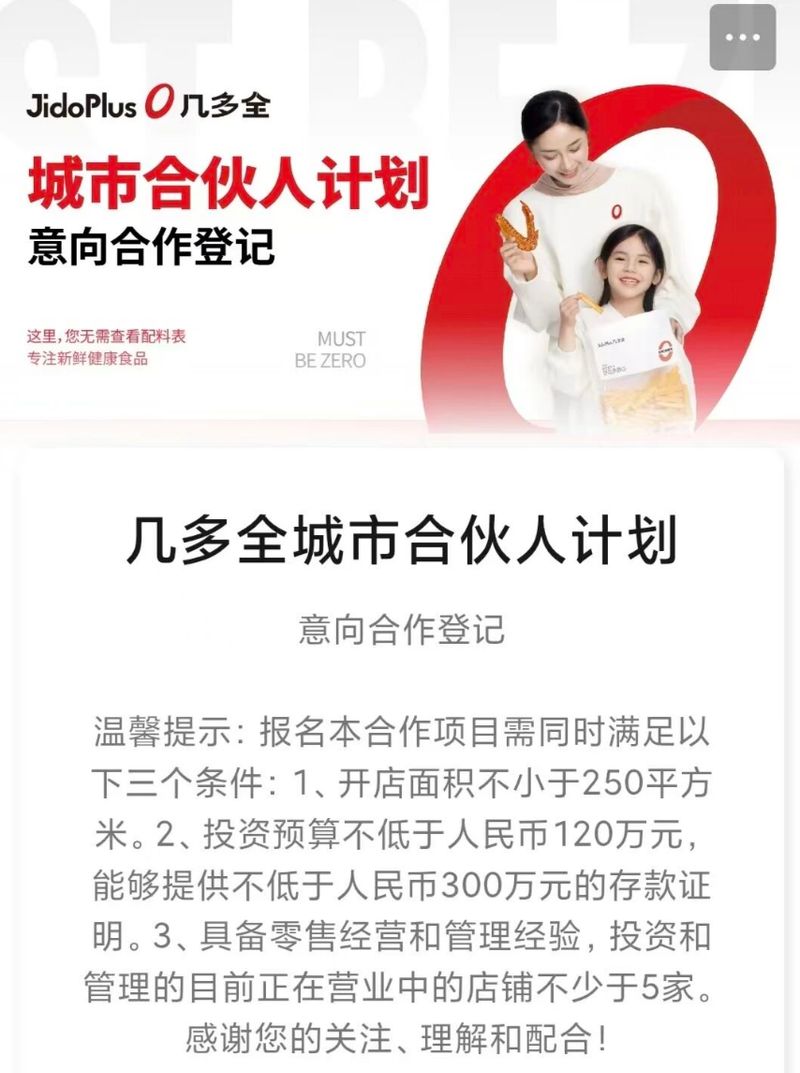
This set of standards directly sifts out the business start-ups and leaves behind large players who are well-funded, well-functioning and able to afford losses. So, where did the $1. 2 million go
First, the biggest is the rental of commercial premises。
In the case of short food, the location of the shop directly determines the traffic and turnover rate. The logic of a few full-scale shop extensions is very clear: the focus is on the yangtze city belt, with priority given to the first or negative floors of a large shopping mall in a second-line city。
In the case of vientiane north of hangzhou city, the daily rent on the b1 or the first floor is approximately $8-15/m2. Based on the official requirement of 250 m2, the base rent alone amounts to 60,000-120,000 yuan。
In addition to the rent, there is also a set of “cooked after-cooking at a milk and tea shop” as a result of fresh milk tea made by the doorkeeper. Refrigerated display cabinets, ice-making machines ... The stacking of these catering-level equipment not only increases the front-end fixed assets in a straight line, but also creates an extremely difficult second-turned sinking cost。
Second, manual。
According to site observations at the door shop, at 5 p. M. On weekends, a peak shop would require three cashiers, three to four clerks, two trial eaters and one to two personnel from the backstage to make milk tea. The actual staff establishment of a single store may be around 15 persons, taking into account the 12-hour operating hours of the mall, double shifts and shifts。
According to the director of the vientiane gate in north hangzhou city, there are currently 16 employees in the shop, and the size of the team is even 20-30 for large stores measuring 300 square metres。
In conjunction with the direct employment of boss, the shop is paid 10k-15k per month and the operator and milk and tea producer 5k-8k per month. Based on a conservative calculation of a monthly salary of $7,000 per person, with 15 employees, the single store would cost at least $100,000 per month. This does not include the costs of social security, recruitment, food, etc。
Finally, the rate of loss due to clean labels。
Over a few times, short bail and zero preservation have been used as core selling points, but this is directly equivalent to high wear and tear in the books of affiliated firms. The doorman told a finance school that after 9:30 a. M. A milk tea is bought and delivered, bread and fruit are given 5-7 cents at the nearest hour。
According to field observations on 16 july (on thursday) near the closing hour, more than three bottles of milk tea, two boxes of fruit cutters and eight boxes of fresh halogen were left on the shelf of the vientiane gate in all hangzhou. Although the reported losses do not appear to be high, they are a high test of the ability of the head of the store to provide and control the losses。
Who made the real money
On the one hand, there is an investment budget of $1. 2 million, on the other hand, “adherence to the principle of low maori”. At this point, a lot of people are sure to wonder, "how does this business work?"
In fact, in this business model, it is not the same amount of money that is earned at headquarters and in the association。
When you look around the door, you find that, in terms of pricing strategies, there is almost no incentive to give up the “product premium” at the consumer level. The store's halogen, baking, fruit tea and regular snacks are mostly priced at around $20, while the explosive durian lard cake is sold at $39. 9。
It is stuck in a blank ecological position: the unit price is lower than the price of a good shop, three premium brands such as squirrels, but the quality sense and the concept of “zero preservation” are thrown out of the way。
Where is the real profit pool? The factory behind it。
More than one set of data has been made publicly available: 85 per cent of products are self-researched and 35 per cent are self-generated, accounting for 50 per cent of turnover。
This can also be seen from the information of the trustee behind the product: the fresh halogen hot food in the shop is largely covered by “hoonan man's pile”, while more fruit tea and dried fruit is derived from the “preliminary sprouts of long sand”; in terms of the investment structure, the two companies are all part of the same parent company — voyage group — which is said to have more than one full plant。
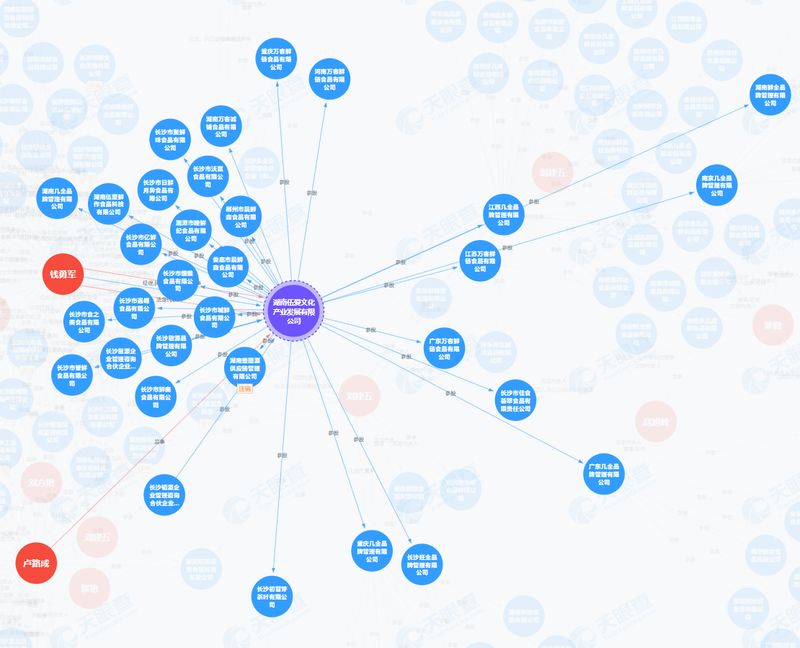
This means that there are more than half of the money that is actually being made in two secure ways: the front-end union fees and the back-end high-frequency flow supply chain differentials。
For headquarters, the money is earned as long as the goods are shipped from the plant; the more the shop is opened, the higher the flow rate, the greater the profit-making snowball at the back end. The most uncontrolled retail risks and the high cost of opening a store are at the expense of the affiliated parties。
So, how do you make money with a 1. 2 million-dollar union? How long till you get back to ben
The official answer is that the average return on investment is currently in excess of 12 months, with the total area being 4-18 months。
But is it really that easy? Now that a few words of “low maori” have been written on the front of the door, it is highly likely that only one kind of money — the scale of the gains made by extreme traffic and turnover — will be available。
Let's make the most intuitive financial push to see how high the "12 months back" needs to be supported by daily water。
Assuming a median monthly rent of 90,000, the manual conservative estimate is 100,000. After deducting these 190,000 rigid costs, an additional net gain of $100,000 per month would be required to fill 1. 2 million prior-period inputs。
According to the yangtze securities study, the average māori ratio in the fresh snack industry is between 30 and 40 per cent. Inversely, we have an ideal 35 per cent combined maori ratio: single-store water must reach 800,000 yuan a month. On a single day, the real daily turnover of the store was $26,000。
On-site observation by a financial and business institute found that the average purchase of two to three items by customers was about $20 per unit for the goods in the shop, which combined with the estimated cost of more than 40 to 60 dollars per unit for the new retail trade. Every day, at least 450 people lined up to pay。
Despite a few indications, the maximum monthly turnover of 300 m2 in chungqing, changde, could reach 3 million. But it is likely that some of the customers come from a sense of scarcity, freshness and even research. When the initial queuing dividend recedes, the first wave of fresh-sniffing customers is lost, and the water flowing from thunder every day is repurchased. But when snacks are not new to food, how many shops under normal operation are able to maintain such high daily output for 365 days today
The $1. 2 million is just a ticket, and the bigger test is still behind. So far, it's obvious that there's a lot of bottom cards: this model is too expensive for ordinary people。
Iii. A thousand stores, what does it mean to join a consortium
To date, more than 100 shops have been established in all of the country's 14 provinces and 69 cities, with an annual target of over 600, and a plan to surpass 2,000 by 2027。
For branders, size means a marginal decline in supply chain costs; but there are two tests behind this。
First, the expansion of the headquarters would be beneficial, but there was a “roll-for-roll” risk for the consortium。
It's about supply efficiency. In order to compress back-end performance costs to the extreme, brands tend to opt for a “single-point” logic when expanding their shop — opening a shop at a high density in core cities。
However, the best solution to the efficiency of supply falls to the allies, diluting the flow of single-shop customers。
According to the existing layout of several stores, more than 20 are in changsha, more than 10 are in nanchang and most of the others have entered the city. Each store also receives a brand-new sense dividend。
But with the increase in the density of the back shop, the flow of people who would otherwise belong to you could be stopped by the newly opened brother shop in the business circle。
In this “encrypted game”, headquarters is a permanent winner — because factories can earn supply-chain money regardless of where they sell. The front-end allies, however, had to roll each other in the storage pool, and the already tight 12-month curve was likely to be stretched。
And what's the concept of a 2,000 store? We can refer to a box of horses that grow in the form of food. As of the end of the 2026 fiscal year, the total number of houses in the country was close to 1,000, with the addition of the box to the nb store。
This raises the second question: if we go to 2,000 stores, the core business community resources of the first and second-line cities will soon come to the top. Sooner or later, it will all have to go down from the b1 level of the core business circle to a more gashed community street. But out of the core mall, can the community catch the $1. 2 million
At present, the maintenance of high-flowing water in more than a dozen direct-camp model shops and in the first union stores is largely due to random and impulsive consumption of people travelling through the mall. Community shops, however, rely heavily on high frequency “purpose buy-back” from residents of 1-2 km surrounding them。
Also on a thousand-storey scale, the box can enter the community because it sells three meals a day, three meals a day, and more than all of it is fresh snacks. How many mothers and ordinary batterers will spend $39. 9 a day to buy a box of morians whose mains are “0 corruption-proof”
Iv. Follow-up
Just over 20 days ago, li zongwen, the co-founder and vice-president of the consortium, also expressed at the first china fresh food forum in 2026, a commitment to focus on the asset supply chain — with a base of 150,000 square metres in changsha — planning to build plants in 20 cities across the country。
The problem is not the lack of money for the association, but rather the need to maintain the flow of customers close to the opening of the internet red shop in the long term, with high rents, manpower and losses. A small number of good stores can make money, but the size of a thousand stores requires them to be replicated in bulk。
Doors can be replicated, supply chains can be scaled up and valuations can grow, but unionized businesses always go back to the simplest arithmetic: there are not enough people in the store every day to pull out their wallets。