3-d-5 panorama — project management thinking and fighting
Course background:
In a volatile and complex business environment, there is an increasing number of projects arising from the various stages of an enterprise's operations, and the number of project managers who need to be single-handed; the importance of project and project management is becoming more prominent and the impact of project implementation on the performance of the enterprise is becoming more and more significant. The lack of understanding of project management in many enterprises, the lack of systematic and comprehensive knowledge of project management and the absence of organizational-level learning project management to develop coherent project thinking and behaviour have led to problems in the enterprise's implementation system, which does not respond well to the expectations of decision makers and even hinders enterprise development。
What are the common problems with enterprise project management? What basic knowledge should project management have? How should the project manager be located? Which individuals do the project manager need? How to collect project needs, define the objectives and scope of the project? How to manage the time of the project? Making sure that the quality of the project is satisfied by the client? How can the cost of the project be guaranteed to meet market demand? How can project risk management be implemented? How to manage the project team? How can project communication, project integration and project procurement be managed? How is the management of the project carried out? How to conduct multi-project management? These problems have brought together the problem of controlling the fallout of the enterprise project management process, which is the root cause of poor implementation and the unsatisfactory pace of enterprise development in most enterprises。
This course allows participants to learn systematically from modern project management systems and methods in interactive learning and to improve project thinking and project integrity through case analysis, group exercises and finding solutions in interactions。
Course benefits:
Knowledge gains: learning from modern project management systems, theory, processes, methods and tools
Skills:
The process of project preparation and start-up, and the setting of project objectives, in a company context
Learning on the definition of project scope, decomposition methods and techniques, and fine-tuning of project objectives
Methodologies and tools for developing project milestones and detailed project progress plans
Effective implementation and monitoring of projects; ownership of risk management principles and methodologies in projects
Increased capacity to address practical project management issues
Attitudinal benefits: recognition of the importance of project management in practical work applications, proper understanding of project management and introduction of project management thinking into daily work medium
Target audience: project manager, project management team, project functional manager, core corporate staff, etc
Course duration: 3 days, 6 hours/day (as adjusted to the client's actual situation)
Course approach: theoretical + interactive learning + case analysis + group exercises
Curriculum models:
Consortment: "3-d-5 panoramic sandboard" + "look back to the heart of the gpdda project dull disk" and its accompanying tools for exercises
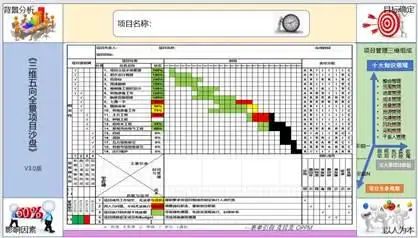
Curriculum
Module 1: project management framework and recognition of project manager roles (view, location)
First: project management conceptual framework (overview)
Exercise + discussion: team formation, exercise selection
The importance of the project: everything, everyone knows how to manage, is an important way for the organization to achieve commercial value and value delivery. Good project management allows for the organization of confused services; rationalization of structured services; breakdown of reasonable services; organicization of subdivided services; optimization of organic services
Course import
Exercise 1: team formation (early completion, team presentation)
Development of project managers
Project overview
Exercise 2: selection of projects (project description forms completed ahead of schedule, project introduction)
— the importance of the project
I. Elements for project projects ( constraints)
1. What are the factors that measure and constrain project success
2. Are these elements ranked as important? Which is more important? Or is quality important
3. The balanced arts: how to achieve the most comprehensive project
Ii. How to measure project success
1. End of story: how the project works
2. Specifically: considering the achievement of project objectives (scope, progress, cost, quality meeting set targets)
In general terms: good for everyone, good for all! — the project manager is satisfied (how to measure
4. Other elements: financial indicators, non-financial objectives, organizational strategy achievement considerations, contract formation, client acceptance, etc
Iii. How to divide the life cycle of the project into phases of governance
1. Differences between product and project life cycles
Products are like a lifetime (product life cycle) and a while (project life cycle)
2. Developmental features of the project's life cycle
— uncertainty from high to low, gradual clarity
3. Distinction and prioritization of phases/gates
Stage governance: controllable processes to avoid uncontrolled outcomes
Iv. Project management process
1. Three-dimensional composition of the project management knowledge system: project life cycle + knowledge area + process group
2. The essence of project management: the project management process
3. Project management visualization process landscape figure
Second: role positioning and competency requirements for project managers (definite)
Positioning of the role of the project manager
1. Case: who is more suitable project manager
2. Distinction between management and leadership
Self-inspection: project manager leadership self-examination
3. Core competencies of project managers: integration capacity (how to integrate)
Ii. Capacity requirements for the project mandate (hard and soft skills)
Hard skills of project managers
Knowledge of project management disciplines: project life cycle, wbs (work decomposition structure), critical path method, earned value analysis techniques
Common knowledge areas: systems science, finance, organization, psychology, common management, industry environment
Industry applications: software, manufacturing, engineering/construction
2. Soft skills of project managers
Interpersonal relations: communication (hearing + information), negotiation (illness, interest)
Team management: conflict management, team motivation, leadership
Case: how to make team incentives
Module ii: 3-d-5 panorama visualized panoramic field exercise
First: project initiation - project formulation
I. Development of the project charter
Role of the project charter: the project charter is a high-level, general, life-and-death requirement of the project
1. Project start-up elements: why, expected results, course of action, description of objectives, evaluation indicators, project scope and deliverables, stakeholders
2. Develop the overall objectives of the project and complete the project chapter cheng
Practical formula: under the environment (conditions), for the same purpose, we have to do something, this thing is responsible, the budget is done within ..
Tool sheet: project charter template
3. Identification of perpetrators: identification and analysis of persons/communities affected by the project and persons/communities capable of influencing the project
Publication of project charters formalizing the existence of the project
5. Attention given to the convening of project initiation sessions
Ii. Project establishment process
Project set-up process: initiate the process required to approve project set-up and budget allocation
Case: project process by a company in the consumer electronics industry
Discussion: corporate/organization project development process
Exercise: development of project charter + register of practitioners
Second: project planning: needs management and job disaggregation structure wbs
Needs assessment and sequencing
1. Importance of collecting demand
At first it was decided to end, and the correctness and integrity of demand collection determined the success of the project
Level and classification of project needs
Case analysis: do not take expectations as needs! (what is the real needs of different actors?)
3. Insight client needs and define project scope
Tools and technologies for collecting demand
Case: needs collection process for a telecommunications industry project
Tool sheet: demand paper, demand tracking matrix
Ii. Project scope statement
1. Project scope statement elements: project scope, acceptance criteria, deliverables, project exclusion liability, constraints and assumptions
2. Project deliverables
Project constraints and assumptions
Constraints: factors limiting selection by the project team
Assumptions: some defined premises
Case analysis: giant building construction project (the importance of project scope control)
Iii. Creation of a decomposition structure
1. Importance of creating a decomposition structure for wbs
— tasking, progress control, cost control, project implementation, project monitoring
2. Steps to create wbs
1) identification: deliverables and their associated work
2) methodology: structure and presentation of wbs
3) decomposition: from top to bottom
4) encoding: assign marking codes
5) validation: verification of decomposition
Case: wbs template for a research and development project in the consumer electronics sector
Exercise: develop scope benchmarks, project scope statement + create wbs
Iv. Allocation of project responsibilities
1. How to set the distribution of responsibilities at multiple levels
Forms of allocation of responsibilities: hierarchy, matrix, text
Allocation of responsibilities tool: raci
2. Using raci tools to develop key elements of responsibility allocation
Point one: clear delineation of roles and expectations
Point two: distinction between final responsibility and responsibility
Point three: well thought out and distributed
Point four: team engagement, not one decision
Case: a matrix of responsibility allocation for a research and development project in the consumer electronics sector ram
Iii. Project planning: preparation of project progress plans
I. Milestone target setting
Milestones: milestones or events in the project
Case: important milestone target setting
Case: list of project milestones in the telecommunications sector
Ii. Sorting of project activities
1. Logical management of project progress activities
1) activities to be undertaken
2. Logic between activities
3. Resource requirements and duration of activities
4) undertake as many activities as possible simultaneously
5) key path to the project
2. Process and attention for defining activities
1) process for defining activities
Wbs-based decomposition -- incremental clarity -- discussion/review -- publication of list of activities
2) attention to definition activities
The person who works is involved in the definition -- finely decomposed -- rolling planning -- organizational assets/experience
3. Order of activities
- analysis of the relationship of dependency among project activities, prioritization
Tools and technologies: forward relationship mapping, advance and lag, identification and integration of dependency
Estimation process (estimation of activity resources, duration, cost)
1. Estimating resources for activities and developing a project resource plan
Estimated duration of activities
3. Costing and budgeting
Relevant estimation tools: analogy, parameters, three points, bottom-up
Agile method estimation tool: story point, team speed
Development of a progress plan — key path approach