The academic community has two perspectives on the current changes in families in china. Family converters believe that individuals are increasingly disemboweled from social constraints outside family and kinship relationships, and that they no longer believe that they should fight to maintain their family line, and that they build their own social life and view the family as a resource available. For their part, the proponents of family continuity believe that we are still home-grown, married and given birth for the sake of respect and blood of our ancestors, and that the family is not the means and means by which their children grow up, but the main purpose and significance of their lives。
One of the reasons why there is little dialogue between these two types of views in the academic world is that family continuityists are not so much concerned about the family at the empirical level as they are about the ideal type and spiritual metaphor of institutions and ideas, and they are committed to understanding chinese society with traditional family ethics and home-grown culture as tools for rebuilding social order. Thus, it does not seem to be excessive for them to focus on china’s family as a value-advocacy that transcends time and as a static cultural symbol。
We need to return to our experience to determine whether there has been a fundamental change in the family in china, not only in terms of the framework choices when conducting specific family sociological studies, but also in the direction of future family-building. If the proponents of family continuity believe that the immutable nature of the family has in fact changed fundamentally, then the spiritual core upon which we reshape family and social order may need to be re-examined and treated with caution。
How to judge whether there has been a fundamental change in chinese families? Family continuationists have made it clear that it depends on whether the chinese people still have their home as the source and destination of life, whether the meaning of life depends on the fate of their parents and children, and whether it is based on the senses and feelings of a single book (parent-centred) and one (father-child, mother-child). Specifically, we can look at it through people's fertility views。
Type of marriage and change
Based on the research accumulated by the author's team over the years, the attitude towards marriage and childbearing has undergone the following changes。
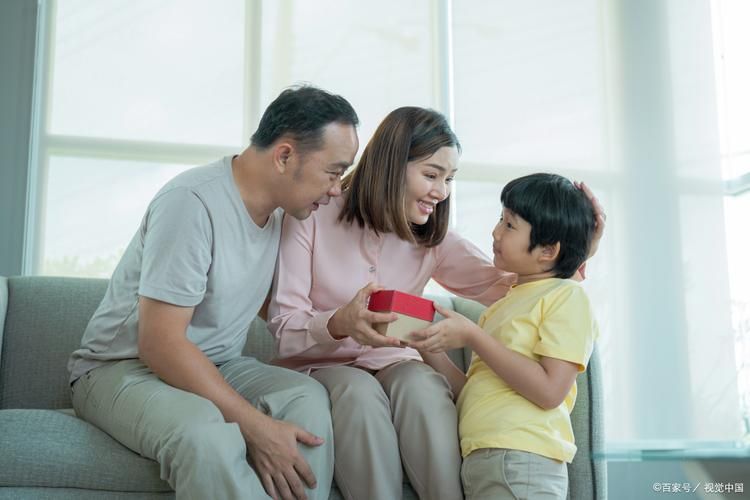
Closed. Before the introduction of family planning in the early 1980s, the term “closure” was by no means the most odious term, and if it were to be directed in the face, it would be basically the end of a relationship. Thus, the idea of progeny is deeply rooted。
8th sister and 9th sister. In the 1980s, large families with many children were common, and after having given birth to eight daughters, the zhao dwarf of the a village marketing agency gave birth to a son. Although he lost his job and had too many children in his family to feed himself, zhao's life was made sense by the fact that he had a son and had a straight waist and spoken loudly. The people around felt that he had had too much luck, had had so many daughters to have a son and was too poor, but did not feel how wrong he was to do so, after all it was normal to want a son to pass on。
I don't believe you're dink. In 1999, shao chun, 33 years old, left his home town to study in the capital, an important reason being the absence of children. Every day, faced with a variety of concerns, inquiries and different views, she felt overwhelmed and left her home town. There are occasional references to childbirth at university, and she says she's going to be a dink. In fact, people are not convinced, because there were so few people who genuinely chose not to have children at that time。
Daughters can also pass on their descendants. In 2013, mr. And mrs. Xiao liang gave birth to their daughter beibei after 80 years of age, knowing that their parents wanted their grandchildren, and that they were planning to have another child. To that end, she felt that it was right to have a child, leaving her mark on the world, but the legacy was genetic continuity and the daughter could inherit it as well。
Who gives birth and who decides. "i'm still willing to have a child, but having a child has a greater impact on the woman and she's paying more, so i think it's up to her to decide. She's afraid of having children, and she doesn't like them that much, so she doesn't
I may not be entitled to have children. My cousin creek (born in 1992) attributed the reason why she was determined not to have children to the disharmony of her original family: "i don't believe that even when i was little, i felt that i was determined never to become my mother, but it was just like her, and it was unstable. In case i don't like my children, my children don't like me.” then she said, “in the present environment, more and more people don't want children or get married, and give me another option. In fact, being happy is the most important thing, and marriage is a state or stage of life.”
It's too hard to raise a child. Little lian's friend is a programmer with low grades and low incomes, but lives on his own, without consideration of development and future life. However, when married and had children, the situation would soon become more complex and his career and income might be difficult to maintain a decent family life, so the idea was not to marry or have children。
It's better to have a child than a child. In 1997, she lived in a very traditional family along the coast, and was greatly encouraged by the patriarchal family climate and the vulnerability of local women. Although she went out to study and left her home, the resistance to procreation led her to refuse to even marry: “after all, if she was married, the mother-in-law would have reason to ask me to give birth.” she was pleased with the three cats she and her boyfriend had。
Fertility means nothing to me. The first-born family of the little girl in the creek is happy and healthy, but the young one is determined not to have children, on the grounds that she “cannot get happiness and achievement from childbirth”. She was very clear: “something with a sense of achievement and happiness is probably the results of academic research, the effectiveness of physical exercise, the development of new skills, and so on, and so on. Only happy things include watching movies surfing on the internet." at the same time, she was very calm or negative: “my family is happy, but the world is not so good, and there is too much suffering in a lifetime to make a child that does not exist, and i do not think it is necessary to take the risk of `possible suffering' for `possible happiness'.” there are no few people with such ideas。
Analysis of the nature and mechanisms of family change
In the above-mentioned case, the “after-80s” light action, although changed, is still thought and acted within a traditional one-size-fits-all framework, consciously viewing fertility as part of a mobile and continuing environment and striving to sustain it. There has been a fundamental change in the situation of “post-90” creeks and small forces, small snails and others, who no longer see themselves as part of and necessary bridge for the continuation of the family, nor do they feel that they have the duty and responsibility to continue the family. On the contrary, their primary consideration is personal feelings, especially happiness and happiness. Compared to previous generations, “after 90” shows a fundamental change in individual perceptions, i. E., mutations。
Thus, “the life of every human being begins with his son and ends with his father”, and “the knowledge of mercy and good will” is no longer iron law. There is also doubt about the idea of rebuilding family relations and social life, as those individuals who are represented by the “after 90” list, who have felt the love and care of their parents and may be filial to their loving and loving parents, but who do not necessarily wish to be compassionate fathers again, and who are weakened in the very core of a caring society。
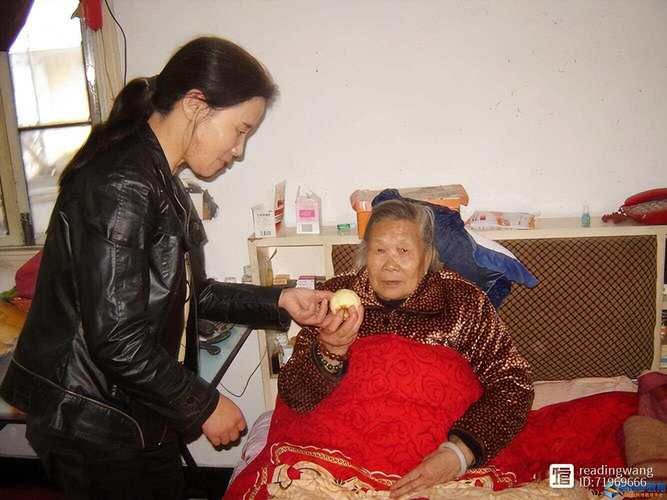
The mutation of “after 90” is the result of long-term accumulation. The change in the social fabric has profoundly affected the pattern of families in china since late dawn. Since the establishment of the new china, the economic foundations and the ceremonial order of the traditional patriarchal system have gradually been weakened by land reform and the new legal framework. This has been accompanied by the suppression of traditional family ethics, which have led to the partial loss of traditional ethics in the socialization of the family, which is also the main reason for the change of attitudes after “80” and especially “90”: the environment in which their parents have grown has changed。
After the reform and opening up of the economy, the emergence of the private sector ended the state's monopoly on the allocation of resources and opportunities for life, and individuals and families achieved a new disempowerment. Subsequently, changes in key structural factors, such as state-driven institutional reforms, higher education development and the commodification of housing, have had a profound impact on family relations and family structures。
In particular, the implementation of the family planning policy has weakened the responsibilities of the lineage generation, with the corresponding phrase “all children are born the same” and “only one good child is born and the state is given old age”. As a result of specific policies, many single-child families have to accept the fact that there is no blood transmission in the strict sense of the term. The intensive state discourse has also led to the gradual acceptance by some of them of new ideas. Since the birth of a son is no longer necessary, the notion that the birth of a child is no longer sacred or of transcendental significance, it is easy to understand that the younger generation has developed the notion that “birth is not in itself necessary”。
It is also necessary and important to listen to the story of the child and to understand the value of birth to the child and to develop an effective and meaningful production and discourse that fosters a positive view of fertility, in addition to the time, economic and service support available。
(professor, faculty of social sciences, china university of science and technology)