


Portable fire extinguishers can be divided into pressure extinguishers and gas bottle extinguishers by the pressure type of the driving gas。
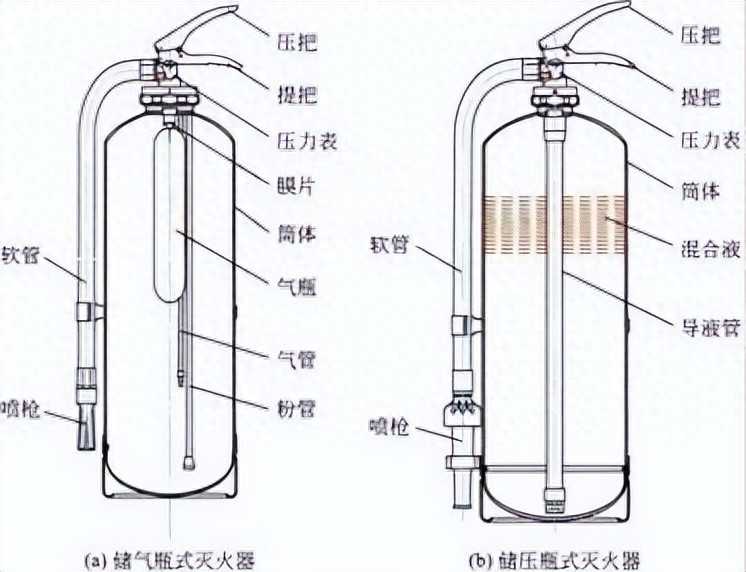
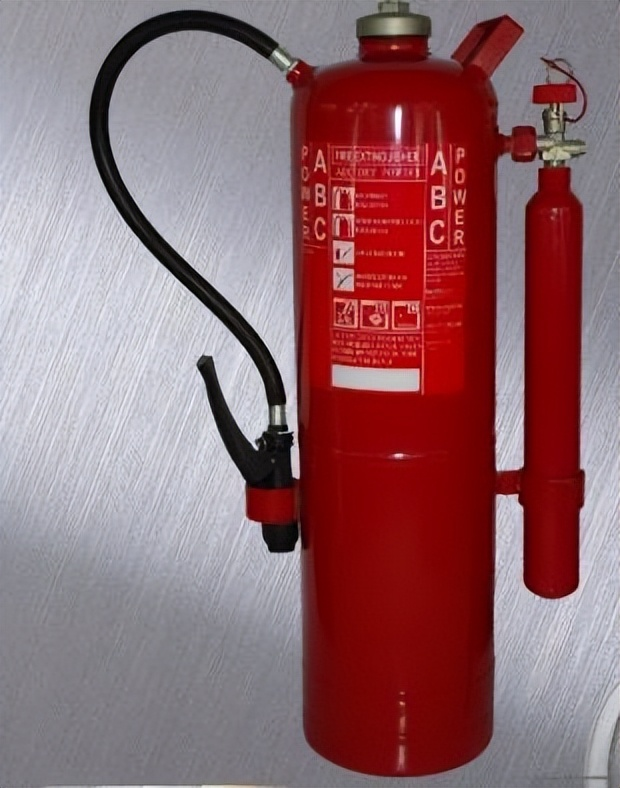
Gas cylinder fire extinguishers whose fire extinguishers are driven by pressure from compressed or liquefied gases released from cylinders of fire extinguishers. The fire extinguisher appears to have a larger cylinder, accompanied by a smaller cylinder。
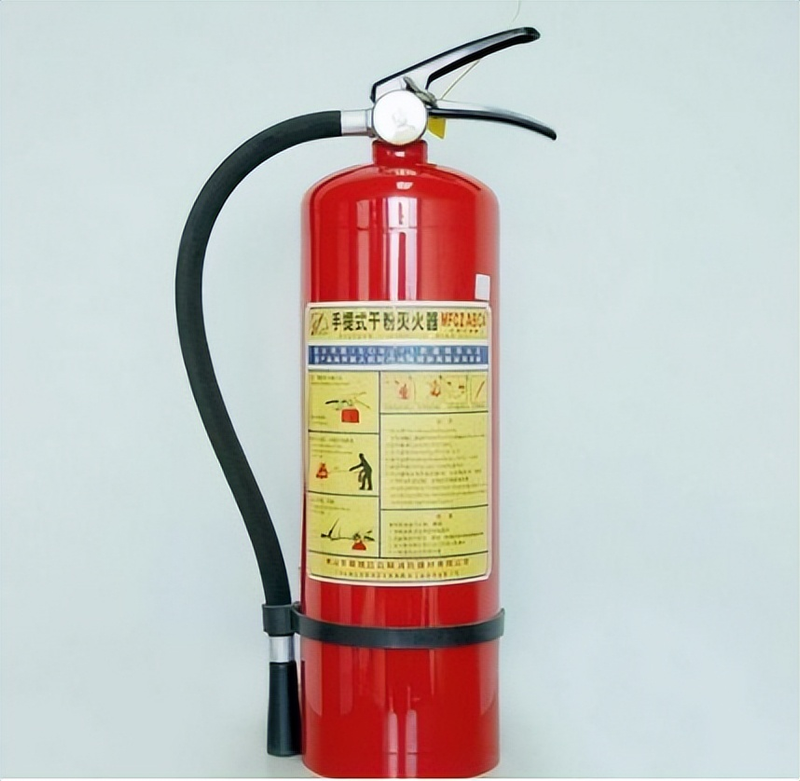
(b) a pressure extinguisher, whose fire extinguisher is driven by a compressed gas or by the vapour pressure of the extinguisher stored in the same container as the fire extinguisher. The fire extinguisher appears to have only one container。
Seal performance test
Gas cylinder fire extinguishers: the annual leakage rate or annual leakage of the cylinder shall not be greater than 5 per cent of the mass of the gas in the bottle and the smaller of 7g。
Storage fire extinguishers: the annual leakage rate should not be greater than 5 per cent of the working pressure when the pressure measurement method is used. When weighing inspections are used, annual leakage rates or annual leakages should not exceed the smaller values of 5 per cent and 50 g of the rated charge。
Operational performance
Storage extinguishers are relatively easy to use and do not require additional operation of gas cylinder valves; when used, they need to open first the gas cylinder valves, with a further step in operation。
Apply scene
Gas cylinder fire extinguishers are better suited to respond to a number of larger and more distant fires because of high driving gas pressure, faster jet speed and longer range。
The injection of pressure extinguishers is relatively smooth, more suitable for day-to-day small fire recovery and more widespread。
Safety
Gas cylinder fire extinguishers are dangerous and may cause large vials to explode when the gas in the small cylinder enters a large bottle free of pressure at normal and are less commonly used。
The internal structure and working principles of the pressure extinguishers are more secure, and most of them are currently used。
Since fire extinguishers do not need to undergo an annual check-up and can only be performed in accordance with the end-of-life requirement, they must be scrapped, either in gas cylinders or in pressure。
1. An area of rust in the cartridges greater than or equal to one third of the overall area of the cartridges and a puddle on the surface。
2. Manifest deformation of the cartridge with serious mechanical damage。
The object has a crack and is free of charge。
4. There is an unreasonable structure of the cylinder at the flat floor。
5. There are no portable fire extinguishers for intermittent jets。
6. Failure to identify the name of the production unit and the time of its release, including the loss of the inscription, the vagueness of the inscription, the inability to distinguish the name of the production unit, and the inability to identify the steel mark at the time of its release
7. The cartridges contain patches such as welding, copper welding or welding
8. Burned
9. Hand-held, cart-based water-based fire extinguishers left the plant for six years. Hand-held, wheeled dry powder extinguishers and clean gas extinguishers left the plant for 10 years. Handheld, pusher-type carbon dioxide extinguishers left the plant for 12 years。
Summary
The advantage of gas cylinder fire extinguishers lies in their relatively simple structure, which facilitates maintenance. As a result of the separate storage of the driving gas and the fire extinguisher, the quantity of the fire extinguisher is higher at the same volume and the dry state of the fire extinguisher is maintained. The disadvantage is that additional space is required for the deployment of the drive cylinders, which may have an impact on fire suppression if the drive gas leaks。
The advantage of pressure extinguishers is that they are structurally compact and occupy relatively small space. There is no need for additional power-driven cylinders, which reduces costs and maintenance difficulties. The disadvantage is that fire extinguishers are stored in combination with the driving gas, that long-term placement may expose the fire extinguisher to tide and that there are high requirements for container sealing and stress resistance。
In day-to-day use, regardless of the type of fire extinguisher chosen, it should ensure that it is in good working condition and that it is regularly inspected and maintained to ensure its reliability。



