Orm's law is the “ground-based formula” of the electric industry, which cannot be separated from either the test brush or the routine connection. It's not hard to see "electric currents, voltage, resistance" when many zero-base starters see it. I'll tell you the law of om today, so you can read it and learn it。
First, don't be frightened by the law. What is om's law
When people hear the word “law”, they think it's a deep knowledge of physics, far from themselves. In fact, om's law, the most basic and common “plus-minus-and-minus” in the world of electricians, is the central basis for all circuit calculations and failure screening。
In short, om's law is a formula that describes the relationship between voltage, current and resistance. Just as we cook daily, the voltage is “water pressure”, the current is “water current”, and the resistance is “bold pipe”, the relationship between them can be summed up in one formula: i = u/r。
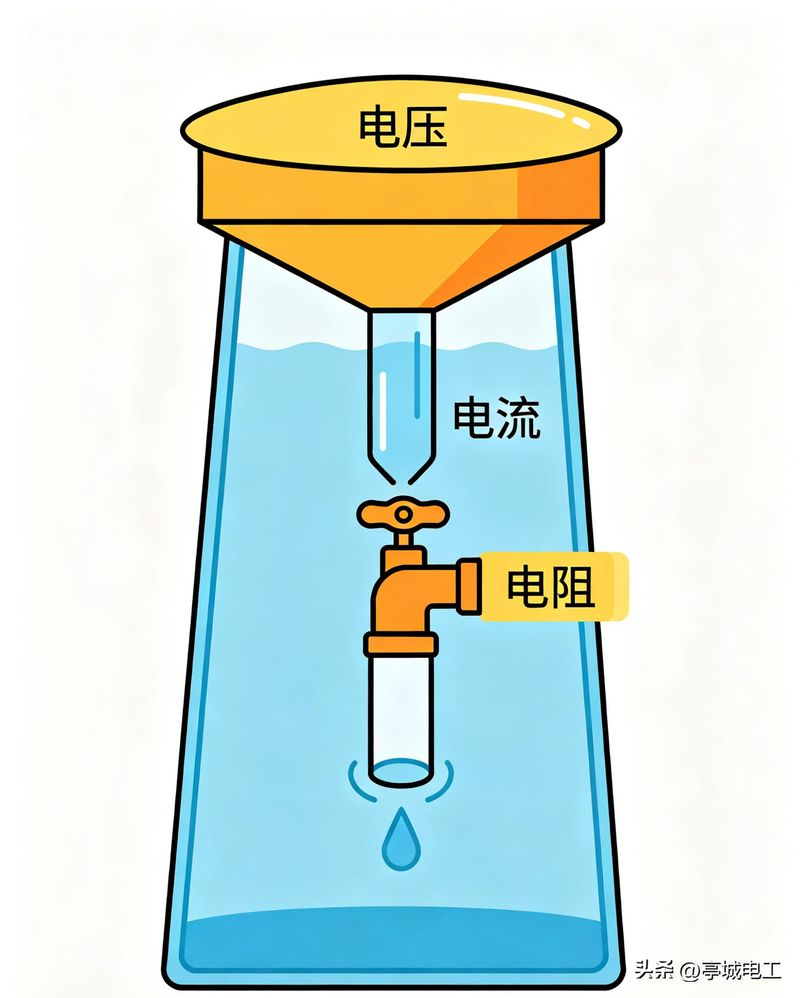
The zero base is not a hard-backed formula, but the relationship between the three “principals” is understood first, and then the calculation goes to the canal。
Two or three of the protagonists understand, and the om law is half
2. 1 electricity: "power sources" in circuits
The voltage is like the “water pressure” in the pipe, which drives the charge-directed movement. Without the voltage, the charge will not flow and there will be no current in the circuit。
In our day-to-day electrical scenes, volts (v) are the units of volts, such as 220 v for home exchange, 380 v for plant power, which is the number of volts. Like the higher the pressure, the faster the current, the higher the voltage, the greater the current in the circuit, provided the resistance remains constant。
2. 2 electricity: “water flow” in circuits

The current is the “flow” of the charge-directed movement, like the flow of water in the pipe, in amber. The size of the current directly determines the working state of the circuits, such as light bulbs that are not lighted and the power is not turned around, all of which is related to the current。
The current is invisible, but it has a clear direction: in direct-flow circuits, currents flow from positive to negative sources; in communication circuits, current direction changes cyclically, but the core logic of om's law still applies。
2. 3 electrical resistance: “retrenchment wall” in circuits

Electrical resistance, like the “barrel resistance” in a pipe, impedes the flow of electricity in om. The greater the resistance, the greater the barrier to the current, the smaller the current; the smaller the resistance, the easier it is to pass。
The most common types of electrical resistance in life are light bulbs, electrical heat wires, which work using electricity currents to prevent heat and light. There are different types of resistance for different materials, for example, copper wires, which are less resistant and more smooth through the currents; and fine wires, which are more resistant and more likely to heat than crude wires。
Iii. Formula disassembly: three volumes, one formula, one formula, one that is always different
The core formula of om's law is only one: i = u / r, i. E. Current (i) equals voltage (u) divided by electrical resistance (r). The zero base will solve the vast majority of circuit computing problems by remembering the formula and learning its two variants。
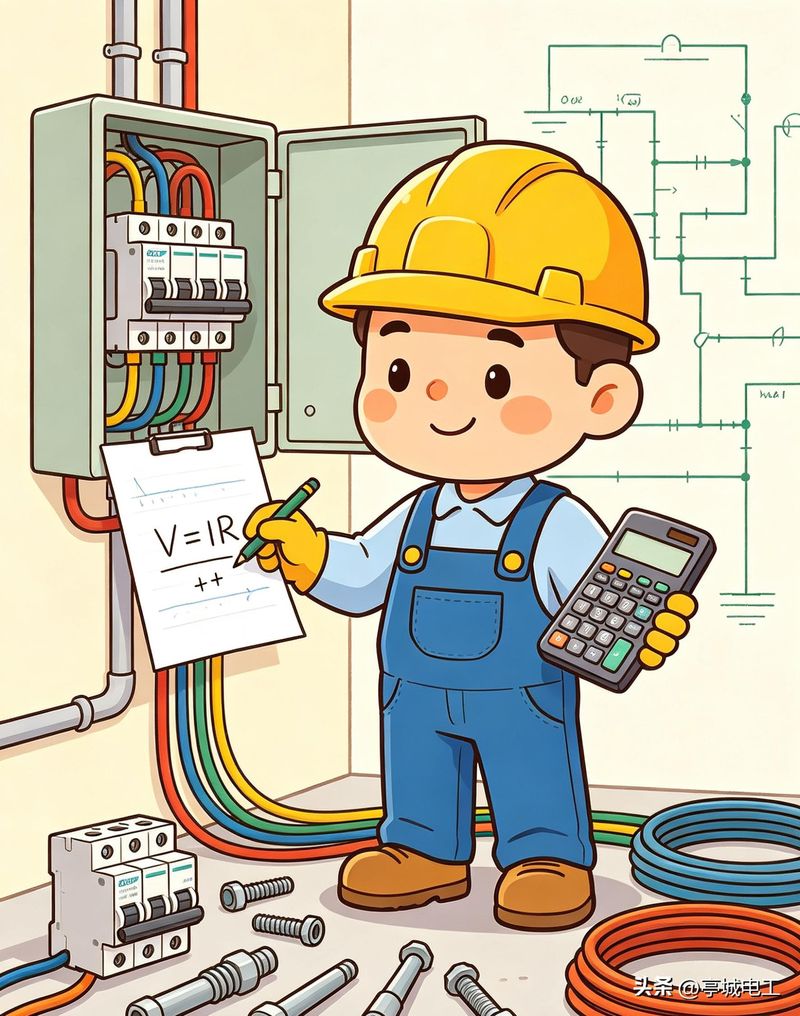
3. 1 formula one: power demand u = i x r
This is the formula you use when you know the currents and the resistance in the circuit, and you want the voltage. For example, an electrical barrier is 10 light bulbs, passing through 2as, and its voltage at both ends is 2a x 10 = 20v。
3. 2 formula deformation ii: requiring resistance r = u / i
That's the formula you use when you know the voltage and currents in the circuits, and you want to resist. For example, a light bulb attached to the 220v power supply, passing through a current of 0. 5a, is a resistance of 220v / 0. 5a = 440 times。
The three formulas are one thing, but they are written differently, depending on what is known. The zero base does not have to go back to the three formulas, but with i=u/r in mind, the two remaining deformations can be introduced with the “multiplier conversion” of primary schools。
Iv. How does om's law work with the electric field
Many people learn formulas, but they don't know how to use them in actual electrical work, which is the word "warlord" on paper. In fact, om's law is used everywhere in routine connection, failure screening, safety protection。
4. 1 scenario i: calculating electrical currents, choosing pairs of guides and switches
For example, how many air switches do you need to connect a 220v power 1000w? Power flow is calculated by omm's law: according to p=ui, current i=p/u=100 w/220v≈4. 5a, combined with the safety flow of the guide i=u/r, a 10a air switch is selected that is safe and does not jump frequently。
4. 2 scenario ii: troubleshooting, rapid positioning problems
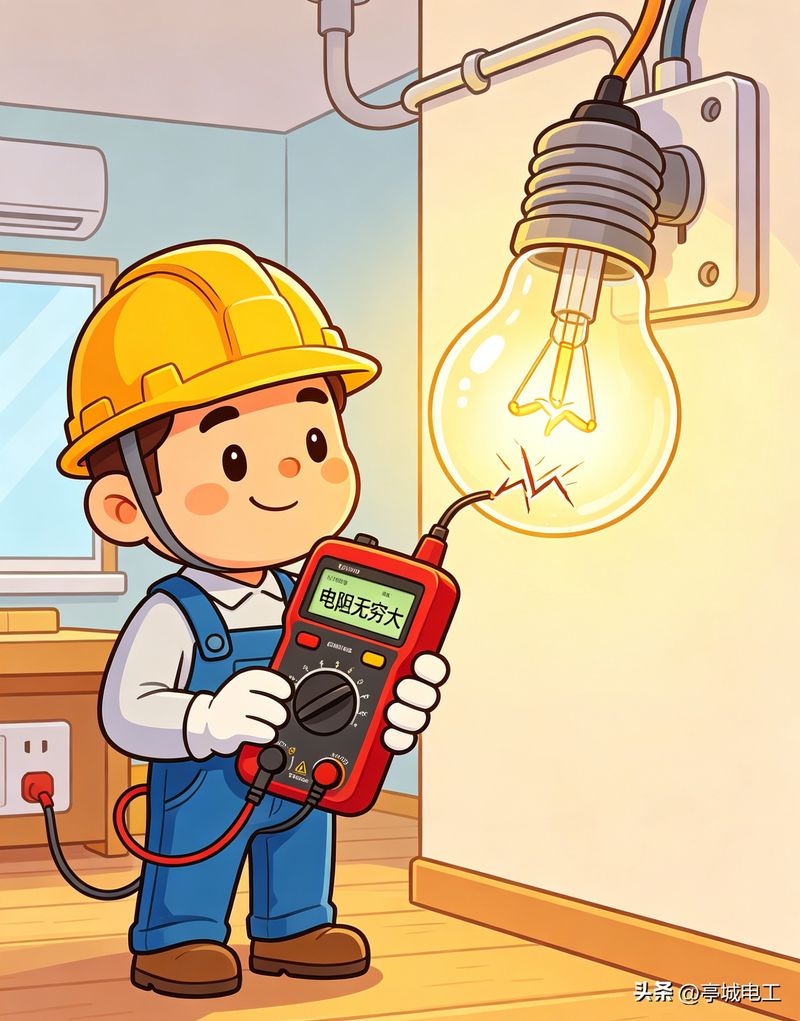
For example, a light bulb that is attached to 220v power is not lighted, with a universal meter measuring the power at both ends of the light bulb at 220v, indicating that the power supply is working; and a current of zero, which, according to omph. I = u/r, has a normal current of 0, indicating that the electrical resistance is infinite, i. E., the light thread is broken or the circuit is broken, and the failure point is directly located。
4. 3 scenario iii: understanding safety and avoiding electrical accidents
A lot of people don't know why it's easier to get electrocuted in a damp environment. Because the electrical resistance of the water is smaller than that of the dry skin, when humans come into contact with the body, the resistance of the wet skin becomes smaller, and the current i becomes larger and more likely to cause electrocution under omg law i = u/r. By understanding the law of om, you can understand the principles behind safety norms and no longer operate blindly。
Five, zero basic learning error. Don't let these pits keep you
5. 1 deadback formula, not understood

Many people are familiar with the formula but do not know what each letter stands for and do not have practical problems. Learn om's law, understand the logic of “voltage pushes currents, resists currents”, then write down formulas before you can really eat。
5. 2 confusion to the point where the formula is not applicable
The om law applies not only to straight current circuits, but also to pure electrical resistance loads of communication circuits (such as light bulbs, hot wires), which need not be complicated by “communications”, with the same core logic。
5. 3 neglect of units, error in calculation
The calculation must be based on unit uniformity: volts for volts for volts (v), ampei for currents (a), oms for electrical resistance. If units are not uniform, the result is certainly wrong, and this is the most easily made mistake by zero-base starters。
Vi. Initial steps
Orm's law is the "knocking bricks" of the electrician base, which you learn to understand the principles of many circuit changes. For example, in a chain of circuits, total electrical resistance is equal to the sum of the resistance, the current is equal, the voltage at each end of the resistance is proportional to its electrical resistance; and in a chain of circuits, the voltage of the circuits is equal, the total current is equal to the sum of the circuits, the secondary roads are smaller, the passing is larger。

These seemingly complex circuit patterns are essentially an extension of om's law. Zero foundations don't have to eat complex strings and connect circuits at the start. First, the om's law will be perfected, and then the knowledge behind it will naturally be integrated。
Orm's law is never a big problem. It's just the most basic “language” in the electrician world. Whether it's a test brush, a routine connection or a failure check, it's the core tool you can't leave behind. There is no fear of zero, starting with an understanding of the relationship between “voltage, current, resistance”, remembering a formula, learning to deform it, combining the actual scenes with many exercises, and learning it quickly. With om's law in hand, you get the electrotechnical's “entry keys”, and it'll be easier to follow。
# om's law # # electrician # electrician # electrician # electrician knowledge # electrician base # electrician exchange #