In the day-to-day production of enterprises, problems with instrument failure often arise, which requires instrument maintenance staff not only to have a high degree of failure judgement, but also to use appropriate inspection tools. So, what are the indispensable little tools that we use in the various components of instrument maintenance? Next, let's find these amazing assistants。
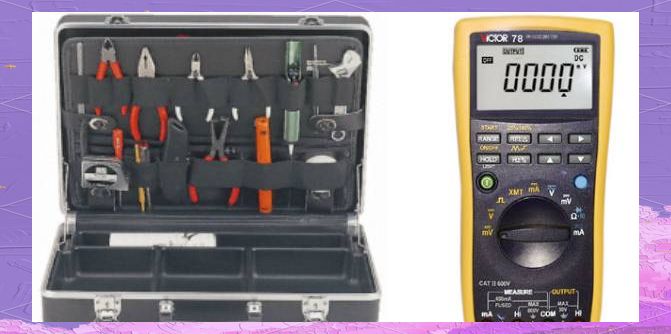
Overview of instrument workshop tools
On the road to instrument maintenance, we are accompanied by a series of indispensable assistants. They are small, but they can play an enormous role in helping us solve one problem after another. Now, let's take a look at these magic tools。
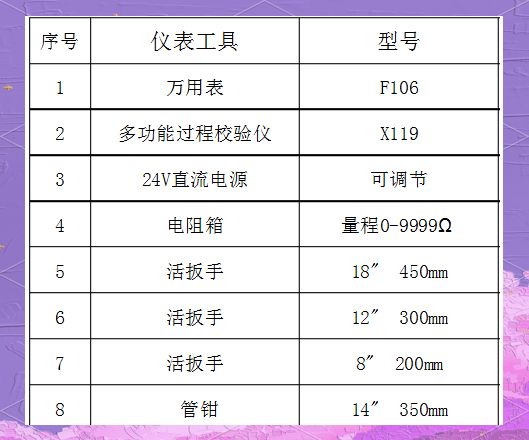
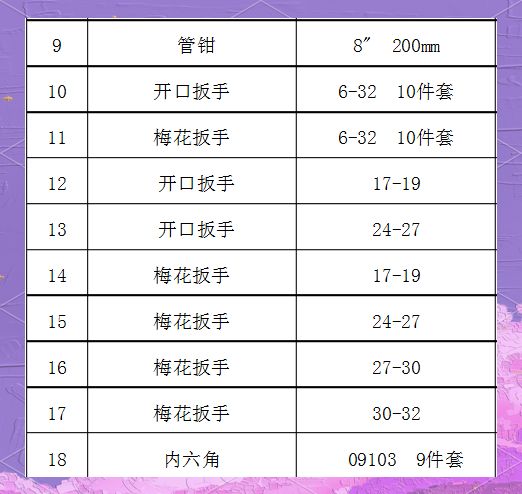
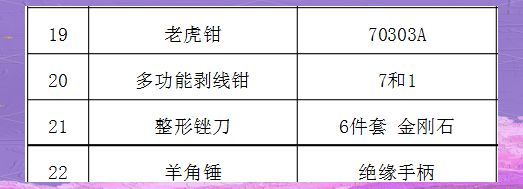
Tool detail
First, let's look at one of the key tools in instrument maintenance -- screwdrivers. The screwdriver, which is also often known as a head starter or a cone, is designed in one font and a cross for different maintenance needs. A single-word screwdriver is used primarily to tighten or remove bolts with a single-word sink, while a cross screwdriver is designed to tighten or remove bolts with a crossbow. These screwdrivers play a vital role in instrument maintenance。
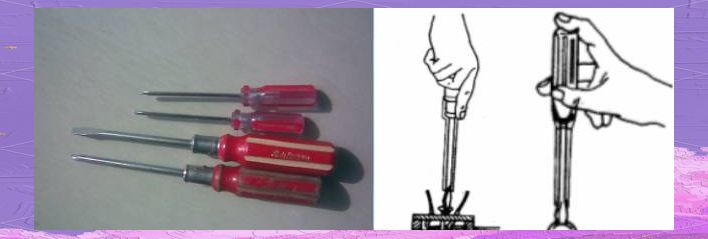
Use of caution
During instrument maintenance, the screwdriver is selected to select the appropriate specification according to the size of the screw and to avoid damage to tools or screws due to mismatches. At the same time, screwdrivers may not be used in the course of use as head starters in case of surprise. In particular, it is important to ensure that hands do not touch the metal pole of a screwdriver to prevent electrical accidents. To further ensure safety, metal poles may be fitted with insulation tubes in order to prevent them from touching the human body or the adjacent electrical body。
Now, let's look at another important hand tool -- wire clamps. Thread pliers, also known as tiger pliers or tiger heads pliers, are the ideal option for holding, fixing, and turning, bending and cutting wires. The handle is partly protected by insulation to ensure safety in use. The steel wire pliers are of various specifications, commonly 150 mm, 175 mm and 200 mm, and have an insulation shield of up to 500 v, and are therefore primarily suitable for maintenance work on low-pressure belts。
Use of caution
Prior to the use of wire clamps, it is important to check the insulation performance to ensure the safety of electrical operations and to prevent electrical accidents. When conducting a wire with electric shear, it is strictly forbidden to cut two lines at different levels, such as a line with zero or a line with a line to avoid short-circuit accidents。
In addition, we need to know about another hand tool — the platinum. It is sophisticated in its head design and is well suited to operate in a narrow workspace or for electrical maintenance of low-pressure electrical equipment. Pointy pliers can also be used to cut thin wires. It displays a high degree of flexibility with regard to instrumenting and connection production or maintenance. In the selection of the plating, preference should be given to acid-resistant plastics tubes with insulation handles with a resistance capacity of more than 500 v. The usual specifications for plating include 130 mm, 160 mm, 180 mm and 200 mm。
Ripple
Scratches are tools designed to exploit the insulation of small diameter lines, as shown in the figure. The handle of the tool is good insulation and can withstand 500 v. Ripples are usually divided into manual and automatic categories. Manual stripping is simple, while automatic stripping is more intelligent to adjust to the size of the metal wire inside the lead line and to ensure that it is not damaged during exploitation. In addition, the self-defeating clamps also have the ability to adjust the length of the strips, which further increases the ease and efficiency of use。
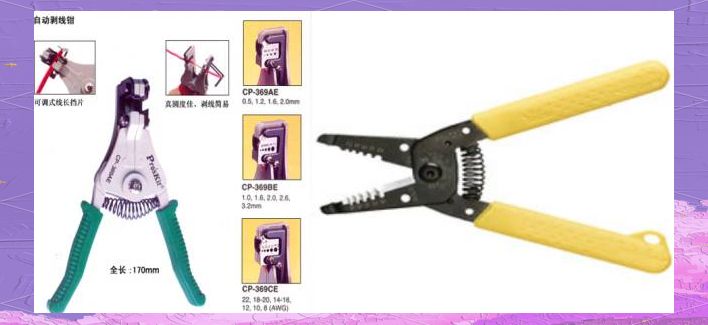
Slash
Tilts, also known as flats, are indispensable tools in the field of electronic overhaul. Its head is designed to be flat, which makes it very suitable to cut the guidance lines, and the excess lead of a metaware. In addition, it can replace scissors and be used to cut materials such as insulation tubes, nyonza cards, etc. The handle of the slash is usually made up of iron handles and insulation tubes to ensure safety of use. Usually, the commonly used slant-plugs should have more than 1,000 v for insulation。
Electric knife
Electrical knives, as shown in the figure, are indispensable tools for assembly maintenance. It is used mainly to cut the insulation skin of the guidance line and can also be used to cut wooden stakes and ropes, etc. Depending on the size of the blade, electricians can be divided into large numbers (112 mm) and small numbers (88 mm) to meet different work needs。
Attention when using electricians' knives:
They shall not be used in electrical carrying operations to ensure safety and avoid electrical accidents。
In the course of its use, it should be ensured that the knife is cut in the face and that extra care is taken to avoid cutting fingers。
When cutting the insulation of the guidance line, a smaller angle should be maintained between the surface of the knife and the guidance line to prevent the cutting of the guidance line。
Upon completion of use, it is essential that the knife be folded back into the handle in time to ensure the integrity of the knife and the safety of its use。
Next, we will introduce another common tool — the operational wrench。
The active wrench, also known as the living wrench, is a tool specifically designed to tighten and loosen the nut. It consists of the head and handle, and the head structure consists of the active lip, the trigger, the dumb lip, the snail and the axle. Through a snail, the size of the trigger can be easily adjusted to the different sizes of the nut。
Attention when using the active wrench:
It is not possible to reverse the active wrench in order to prevent damage to its active lip。
Avoid the use of force-added poles to extend handles to increase wrench rectches to ensure the safe use of tools。
Do not use the active wrench as a crowbar or a hammer to avoid unnecessary damage。
Next, we'll introduce a pen, also known as an electric pen. It is a commonly used auxiliary safety device used to detect whether a conductor up to 500 v or an electrical equipment shell is electrical. Handovers can be applied flexibly with knowledge of their principles and circuits. The common holding of electric pens is different from the daily writing of pens, but the end of the pens should be held against the heart or index finger, while the other fingers should hold the pens。
The role of a pen
Power pens, also known as electric pens, are a practical security detection tool. It has a variety of functions, including the identification of communication and direct currents, the determination of the positive and negative poles of direct currents, the monitoring of the break-off of the zero line, and the detection of objects with static electricity. When used, a series of security precautions are followed to ensure accurate judgement and physical safety。
In addition, the universal meter is a multifunctional instrument capable of measuring multiple parameters such as current current, current voltage, exchange voltage, resistance, frequency, current and capacity. It is widely applied in the electronic and electrical fields and is an indispensable assistant to engineers and maintenance personnel。
The universal scale, as a multifunctional instrument, plays an important role in the electronic and electrical fields. At present, digital kiosks are gradually becoming market mainstream and there is a tendency to replace analogue instruments. Compared to analogue instruments, digital universal meters are preferred and more easily used by a wide range of users with their high sensitivity, high accuracy, clear display, strong overloading and portability。
Note of use of digital kiosks:
Before embarking on the use of digital forms, we need to carefully read the instructions to familiarize ourselves with the specific roles of power switches, quantum switches, plugs and special plugs. Next, the on/offf switch is placed at the on position and the 9v battery is checked. If battery voltage is insufficient, there will be a corresponding hint on the monitor, at which point the battery will need to be replaced in a timely manner. If the monitor is not displayed, the operation should follow a specific step。
In addition, attention needs to be paid to the symbol attached to the test pen plug, which indicates that the input voltage or current should not exceed the indicator value and is intended to protect internal circuits from damage. Before testing, it is important to ensure that the functional switch is placed at the required scale, with due regard to the positive and negative polarity of the red and black counters。
Following the following seven channels of use, we can ensure safer and more efficient use of digital kiosks:
Blocks are determined prior to measurement, so as to avoid miscalculation。
In the measurement process, do not randomly dial the selected spin button, especially for the measurement of high voltage or large currents, in order to avoid the arc generation or conversion of the switch contact point burning. Upon completion of the measurement, the range selection switch shall be moved to a space position。
This should be used at the level of a table of all uses and ensure that the sight is parallel to the pointer。
Select the appropriate scale, selecting a larger scale at the beginning, and then gradually adjust it to a smaller scale depending on the directional angle of the pointer until the pointer moves to around 2/3 of the full scale。
In measuring resistance, care should be taken to operate without electricity and to adjust zero measurements. Every time the electrical block is replaced, om zero should be readjusted。
Remember that the black pen is negative and that it is connected to the positive pole of the internal battery on the electrical block。
The current is measured by a series of 10,000 meters, while the voltage is measured by a combination of two ends。
(ix) keeping in mind the polarity, single-handed operation is safe
When measuring currents and voltage, it is important to ensure that red and black forms are correct and avoid reverses. At the same time, it is recommended, for safety reasons, that one-hand habits be developed。
Besides, what other magic measuring tools do you know? What are their unique features and applications? We'd like to share our comments in the comment area and discuss them with you。