You may find it in every month's calendar: the moon's shape is not always round, nor is it always bent. It has been observed that the monthly change cycle is about 29. 5 days, while in the agricultural calendar, the previous period usually occurs between the first seven and the eighth. These phenomena look like “coincidence”, but behind them are the common results of the celestial movement and our perspective. Understanding them not only enhances astronomical literacy, but also allows you to “read the sky” in a more scientific way in everyday life. The moon changes why #29. 5 # on the moon #
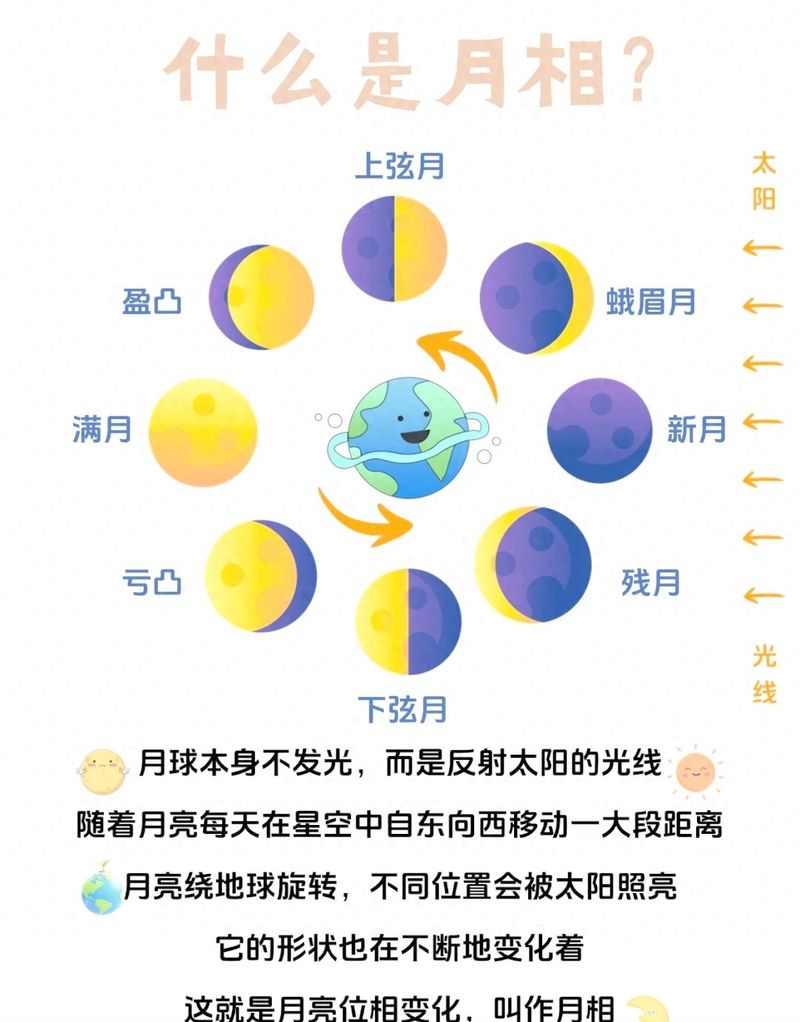
What's the moon? You're actually seeing the "lighted face."
The moon itself does not glow. The moon we see is dark and dark because its surface is lighted by the sun, and what you see on earth is the shape of “the part of the moon where the sun shines”。
So the moon is not "changed," but:
The moon rotates around the earth
The earth is spinning around the sun
The relative location of the three changes
From the perspective of the earth, the moon is changing in its light。
What you see with your naked eyes, “the new moon, the albatross, the upper string, the full moon, the lower string”, are, in fact, the “blank line” at different angles。
Why is the monthly cycle about 29. 5 days
It is common to say that the monthly change cycle is about 29. 5 days. The term “cycle” here usually refers to the time between a synodic moon, which is “the time between a sorghum (the moon is in the same direction as the sun in the sky) and the next skunk”。
The month of hope is about 29. 5 days because of the need for “re-alignment” between the perspective of the earth's system and the direction of the sun. A more intuitive understanding:
The moon turns around the earth (about 27. 3 days relative to the star), which means that the moon's position in the sky is “over”。
But what we care about is the moon. The direction of the sun in the sky is also moving, as the earth is also orbiting the sun。
Thus, from one “with the sun” to the next, there will be more than 27. 3 days。
The average amount of time ultimately received is:
See the moon 29. 53 days (approximately 29. 5 days)。
So the "about 29. 5-day cycle" you're observing is actually a combination of the relative motion of the earth, the moon and the sun。
Why is it like this
First, the concept is clear: the previous moon is that the moon is in a state of “sun-earth-lunar angle about 90°”. In more general terms, you look at the earth and see about half of the moon on the right side of the moon (which is usually close to this definition for most parts of china during common observational times; the opposite is true for observations in the southern hemisphere)。
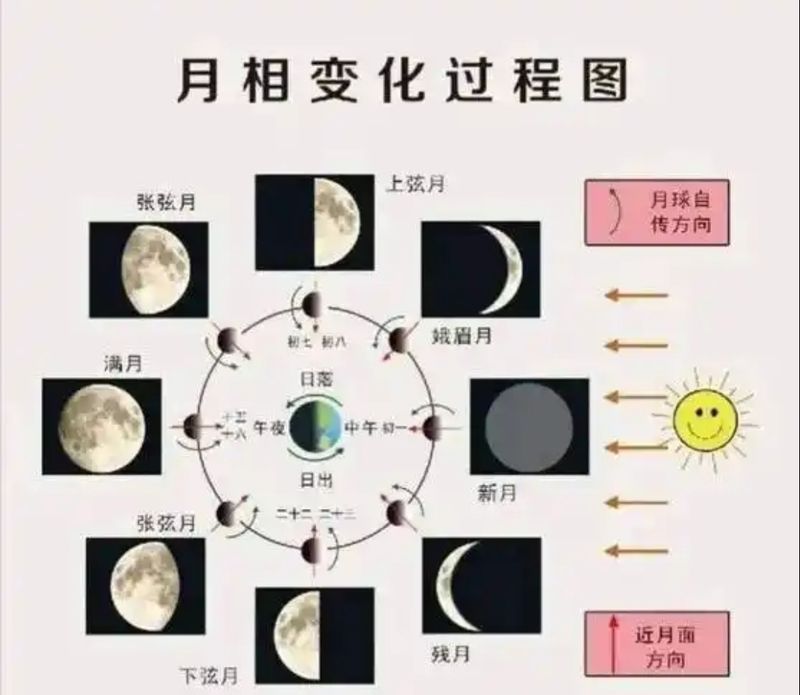
So the question is: why does the string often appear in the seventh and eighth years of the agricultural calendar
This can be explained by “time lag”。
From the new month (scroll) to the upper string (about a quarter-month cycle), about a quarter of the prospective month。
It's about 29. 53 days, so about a quarter:
29. 53 days
Thus, the upper string usually falls between seven and eight days from the beginning of the first month (near the beginning of the new month), that is to say, the beginning of the seventh year。
You find it's not a “death rule”: sometimes at the seventh grade, sometimes at the eighth grade, and occasionally even more. This is because:
(a) the real promise moon is not entirely fixed at 29. 53 days (with minor changes)
The monthly calculation of the calendar and the accuracy of the sky will be calculated and corrected
Weather and observation time will also affect whether “you can see it on that day”。
But the general pattern is very close: the first seven and the eighth are very common empirical responses。
What do you think
In order to really turn the monthly pattern into “knowledge you can verify”, a simple observation can be made:
Time for observation
The upper chords are generally more visible from dusk to night. You can choose a fixed time, like around 7:00 p. M。
Is it half the circle that records the moon? Is the bright side left or right? Is the bright side radicalizing
Date recorded
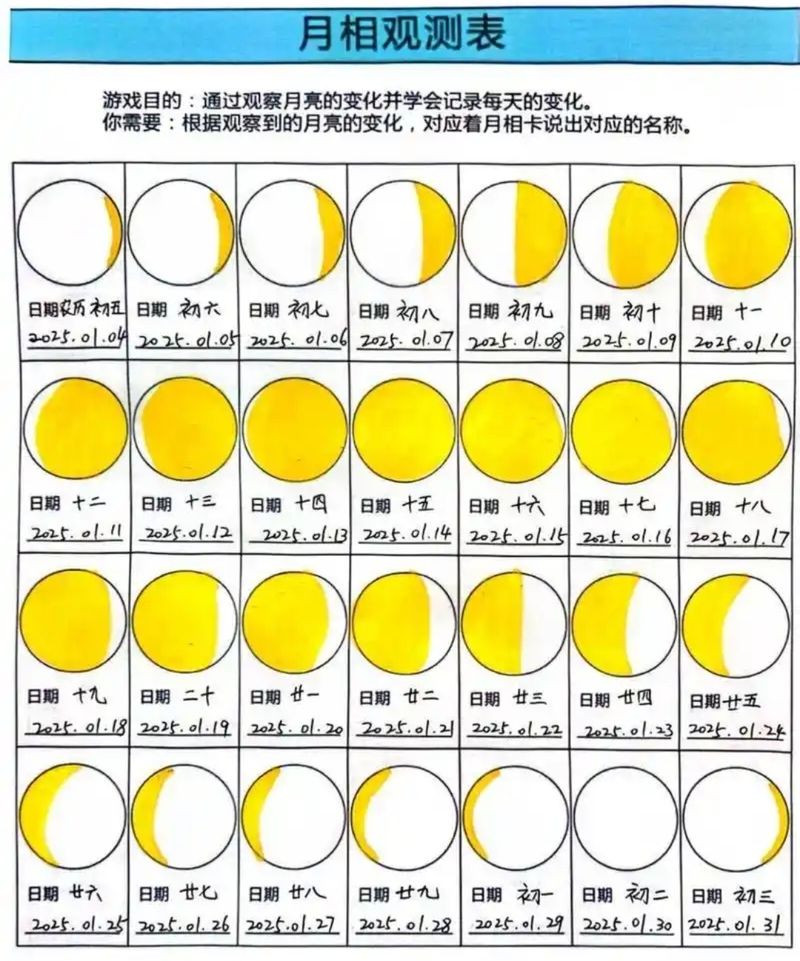
You can write: calendar date + calendar date (e. G. "seventh month") + monthly description you see。
Three to four weeks in a row
You find the moon moving from the top to the full moon (about seven days later), then into the lower chord and then back to the new moon (about 29. 5 days in full cycles)。
This “time-based observation of change” approach will transform your understanding of the monthly cycle from memory to evidence。
Common error zone correction: the month is not “on the same day of the month”
A lot of people would think, “one round of 29. 5 days a month, so i can push exactly to the beginning of a month. The reasons for the deviations in reality include:
The definition of the month start is different:
Some think that "the upper string is a bright half month", but in fact the strict definition of the upper string is the moment when the geometric angle (relative to the sun) reaches a particular condition; you see that "almost half" is not the exact moment。
The calendar is not a simple plus or minus:
The calendar is based on vision and incorporates rules such as moons, corrections, etc. The “natural law” of the month and the “rules of the calendar” of the agricultural calendar do not correspond exactly to each other。
Geographical and observational conditions:
Cloud cover, flat heights, and different observational moments can make you different on the “can you see on the day” side。
Empirical patterns (e. G., early sevens and eights) are therefore appropriate for understanding and approximation, but accurate calculations still require astronomical calendars or astronomical software。
Using the pattern for life: why do you think the moon is changing
The change in the moon seems mysterious, but it is a daily update of the relationship:
The moon moves a little bit against the sun every day
So the shape of the moon that you see every day changes
At the same time, the timing of the moon's rise in the night sky changes (usually in the form of trends later or earlier each day, depending on the specific time and location)。
And if you keep watching, you'll find the sky is walking slowly. And this “slow” corresponds to the time scale of our experience on earth: about 29. 5 days per cycle。
Concluding remarks: 29. 5 days to read the sky and 8-to-date
The month-to-month cycle is about 29. 5 days, or 29. 53 days for the prospective moon, as a result of the relative movement of the earth, the moon and the sun。
The upper moon is usually at the beginning of the seventh year of the agricultural calendar, with the highest probability of falling into the seventh and eighth years, since the new month to the upper stage is approximately one quarter of the prospective month, or 7. 38 days。
When you look up at the moon next time, you can look with these two concepts of “key numbers” and “relative positions”: what you see is not random light, but a calculable and verifiable pattern of objects. Astronomy is not just distant knowledge, it's the moment you look at it every day。
If you like, i can also do a little exercise for you in your area (or the specific month you write): list the common monthly changes from the beginning to the end of a month, and give a projected period of time for the string/full month. You send me the city and the year。