Water is the source of all life as well as the scourge of life, and human development depends on it, but when it is overflowing, the waters of the sea gather together to produce flood surges, destroy everything, and the ancient humans living in the east asian continent have to face aquatic disasters and gradually use their own wisdom to start treating the water, thereby creating a series of forms of social organization。
Impact of the qingxi plateau on east asia
About 55 million years ago, the crust was active. An important continental plate in the indian ocean — the indian plate — is moving rapidly northward. Finally, one day, the indian plate met with the asian plate and had a violent impact. Then, the indian plate continued to squeeze northwards more than 2,000 miles. This has led to a massive rise in the terrain of the region, which has created today's world roof, the tibetan plateau and the world's first peak, mount everest。
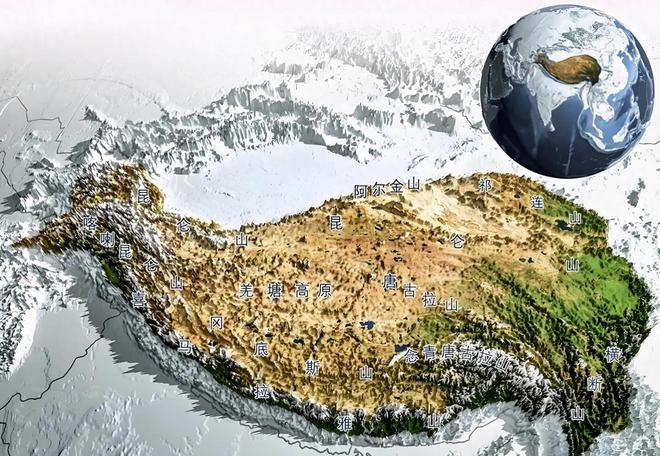
The rise of the tibetan plateau
The rise of the tibetan plateau has brought about far-reaching and dramatic changes in climate patterns in east asia and throughout the world. Before the rise of the tibetan plateau, south asia was today a vast ocean. At that time, the river moved from east to south. The climate is characterized by hot and dry conditions in large areas of the river and south of china, significantly affected by the subtropical high-pressure zone. The vast deserts and large saline areas are interwoven and cover most of the southern regions。
However, with the rise of the tibetan plateau, the situation has fundamentally changed. Its rise cut off the subtropical high-pressure belt and a clear and visible monsoon climate developed in east asia。
During the spring and summer seasons, the northern hemisphere recovered slowly, while the southern hemisphere gradually turned cold. At the same time, combined with the influence of the earth's rotational forces, monsoons have crossed the equator from the southern hemisphere and turned towards the east asian continent。
More crucially, the fact that the land is warmer than the sea is an important factor has enabled marine water vapour to enter east asia at a faster pace. Moreover, the impact of the typhoon must not be minimized, and the combined effect of these multiple factors has been that rain has become increasingly abundant in east asia, which is already arid and less rain-fed. Thus, after tens of thousands of years of baptism, the arid desert became a rich forest。
Another crucial result of the rise of the tibetan plateau is the complete reshaping of the rivers. The east asian landscape was uniquely low before the rise of the tibetan plateau. However, with the rise of the tibetan plateau, this landscape has changed to a low in the western high east. The rivers turned and began to flow from west to east into the sea, giving rise to two rivers, the yangtze and the yellow river。

The tibetan plateau and its surrounding rivers
Everything grows not only by the energy given by the sun, but also by water. It is in the huang and yangtze rivers that the wahsha civilization is firmly anchored in it, and it has grown and flourished. This model of civilization based on the rivers and rivers is not unique to china and china. In the rest of the world, there are similar patterns in the creation of many civilizations. In the middle east, for example, the two river basins gave birth to mesopotamian civilization and the nile gave birth to ancient egyptian civilization。
A distinguishing feature of the distinction between human beings and other organisms is our ability to use tools, which marks the emergence of intelligence. The tools that were first used by humankind were stone tools, tools to grind stones into various shapes, such as axes, marking the entry of mankind into the stone age. The main difference between the stone age, which is further subdivided into the paleolithic ages and the neolithic age, is that new stone age humans entered farming civilization. For any species, survival is the first solution, and our ancestors found that farming provides a more stable source of food than hunting. Some 9,000 years ago, archaeologists discovered traces of rice cultivation in lake ja, found in henan dingyang county。
Civilization of the river's tributary
Owing to the longer growth cycles of crops, it is normal in the ancient east asian region to have one crop per year or three years. This requires long-term settlement of farmers around the land, where water is the lifeblood of agriculture and land closer to water sources is more suitable for crop growth. As a result, farmers are concentrated in the water source, creating the earliest civilization. Our well-known culture of the greater mango, the hempiculture, the upland culture, etc. Were born near the water source。
However, it is interesting to note that the concentration of farming tribes is not located on the main main road of the river, but rather on the tributaries of the yellow river, the yangtze river, especially in the bends of the tributaries, where they are well situated, such as the mew river basin, the low water basin, the hain river basin, etc. From a geogeological point of view, more than 10,000 years ago the ice age of the earth ended and the melting of glaciers resulted in abundant river water. The water resources of the northern part of china in the ancient times were much richer than they are today, but floods were more likely to occur on the main main course of the river. By contrast, the tributary is relatively small and stable and easier to control and use. For early agricultural societies, stable water sources are key to irrigated agricultural land, and tributaries usually provide more reliable and manageable water sources. In addition, the river bends are prone to sedimentation into alluvial plains due to slow water flow, where the soil is fertile and suitable for cultivation. In contrast, land along the main main river is likely to be difficult to sustain owing to flooding。

Yellow river tributary
The farming civilization that was born on the tributary of the river is naturally connected to water, while the amount of water is more affected by the weather. East asia is a four-season monsoon climate with heavy rains in march, april and may in the south and high temperatures in july and august in the north. With the exception of a very small number of climatic anomalies, this is basically the case year after year. The zilong said: “there is no law in heaven, no peace, no death.” communities living in such climatic zones have long learned to observe changes in nature and to look for its own patterns. The early chinese therefore attached great importance to the calendar of times. It has even been suggested by scholars that the mountain and sea scripture may be a calendar book or at least contain a strong calendar concept。
In china, in the last few years, power was vested in those who had changed the order of time. Power, popularly known as influence on people, can influence others to act according to their will. The emphasis on time history in the previous era has evolved into a religion. In the case of the jade instrument found in the cultural area, there is a single image of a human being who is in the hands of a wizard, who has thus become the first to have power。
From the initial worship of nature to religious worship, the wizards and nature have become mysterious and superstitious. The authority of witches transcends equality and becomes power. Under the influence of witches, the surroundings gathered and formed clan tribes. Witches have also become secular, with both the divine and the monarchy forming a hierarchy. At the same time, early cities emerged as social productivity increased. The site of the ancient city of leung, discovered in hangzhou, includes complex palaces, waterworks and burials。
Clan tribes and war
Early clan tribes were unstable, as the natural environment was constantly changing, forcing clan tribes to migrate in search of a more viable place. The migration route is essentially northwards, from yunnan won to the west bluefields, and from the city of leungu to the city of gourd. This may be due to the fact that the soil in the north is more suitable for farming than in the south and that the north is high and not vulnerable to floods. In the process, three large and growing tribes were born。
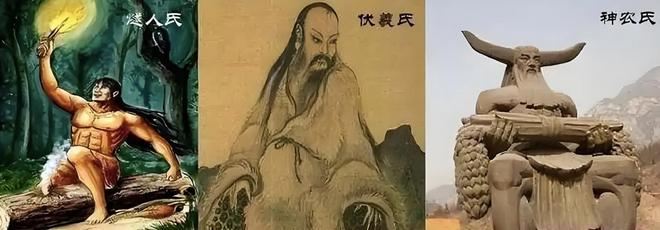
Lord san
These tribes have gradually settled downstream in the yellow river, where the land is flat, the soil is fertile, the water is abundant and the climate is suitable, where farming has developed. The development of production has resulted in surplus production resources, further segmentation of classes and class conflicts. To prevent class conflicts from exacerbating large-scale unrest, there is a need for public power beyond clans to maintain order, ease tensions and rule. As a result, recognized leaders emerged within the tribe. Chiefs are not directly involved in production, but rather lead the people, marking the approach of the national era。
War began between tribes to fight for more living space and fertile land. Some of the more famous tribes at the time were the huang emperor, the indei, and zhu. The indian tribe was good at farming and business, and the textile industry had first appeared in the indian tribe and people had begun to wear cold. An order-keeping and violent organization under the command of the initio had defected and moved to the lower part of the yangtze river and lower part of the yellow river, which later developed into the league of nine nations. On the basis of their superior geographical location, the nine tribes were growing in productivity and socio-economic development, and eventually became the most powerful tribal alliance at the time, compared to the tribes of the yellow emperor。
While the nine tribes had developed themselves, the yellow tribe had expanded eastward, and there had been frequent wars with the inflammatory tribe. Finally, during the sakai springs war, the hoang emperor defeated him and the hoang dynasty nation was incorporated into the hoang dynasty nation, forming the birth of the wahsha nation. So far, we are also known as the yellow sons。
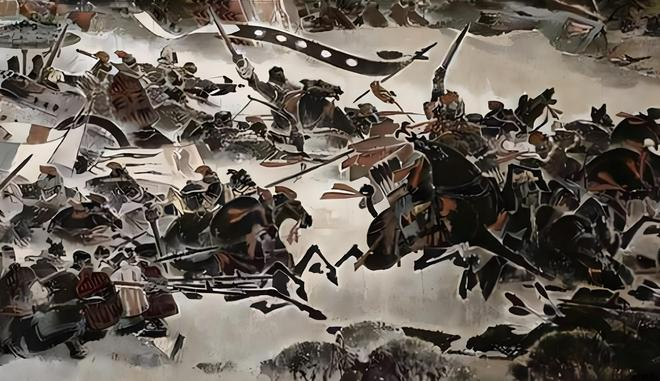
The battle of sakazu
Subsequently, the yellow fever tribe continued to develop and inevitably clashed with the nine l ' i tribe. Two major tribal coalitions have fought several times, culminating in a duel between the two sides in the deer. At the beginning of the war, the 90th league of the commander-in-chief was able to control weather times more accurately, and on the day of the war the fog spread and the 9th league won。
Yellow and initiating divine had been defeated, but fortunately, a wind had spread the fog and the wong dil and initi alliance had taken the opportunity to fight back. And the deer was closer and more logistically secure than huang's headquarters, and eventually the war ended with the victory of huang's and heinty's. The majority of the nine leighs were eventually incorporated into the wahsha, which is the origin of the “limin”. Yellow and initiati have many clans who call themselves “the people” — the origin of “the people of lebanon”. A part of the nine leighs fled to han shui and became part of the sanmi tribe。
War is not entirely destructive; it is also creative. In world war ii, for example, the university of pennsylvania had its first computer to study atomic bombs. During his war with numerous tribes, huang had found it often not timely to convey military orders through oral statements, and it was difficult for troops to coordinate their operations. So wong invented the drums of war and coordinated the combat forces with the drums. Following the tribal annexation, and because of lack of language and communication difficulties, the huang emperor ordered that he create a way of facilitating communication and recording. After several attempts, the silos create text and transmit information in writing。
War takes the price of blood, and one wrong step can be a river of blood and a lost city. A series of systems, such as military management, logistical support and organizational mobilization, are therefore needed to ensure success. Such organizational capacity is needed to build a national prototype. From this perspective, the war has contributed to the development of state authority。
It's a water treatment
Wars require enormous consumption, while the productivity of the previous era was far behind and could not last long. After the end of the war, there will be a period of relative peace. At this time, people are comfortable with production and do not need absolute authority. But to ensure production, natural disasters need to be fought and tribes need to be organized under unified leadership。
When the yellow river basins of the ancient times arrived in the summer, the rains were abundant and highly vulnerable to flooding, flooding agricultural lands and destroying homes. From the time of the yellow emperor to the time of the emperor, people relied on the establishment of cities and dams to withstand floods. However, several years of extraordinary climate change have occurred on the planet, leading to a massive increase in rainfall and unprecedented floods in the yellow river basin, which has spared many tribes. He sent him to fight the disaster, but he followed his past experience and built the embankments, all of which were washed down by the water. The water was killed to the detriment of the emperor, who then sent its son to cure it。
Following an on-site survey, the father was found to have failed to treat the water. During the treatment of the water, the river cannot reach the yellow river, but it is protected by the construction of dams. The more the dam was repaired, the more the water gathered, the greater the disaster. It was first to cut through the pot and open mount lu liang, and then to bring people north to govern the river after the problem of the river entering the yellow river was resolved。
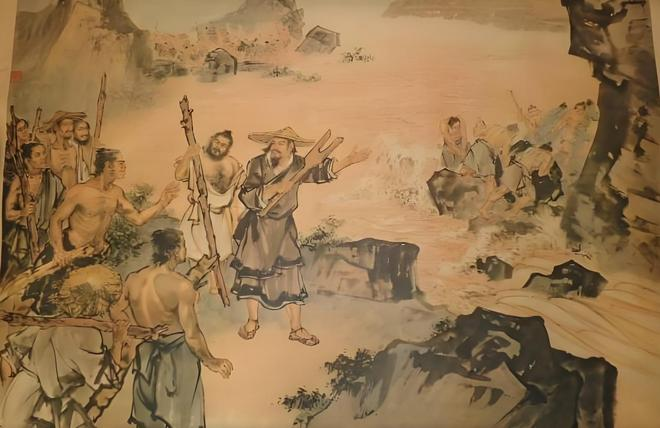
It's a water treatment
When the governance of the river is completed, the river is systematically managed by the river. With the southward expansion of huaxia civilization, the water treatment of tai chi has been gradually extended to the wei river and yangtze basins. In particular, north of the yangtze river basin, where china's civilization was the first to take root because of the soft, fertile soil of the north, particularly along the yellow-earth plateau, and the unique advantages of the then stone-dominated farming era。
The water treatment works in taigu are basin-wide and require the integration of all the tribes of the yellow river basin. Initially, this difficult task was carried out by a water alliance of four major tribes, namely, the core clans, the clans, the clans and the bering. The four tribes later became the ancestors of the four dynasty generations of summer, commerce, qin and qin. The water work, which lasted 13 years, ended with the victory of the human race over nature and was given the following names in recognition of the achievements of the four major tribes: the qin clan, the qi clan, the qi clan and the bwe clan。
The original country where the water was born
During the water treatment period, in order to harmonize the clans, it was necessary for the clans to hand over part of their authority, to make all tribes subject to his orders during the water treatment period, to establish the earliest chain of command and to establish the leadership of the clans vis-à-vis the other tribes, which gradually formed a later feud. In order to ensure the logistics of water treatment, excess production resources, especially food, cloths and copper, need to be mobilized free of charge, and the earliest system of tributes, i. E. Tax, has been established。
Water treatment is a labour-intensive undertaking, requiring the recruitment of large numbers of people, and this has been the first to be fought. Water management requires both the repression of disobedient tribes and the external expansion of territories, which requires the establishment of standing forces to replace the tradition of agricultural warfare mobilization in peacetime. The water treatment of the great pots is a basin-wide one, which has the earliest land census. By dividing the surveyed land into kyushu, the oldest administrative division was created. In order to reward the punishment, a prison has been set up, and there is the earliest judicial system in place, and zhutao is the prison manager. The lands that had been flooded would need to be re-delineated and gradually transformed into wellfields after being treated。

Kyushu
After the water treatment has been completed, the most primitive and complete national architecture has been established, and the country's prototype, which was never before established. After the end of the water treatment, the qing clan sacrificed the gods and further established the authority of the qing, who was the co-owner at the time, challenging the authority of the qing, whose loyal wind guard was deliberately late and gave him a horse. The windshield was directly executed and the other clans did not react. This suggests that the authority of the qing clan has in fact exceeded that of the qing clan, which ordered the elimination of the sanming clan in order to weaken its influence, that after the fall of the deer-to-deer, after integration into the wah ha clan, after growing up, the rebellion was waged, that the qing clan did not submit to it, and that the qing clan continues to be in turmoil, but that qing's prestige and influence in the tribal alliance has grown beyond that of the qing clan, and that the qing emperor has finally had to cede the throne to zheng。
After his death, his son inherited his power, thereby replacing “under the law” by “under the law”, and china's first descent-based power was formally established in the past。
If you think it's a good article, pay attention to me