


Two screws of dye squeeze
The colouring and formation of materials is a key link in modern industrial production. A double-snail dye-crowding machine is widely used as an efficient equipment for dyeing and particle-making processes in plastics, fibres, etc. It achieves efficient mixing, melting, dyeing and crowding out of materials through unique mechanical structures and sophisticated processes, providing high-quality raw materials for subsequent product production。
I. Rationale of a double screwdriver's dyed squeezer
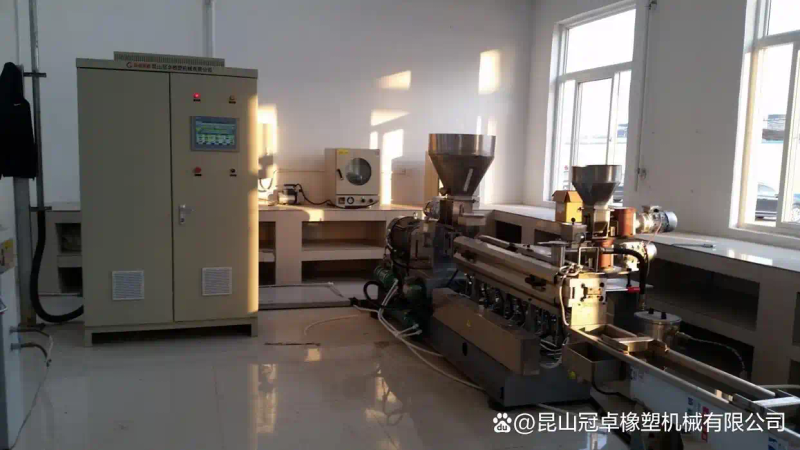
A double screwdriver is a mechanical device based on a double screw working together. Its core is made up of two mutually entangled screws, which rotate in the cylinder in a synchronized or differential fashion, thus transmitting, compressing, cutting and mixing the material. When the material enters from the feed, it moves forward, driven by a screw, and in the process it is processed through multiple functional areas。
The material was initially pressured and delivered in the feed area. The material then enters the melting zone, where the heat generated by external heating and screw cutting gradually melts into viscos. In the mixed area, the co-operative use of the two screws causes the material to be cut and stretched strongly and spread evenly. The dyes are usually added at this stage and are fully integrated with the matrix material by mixing the screws to ensure consistency of colours. In the extruded zone, the molten material is compacted and squeezed through the mimic to form the required shapes, such as bars or particles。
The whole process relies on the geometric design of the screw, the speed matching and temperature control. Double screws can be rotated in the same direction and in the opposite direction, where the same rotation is more suitable for mixed and dyeing applications, as it provides stronger cutting and better distribution mixing. The cylinders are usually divided into multiple sections, each of which can independently control temperature to fit the process requirements of different materials. This design allows for a clear advantage in dye homogeneity and productivity of double-snail dye-crowding machines。
Ii. Key components of a double screwdriver compactor
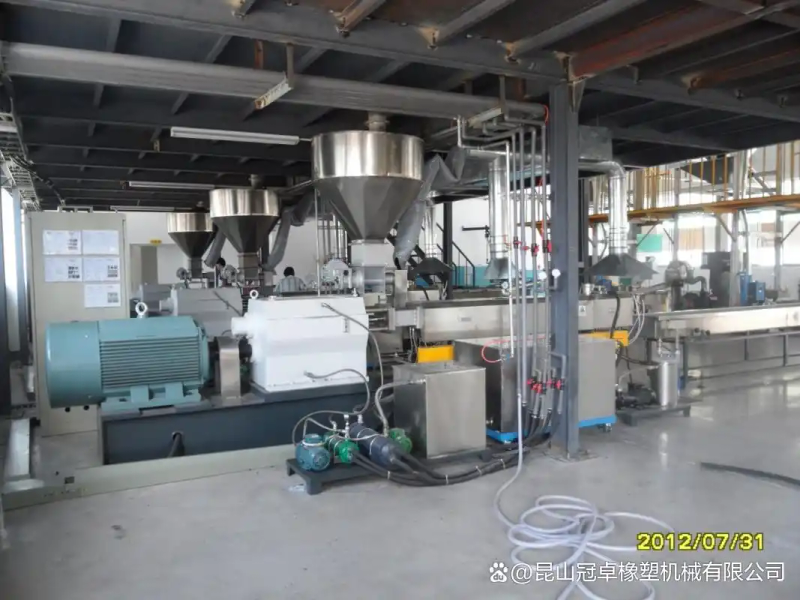
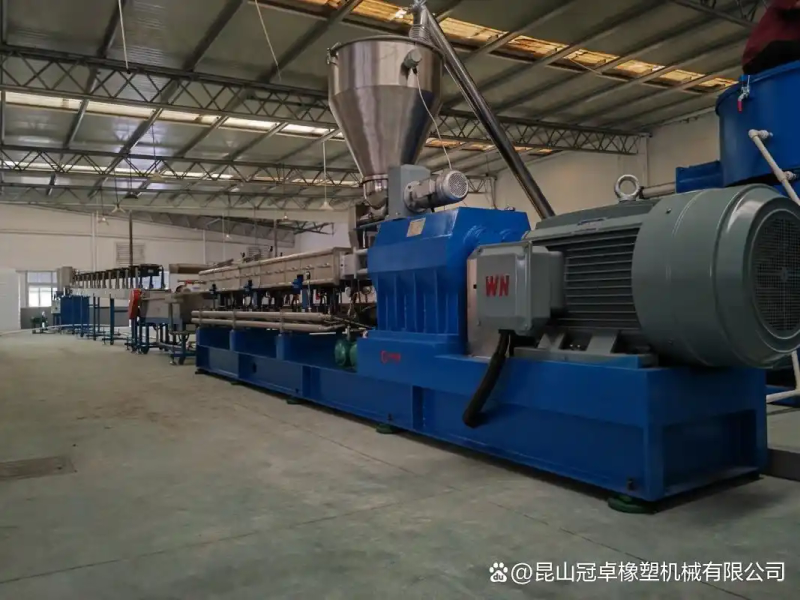
The structure of the double-heavy compactor is complex and consists mainly of the following components:
1. A moving system: the moving system is the power source of the equipment, including electrics, speed-reducing boxes and coaxors. The motor provides rotation power, adjusts to the right rate of rotation through the speed-reducing box and then transmits it to the screws through a joint axis. The stability of the moving system has a direct impact on the operation stability and lifetime of the spiral, and therefore requires high precision manufacturing and lubricants protection。
Screws and cylinders: the screws are core work components, usually designed in the form of building blocks, i. E. A combination of multiple screw elements, to facilitate adjustment of length and function to process needs. The types of screwdriver elements include delivery, mixing and cutting elements, which together complete the transport, melting and mixing of materials. The cylinder is wrapped in a screw and forms a closed working cavity, which is normally fitted with grinding material to extend its useful life. The outer walls of the cylinder are equipped with heating and cooling devices for precise temperature control。
3. Feed system: the feed system is responsible for the ration of raw materials and dyes into the cartridges. The primary feed is used to add matrix materials such as plastic particles, while the side feed or liquid injection is used to add dye or other additives. The feed system needs to ensure continuous stability and avoid congestion or volatility to ensure even colour。
4. Moot and particle-cutting devices: moot is at the end of the extruder and determines the shape and size of the extruder. For the application of dyed particles, the moulds are usually designed to be multi-pore structures that squeeze the molten material out into thin strips. The particle-cutting devices cut these fine strips into even particles to facilitate subsequent transport and use. Models and particle-cutting devices are designed to take into account the viscosity and cooling speed of the material in order to avoid adhesion or deformation。
Control systems: the control system is the brain of the equipment, which monitors and regulates parameters such as integrated temperature, pressure, rotation and feeding. Modern double-snail dye-crushers usually use automated controls to collect data in real time through sensors and adjust their operational status to ensure process stability. The interface is simple and intuitive, allowing users to set and optimize parameters。
These components work together to enable double-snail dye-crowding machines to efficiently perform dyeing and crowding out tasks. The performance and reliability of the equipment depends to a large extent on the quality of their design and construction。
Iii. Application area for double-helicopter dye squeezers
Double screw dye-crowding machines play an important role in many industries, especially in areas where quality colour and mixing are required. Its application is not limited to traditional plastic processing, but extends to new and emerging materials。
Plastics industry: in plastics production, double-snail dye-crowding machines are widely used for masonry preparation and direct colouring. The parent particle is a high concentration colorant particle through which the pigment is evenly distributed into the carrier resin and produced into a standardized parent particle product. These particles can be used for plastering, blowing membrane or crowding out formations, providing consistent colours for end products. Direct coloring is the real-time addition of dyes during production, the reduction of the middle and the reduction of costs. For example, in the manufacture of packaging materials, domestic electrical casings and car parts, double-snail dye-crowding machines ensure the colour beauty and durability。
2. Fibres industry: production of chemical fibres also relies on double-snail dye-crowding machines for dyeing and modification. Before silking, polymer slices need to be melted through the extruder and coloured particles or dyes added in order to achieve an even colour of the fibre. The high shear mixing capacity of the equipment ensures a balanced distribution of colours in fibres and avoids colour differences or spots. It can also be used to add functional additives such as anti-static or ultraviolet stabilizers to enhance fibre performance。
Rubber and elastic processing: in the rubber industry, double-snail dye-crowding machines are used for rubber refining and colouring. Rubber materials are usually very sticky and difficult to evenly mix, but the strong cutting of double screws can effectively spread paints and fillings and improve product quality. Applications include tyres, seals and footwear, where colour consistency and physical performance are essential。
4. New material development: as science and technology advances, double-snail dye squeezers are applied in emerging areas such as biodegradable plastics, composites and nanomaterials. For example, in bioplastic processing, equipment can be used to add natural pigments to meet environmental requirements; in the manufacture of composite materials, it can achieve even dispersion of nanofills and enhance material performance. These applications demonstrate the flexibility and innovative potential of equipment。
Iv. Advantages and challenges of double screws of dye-crowding machines
Duplex dye-crowding machines have many advantages in industrial production, but they also face challenges that need constant optimization and improvement。
On the other hand, its efficient hybrid capacity ensures colour parity. The double-snail collage design produces a strong mix of cutting and distribution, allowing for the rapid integration of pigments with matrix materials and reducing colour differences and defects. Equipment is highly flexible and adapts to different materials and formulations by replacing screw elements or adjusting process parameters. For example, for heat-sensitive materials, cutting intensity can be reduced to avoid degradation. Third, production is more efficient and continuous operations allow for large-scale production and reduce downtime. Automated control systems improve process stability and reduce human error。
Economicity is also one of its advantages. While initial investments may be high, production costs can be reduced in the long run by optimizing energy consumption and feedstock utilization. For example, accurate temperature control reduces energy waste, while efficient mixing reduces the use of dyes. In terms of maintenance, modular design facilitates the replacement and cleaning of components and prolongs the life of the equipment。
However, double screws are also facing a number of challenges. The high cost of equipment, especially high performance models, may require hundreds of thousands of rmbs or even more, which may put financial pressure on smes. Operations and maintenance require expertise, and improper use can lead to malfunctions or product quality problems. For example, wear and tear of screws and cylinders must be checked periodically, otherwise the mixing effect is affected. Third, process optimization is complex and involves the coordination of multiple parameters (e. G. Temperature, rate of rotation and rate of feeding) and requires repeated testing to reach a popular state. For particular materials, such as high viscosity or degradable substances, customized design may be required, making it more technical。
To address these challenges, the industry is committed to intellectualization and material innovation. For example, the development of more grinding screw coatings to reduce the frequency of maintenance or the integration of advanced sensors to achieve predictive maintenance. The training of operators and the promotion of standardized processes also helped to improve equipment utilization。
V. Future trends of digital digital climbing
As industrial technology continues to improve, double-heavy compactors are moving towards more efficient, environmentally friendly and intelligent. In the future, its innovation will focus on process optimization, energy conservation and multifunctional integration。
In terms of process optimization, emphasis is placed on increasing complication and adaptability. The geometry of the screws is improved through computer simulation and experimental research to make it more suitable for the processing of nanomaterials or bio-based polymers. For example, the development of asymmetric screw elements to enhance dispersing mixing or to optimize fluid structures to reduce retention time. These improvements will further improve dye balance and product consistency。
Energy conservation and consumption is another key trend. Double-snail dye-crowding machines are usually more energy-consuming, so future designs will focus more on thermal energy recovery and power efficiency. For example, the use of efficient heating systems and insulation materials reduces the loss of heat, or integrated variable frequency technology adjusts the speed of the electrics on a load basis. These measures not only reduce operating costs but also reduce environmental impacts, consistent with the concept of sustainable development。
Multifunctional integration will expand the application of the equipment. A modern double-snail dye-crowding machine may combine reaction to squeeze out or dive, achieve online polymerization and volatilizer removal and simplify production processes. For example, chemical modifications are completed at the same time as dyeing, increasing product value added. Modularized designs will become more widely available, allowing for rapid switching of functional modules by users to accommodate small quantities and diverse production needs。
Intellectualization is an inevitable trend. Through material networking and big data technology, equipment allows remote monitoring and intelligent diagnosis and early warning of potential malfunctions. The interface will be more humane, supporting voice control or mobile access and lowering the threshold for use. These innovations not only improve productivity but also make equipment easier to maintain and manage。
The development of double-snail dye-crowding machines as important equipment in industrial production will continue to drive progress in materials colouring and processing technologies. Through continuous innovation, it will add value in more areas and reinvigorate manufacturing. In the future, we may see the emergence of more compact, efficient and environmentally friendly models to meet growing market demands。



