


“in addition, there are additional ways to obtain documentation data, including platforms or periodicals sponsored by professional organizations or societies. The most prominent of these is pubmed, a free search engine provided by the national medical library of the united states, which provides comprehensive biomedical research and abstract retrieval services and is currently the most widely used free search engine on the internet. In addition, science, a well-known journal sponsored by the american society for the advancement of science, and the journal of the american academy of sciences (pnas), sponsored by the american academy of sciences, are important ways to gain access to literature in the life sciences.” wang zedang said。
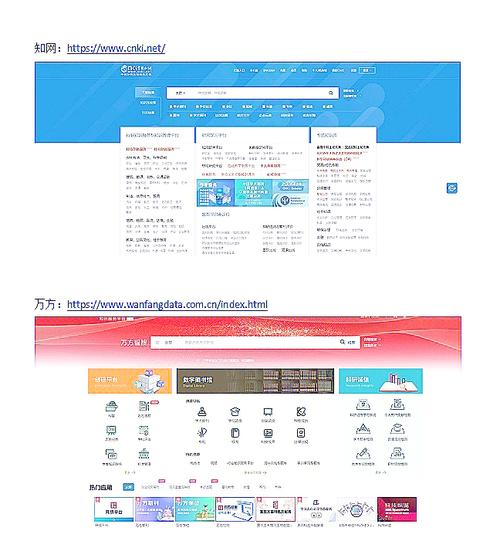
“in addition to the english-language database, several chinese-language documentation databases are commonly used, such as the chinese knowledge network (cnki), the global database, the national science and technology book documentation centre, etc.” wang zefan described the national science and technology library and documentation centre as a virtual scientific documentation and information service。
Data repositories are very important for science
With regard to the current state of extensive reliance on foreign data repositories in the field of life sciences research, wang zefan has been imprudent to state: “more than 90 per cent of the literature in the field of life sciences is derived from these english-language databases, and much of the heavy scientific research is published in such important periodicals as science, nature, cells, and the lancet, which must be regularly consulted in order to keep abreast of recent developments within the discipline.”
“the consequence is that scientific research is subject to human control and, in large part, may be `crawling' at any time, many of which cannot be carried out; and, in small places, many rules are made by the other party and their use is restricted.” wang zefan said, “we have spent a lot of money subscriptions to databases, but we do not have access to raw data. At the same time, the number of people online is limited, exceeding the number of people in use, leaving others without access to the data and waiting for someone to go offline for further use.”
Moreover, not all institutions of higher education have sufficient funds for scientific research to purchase all important databases, and the research work of researchers and students at these institutions is affected. Some higher education institutions may purchase a database of some specializations based on their own comparative disciplines. Students in other professions need to access documentation in a way that is easily transmitted through other institutions of higher learning or by other means. “as long as it takes, educational resources are unevenly distributed and disciplines are unevenly developed.” wang zai is concerned。
“more seriously, the database is also a platform for academic exchanges concerning intellectual property competition and academic discourse.” wang zefan explained that, because of the influence of some well-known periodicals, he is writing here
It represents recognition by academics. Scientific researchers therefore endeavour to publish the results of their research in these periodicals. The intellectual property rights of the study are usurped by those who publish it first, which is very important for scientific research。
Today, several large foreign publishers monopolize databases of scientific and technological literature, and their random pricing has led to contradictions between the academic community and publishers. At the end of 2018, the university of california and ethel failed to agree on open access to publishing agreements and subscription prices. Following the breakdown of the negotiations, ethel cut off access to more than 1,000 periodicals under the california university. It was only this year that the two sides resumed their cooperation. During this period, more than 350,000 students and teachers at the university of california were able to obtain new papers they wished to read only by accessing the library in the school district, looking for legal open access copies on the internet, or directly contacting authors。
It is imperative that a large indigenous literature database be established
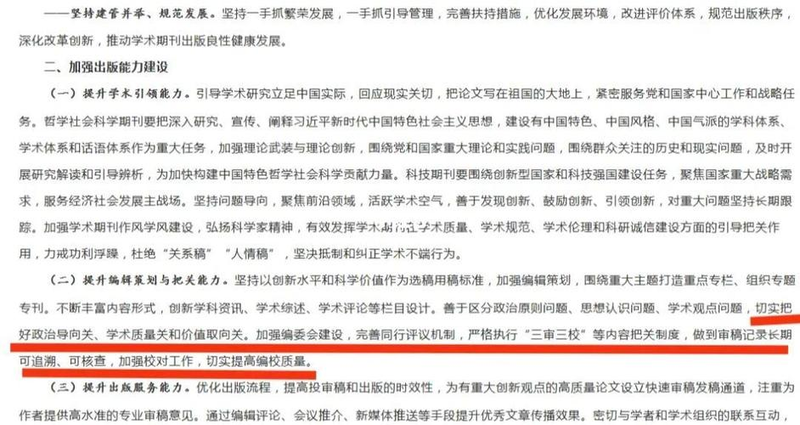
“the state, aware of the importance of the dissemination of literature, i. E. The dissemination of intellectual property rights, has launched the `action plan for the excellence of chinese science and technology journals', aimed at promoting the high-quality development of our scientific journals and accelerating the construction of world-class scientific journals.” wang zefan described the emergence of high-level periodicals in the life sciences of the country, facilitated by state policy。
Among them, the institute of biochemistry and cellular biology of the shanghai institute of life sciences of the chinese academy of sciences and the society of cellular biology of china co-sponsored cell research, an international academic monthly publication published, edited and distributed in all english original research papers, science reviews and newsletters。
Also co-sponsored by higher education publishing, in cooperation with the chinese society of biophysics, and the beijing institute of life sciences of the chinese academy of sciences, the protein & cell magazine, published overseas by springer, is a local journal created in 2010 and edited by the chinese academy of sciences's abbreviated son and master。
“although we now have our own high-quality periodicals and magazines in the field of life sciences, there is still much to be done to achieve the size of the four major databases overseas.” wang zefan said。
Throughout the development history of these old publishing groups, ethel's predecessor dates back to the sixteenth century, while hyundai also emerged in 1880; springer nature was founded in 1869; and john willy's father and son, founded in 1807, has a history of over 100 years. After a long period of development, these major publishing groups have developed and grown into mega-documentary databases through a combination of small periodicals and magazines。
“the marginal effects of these publishing groups are very low because of their long history and well-established construction, and maintenance costs are minimal, especially after networking.” wang zedang believes that at the same time, when entering the industry again, the barriers become very high, as a large number of copyrights are already in the hands of these publishing groups, which need to be bought at great prices and cannot create a virtuous competition。
In addition, a database of globally influential periodicals is difficult to establish: language. “academic journals are now almost all official languages in english, and therefore can be relatively easily combined. And many of our periodicals are chinese." wang zefan said。
“the future, through policy guidance and government support, will certainly accelerate the construction of the chinese documentation database.” it is suggested that more social resources could be integrated, drawing on business models from abroad. For example, the documentation of data in a particular area is of particular value to a company, which could then be responsible for the development of a database of literature in this area. This will allow for the pooling of social capital, which will result in the creation of a large and well-developed documentation database on our own soil。



