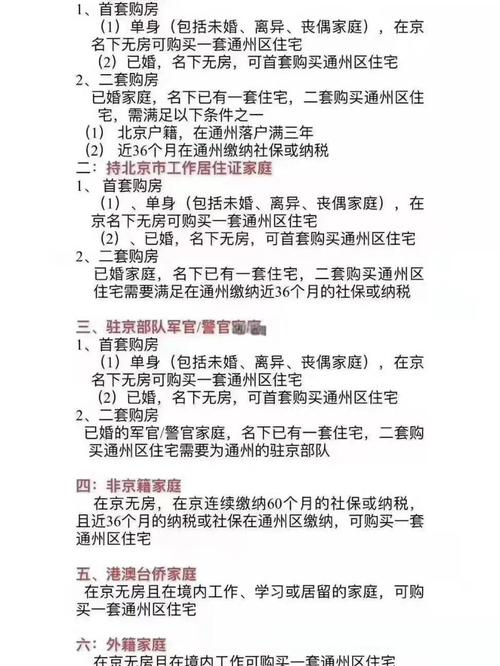
International online coverage (journalist lee xiaoping, intern journalist leyle): recently, the beijing municipal housing construction commission and the tunzhou district government issued a circular on strengthening the management of commodity housing marketing in tunzhou district, which decided to introduce stricter commodity-based housing purchase restrictions in tunzhou and raise the regional housing purchase threshold. This restraining order requires that families of resident residents of the municipality who have already owned a housing unit and who have not been able to provide continuous social security and personal income tax certificates for three years in tunzhou and for nearly three years in tunzhou will be suspended from selling commercial housing in tunzhou. In addition, non-resident families who have not been able to provide a certificate of continuous social insurance and personal income tax payments in tunzhou for the last three years are not allowed to purchase housing. What will be the impact of this policy? International online journalists interviewed property practitioners who revealed that there are currently fewer stock sources in the state and that the increase in housing is expected to be modest in the future。
Following the announcement that thongzhou had been identified as the deputy administrative centre in beijing and that the municipality was to be relocated, the project price in thongzhou's core district was high. “a colleague of mine said that the price of the house had risen from $28,000 to 35,000 a day, and it had an impact on the price of the house, which was quite high. This would limit the non-resident population to buy a house in beijing, but it is not fundamental, because even if it restricts the non-residents, there is no place for locals to buy a house and it is bad for locals.”
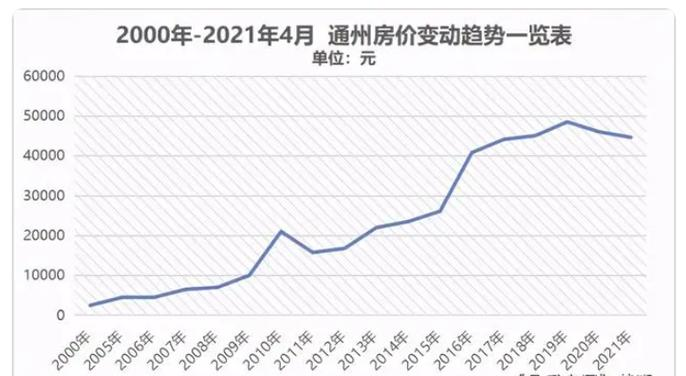
Liu yun, an employee of a large property company in the tunzhou region, also told reporters that since this year there has been an increase in the enthusiasm for house purchases and a marked increase in prices, although there is a small stock of ordinary homes in the region: “more purchases were made earlier this year, after the spring festival, the building in tunzhou slowly became hot, and it became more visible when the location was taken into account and published as a deputy administrative centre. That's what happened to the state. There are no new plates in tunzhou, especially ordinary homes, which are almost non-existent.”
The chief analyst of the centre for the study of chained markets, li, also said that the stock stock in tunzhou had fallen significantly since the current year, with some 7,000 units, and that the government had chosen to issue a restraining order at that time, as well as in response to the previous boom in housing prices. According to lee, “tunzhou housing prices rose almost sharply in may and june, typically by up to 20 or 30 per cent, so overheating demand and fast-growing house prices prompted the government to urgently introduce such a restrictive purchase policy. He chose to present it at 10 p. M., giving developers and intermediaries a short response time. Its qualification clearance system had been closed in the early hours of the morning and, if re-examined, it would have only two hours, which was particularly urgent. The rules are not yet in place, and it is not clear whether to use the audit as a cut-off point or the internet as a cut-off point, and we are still concerned.”
The responsible officials of the beijing municipal housing construction commission read the policy that the new deal aims to give priority to solving the housing problems of the residents of the district in thongzhou and to protect their rights and interests in housing consumption, while meeting the principles of urgency and reasonableness in addressing the housing needs of other groups. Since the beginning of the 15th day of the policy, the beijing city building commission's eligibility form for housing has been supplemented by the column “the district where the house is purchased”。
Media also reported that on the day of the publication of the price limit, some of the buildings had experienced significant price increases. However, high prices have led some buyers to be discouraged. “i've got plans at first (buying a house in the state), because the state is easy to transport, and then i've been living in the state for five or six years, and i'm used to it, but now i can afford it, and i'm sure i won't be able to afford it, because it's too expensive.”
According to guo yi, the market director of the ahou institution, there has been no land concessions in the new town block of tunzhou for nearly three years, and most projects, with the exception of individual pallet projects, have entered the tailings, thus limiting the impact. The stock of residential stock of marketable commodity houses in the tunzhou market has fallen to a low point in the last six years。
In the view of real estateers, liu yoon, some of the housing prices that had previously been overdrafted, together with the low stock of housing, are not expected to rise much, “and not much in thongzhou, because of the restrictions on purchases, which i consider to be a brake on the real estate market, especially in thongzhou. It's just that through this policy, some other types of products are digested. He didn't want to get too high. In fact, the rumour that the city had moved east of the city had led to some price hikes.”
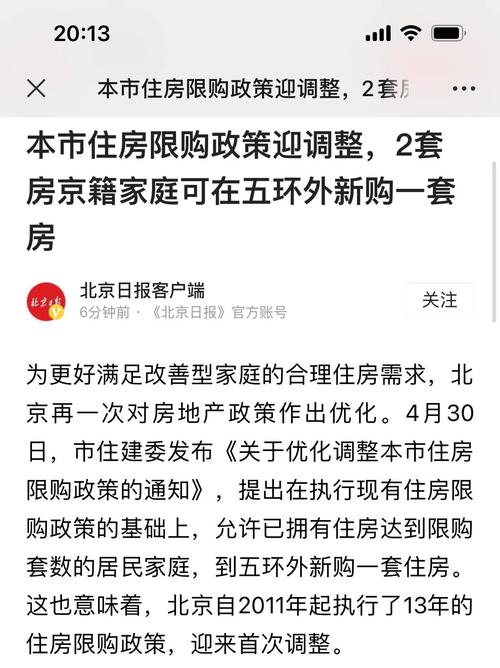
There is also concern that, after the restriction, those buying houses that want to live on their own or to improve their needs will go to places such as yan, which is also an important area for concerted development, thus contributing to rising housing prices in these areas. Li xiaoling, chief analyst of the centre for the study of chained markets: “if it is needed, it is not easy to buy a house through the canton, after all, to go to yan's suburbs. There is a possibility that self-habilitation and demand may be taken to the west, that is, to the sun-yang area.”
At present, the cost of good-quality buildings near tunzhou is around 35,000, which is lower than the current offer of 40,000 to 50,000 for some projects in tunzhou. For thongzhou, before the city-wide limitation order was issued in beijing in 2011, there had been a sharp increase in the history or re-emergence of house prices, which had led to a change in the market for investment in housing projects, and the new thongzhou policy had once again reinforced the logic of limiting purchases。