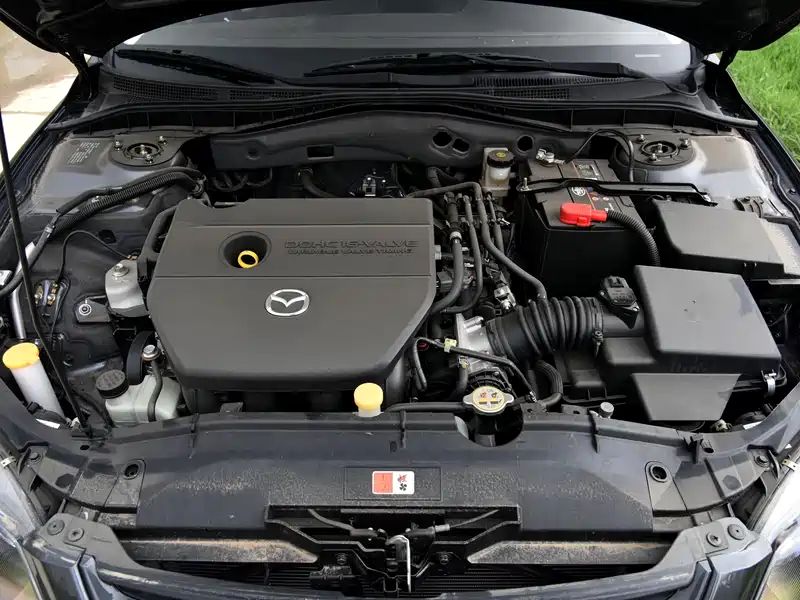
In response to your reference to the “12-year horse 6 no glitch” problem, this usually means that the motor cannot stabilize in the normal glitch zone (usually around 750 turns/minutes) or even shut down directly after the vehicle has released its oil pedal. This is not a case in point for the 2012 motor maada 6, which carries a natural inhaler engine, but is a common “light loss” in old cars. Taking into account the structural features of mapada 6, we have prepared the core lines of thought and solutions。
First priority: purge the air-saving doors and the glitch motor
For the 12-year-old maurada 6, carbon accumulation from the gas-saving doors is the primary reason for the lack of speed. Since the mandatory ventilation system of the warp shafts will bring oil vapour into the gas channel, it will accumulate over a long period of time to form oil sludge around gas-saving door flipboards. When there is too much carbon, the movement of the gas throttle door to the plate is directly stuck, leading to the blockage of the airway by the glitch, which in turn triggers the pine door or the fire. It is recommended that the gas-saving doors be removed immediately, with the use of special detergents for the complete clean-up of the board and the light-speed madacon drive. The cleaning requires the self-adaptation of the gas-saving door position sensor (through negative minutes of the vials or using diagnostic devices)。
Priority two: checking leaks in vacuum pipes
There are multiple small vacuum hoses in the pada 6 gas feeding system for the control of components such as carbon tank electromagnetic valves, fuel pressure regulators, etc. After 12 years of high temperature and ageing, these rubber hoses are highly susceptible to hardening, cracking or even falling, resulting in tight seals and too little mixing of gas, leading to a lack of speed or loss. The focus is on the lower entrance tube, the brake vacuum-assisted pump connection and the pipeline near the carbon tank electromagnetic valve. Sprays can be used for impervious speeds to the suspect pipeline, which, if the engine turns, indicates a leak。
Third priority: inspection of glitch control valves and water temperature sensors
Despite relying mainly on electronic air-saving doors to control the glitch, section 6 of the vehicle model is still equipped with a supported air valve or a glitch control implementer. In addition, the failure of the water temperature sensor signal is the invisible killer that leads to the loss of glitch. When the engine is cold, the water temperature sensor provides the computer with a cryogenic signal and the computer directs a higher speed of glitch; if the sensor is ageing and the feedback temperature does not correspond to the actual temperature, the computer is unable to control correctly the amount of oil sprayed during the glitch, leading to a lack of glitch. It is recommended to use diagnostic devices to read water temperature data streams in cold and hot vehicles and to compare them to actual temperatures。
Priority four: inspection of spark plugs and ignition wires
The pyrocyte is too large or the ring of ignition is ageing, resulting in a tank setting fire energy low or even intermittently. The fire is amplified at the speed of the glitch, causing the engine to vibrate and when it is severe, it goes out directly. Check if spark plug ceramics have cracks, if electrodes are burned, and measure primary and secondary electrical resistance to the ignition ring. If the spark plug is used for more than 60,000 kilometres, it is recommended that the aluminum piping of the original plant specifications be replaced directly。
Fifth priority: inspection of fuel pressure regulators
Fuel pressure regulators maintain constant pressure differentials at both ends of the nozzle. If the internal vacuum film is broken, it can cause fuel to be inhaled through a vacuum tube, causing a mixture of gas to be overheated, and it can also cause vehicles to move at no or no speed. Remove the vacuum tube from the fuel pressure regulator and check whether there are fuel residues in the tube. If fuel is available, the regulator must be replaced, and the smell of fuel on the machine's feet must be checked to determine the extent of film damage。
Recommendations for integrated maintenance
In dealing with this issue, it was suggested that the principle of “complex, internal” should be followed. First, gas-saving door dismantling and vacuum pipe visual inspection are low operating costs and solve most of the problems. If the failure continues, the data stream is readable using a diagnostic device, focusing on short-term fuel fixes and the opening of the air-saving door position. In the case of a 12-year old horse, as long as it is not difficult to check patiently and restore its smoother condition, it will also allow you to continue to enjoy the pure driving pleasure of the king of the curve。