Bibliography
I. Definition of dynamic costs and regulation of the responsible sector
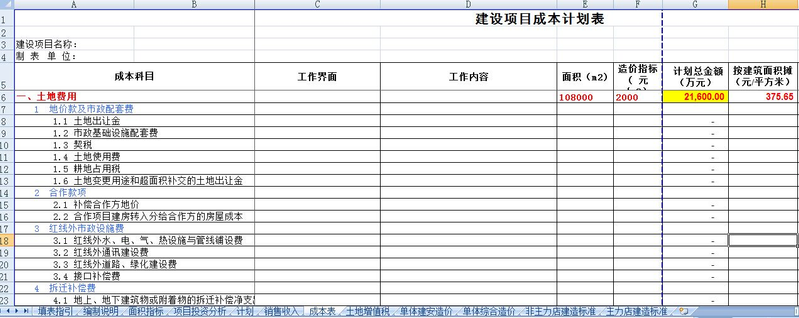
Dynamic costs (professional staff): “active costs are usually defined by real-time reflect instant costs (note: costs are not actually incurred). Dynamic costs can be divided between costs that have been incurred and costs that are to be incurred, which consist of unliquidated contractual costs, settled and same-sex costs, and non-contractual costs. Dynamic costs can be expressed as dynamic costs = contractual costs + non-contractual costs + costs to be incurred. Non-contractual costs are all non-contracted cost classes of expenditure incurred on a project, such as construction costs, management costs, etc. Support was expressed for the fact that the costs of the three projects should be reflected in dynamic cost accounting, with information consistent with the target costs, and that the three costs should be updated in a timely manner to allow comparison with the target costs。
Are visa and design changes categories contractual costs? Small amounts are included in the scope of the contract and a separate agreement is entered into that exceeds a certain amount, depending on the corporate system and the actual circumstances in which it occurs. If there is: if there are companies that have a requirement of 300,000 and a requirement of 500,000..
3. Dynamic costs are managed in such a way as to allow immediate entry analysis of the cost items that have already been incurred; the cost items that have not been incurred should provide an accurate estimate of the costs and amounts that may be incurred. Keeping dynamic costs within the manageable range of target costs, looking for reasons in a timely manner if deviations occur, and developing corrective measures. The part that has taken place is sufficient for statistical analysis; it is mainly the part that has yet to take place and is sometimes missing or overestimated, difficult to control and inaccurate。
The forecast of costs to be incurred is strongly related to the accuracy of the dynamic costs, and it is recommended that a statistical desk account be maintained for each month to be taken: image progress, cumulative completion value, advances due, visas, changes (values or projections), accuracy of estimates directly related to the experience and analysis of the cost personnel。
4. Regulation of dynamic costs and primary responsibility: depending on the company's own regulatory characteristics, it is generally the responsibility of the cost department or the finance department, i. E., the relevant sector, to coordinate, analyse and summarize the dynamic costs. If the financial department is primarily responsible, then the financial cost should be easily taken into account and it is more difficult to obtain financial cost data as a cost department。
The purpose of dynamic cost management is to analyse what has occurred, to correct what has not occurred and to adjust what has not occurred; it is to control the overall cost of the project, not to overspend overall, and to provide early warning of risks. However, costs cannot be over-deflated, leaving a cost premium. The relationship between cost and product cannot simply be said to be high or low, but is appropriate。
The dynamic cost control of the building block is also linked to the form of contract signing, with tentative total prices, which have not always been quantified, and the provisional total price, which does not have a drawing contract, is still subject to timely accounting。
Dynamic cost control tools — traditional models and professional software and their advantages and disadvantages
1. Traditional models are easy to operate, but the level of application of spreadsheets varies, and dynamic cost data responses may be intuitive and difficult to regulate, without early warning and subject to a certain degree of subjectivity in managing dynamically。
Specialized software: professional modularization, visualization and easy to monitor, with the advantage that individual over-line processes can attract the attention of approving officers. Application is slow at an early stage, and some operational functions need to be gradually refined in application, and multiple factors may lead to inefficiencies. Professional software is also more advantageous, large companies (group management) can demand, and small companies are not necessary。
Iii. How to find effective cost controls in the management of dynamic costs
Target cost setting is scientific and operational. The reason for the dynamic cost overrun is mainly volume and price, the reason being that the measurement was not valid at the time, the importance of historical empirical data, and the fact that it actually occurs can only be transcurricular. Measures taken: project positioning, economic selection and optimization of the programme, introduction of quota design and design claims, award of invalid costs arising from contractual design. Higher prices are usually associated with changes in our material allocation standards, which optimize the organization of marketing, engineering and design discussions without affecting sales。
2. Develop cost-neutral cost-proofing measures based on past project experience, pre-empting them; and establish a cost-defeating system for invalid costs resulting from the responsibility to review the construction plans. How are price changes due to market fluctuations foreseen for non-material allocation criteria? Some are unforeseeable and can only be adjusted. Policy changes, such as electricity packages, and national regulations are marketed, but local protection and understanding of policies vary。
Case 3: the estimated cost of electricity at the time of the project was determined by an autonomous tender, which was done unilaterally in the order of 80, but at a later stage of actual implementation, the price would have to be increased to $108, which could not be pre-regulated and could only be adjusted。
The cost of new land acquisition projects in new cities is difficult to control, with special fees in some places. The market for entry should be pre-researched and as well considered as possible。
Cost control measures for the implementation phase of the project: e. G. Selection of qualified suppliers, allocation of reasonable bids and delineation of the interface, accuracy of the list of works, agreement on contractual risk terms, analysis of quotations and commitment of tender units as an annex to the contract。
6. It is essential that personnel who review the value of the image progress be present at the site to keep track of the actual progress and to prevent delays in the payment of progress payments. Measures: first, there should be a land-accessible control system, and second, greater control by the personnel at cost. Case: more than 70 individual project works, three lump sum units misrepresented the image progress, ministry of works, supervisory authority signed confirmation that at the time of the audit, department of cost personnel had visited the site to examine the actual progress of the building with supervisors, ministry of works, general packages and consultants, reducing the workload by 30 per cent。
7. Design changes, visa approval and confirmation. Emphasis is placed on the control of on-site visas: the grounds for the visa must be clear: the reasons for the visa, the number and location of the block, the amount of work, the details, the process, the attached chart, which cannot be measured by the figure, and which require confirmation on-site, must be confirmed by a co-signature of the supervisor, the construction, the advisory body, if any, and the ministry of engineering, the cost department, on-site. Case: a river embankment is intended for construction as a temporary road, designed and costed. During the course of the construction work, the ministry of engineering, the supervisory authority and the construction work carried out numerous visas, which were not submitted for approval and, upon completion, required settlement. Some contact sheets need to be classified when counting dynamic costs, and some top and bottom contact sheets repeat the same work. It is important that the scope of the various contracts in the costed personnel's brain be clear and that the audit process focus on the prevention of duplication of work。
Iv. Issues and responses that may be overlooked in dynamic cost management processes, case sharing
1. Process management has a strong relationship with the ministry of engineering and requires a well-developed and truly landed system, which otherwise creates a significant gap. Response: a contact list visa is timely and the focus is on the ministry of engineering. Regime control of landing: ministry of works and ministry of design issue verbal instructions to the construction unit, and when the contract is submitted, it is made clear before the contract is due that there is no contact list and visas that are not approved in accordance with the system process cannot be included in the settlement, avoiding subsequent notification of passive management by the department of cost。
2. Funds are available, progress payments cannot be made in a timely manner, visa changes are not confirmed or disputed in the course of the process and are processed only when settlement takes place, resulting in the distortion of dynamic costs, resulting in settlement disputes and disclosure of settlements. Response: visa change confirmed and cleared in january; unsolved timely filing of disputes, leadership support, timely processing, advance estimates and confirmations. 3. For temporary price contracts, including dry and flat price items, the terms of the contract should be clearly amended to focus on cost personnel, especially those contracts that are equally prone to trilateral work, such as general packages, renovations, gardening and firefighting. For example, in the case of landscape construction, inadequate design, construction by design, most of the seedlings were added, the construction of the construction unit required price fixing, the work was stopped without real price, and prices were high, and in some cases the unit price of the tree was higher in order to deliver the house。
4. Institutionally, some red lines are being developed for the relevant departments to ensure that the underlying business data are real, that the dynamic costs are real, that cost control is a full-time process, that it is not done well by the cost department alone, and that it requires departmental linkages. The process of dynamic cost control is an important element of operational management and must be supported by a rigorous appraisal system。
5. Adjustments to material in bulk or to specifications, market price fluctuations such as steel bars, twigs, artificial and aluminium materials, fire-fighting requirements, etc., are sensitive and subject to advance estimates in the context of dynamic cost reviews; material adjustments are to be specified in the contract。
6. Recognition materials, multi-channel requests for quotations, with due regard to such factors as volume of procurement, mode of payment, transport costs, etc., to determine a reasonable market price. Prior to implementation, avoid passiveness。
7. The low-priced items that were not balanced in their bids were replaced by the lower-priced ones, which were then jointly designed and modified. Therefore, cost is a prior exposure problem, costs cannot be resolved and risks may be identified in advance. Cost provides data on decisions taken at the upper levels and also describes potential risks。
8 other: possible problems are data errors, data-sharing errors, omissions without contractual fees, attention to the accuracy of receiving and inspection records for hidden works, follow-up and follow-up actions following the early warning of over-target costs are also important, and updating dynamic selling prices is also important, and income and expenditure are updated to reflect real dynamic profit margins。
Summary
1. On-site cost management is flexible。
Boss, in many cases, is not concerned about the high price of certain individual items, is more focused on the overall objectives of the project, and cost management must focus on the benefits and operational tempo of the project and, more importantly, the management perspective rather than the business perspective。
Related downloads
Download