In the north-east of the rice fields, where the wind comes with the fragrance of the rice, the harvest trucks drive all the way to the front of the farm to the storage area, and the critical step of the paddy silo is never to bypass the junction test. For rice collectors and deep-processors, a real and representative food sample is the crux of the problem of controlling the quality of rice and ensuring fair trade, but traditional artificial swabs are always difficult for many practitioners: artificial drilling into cars, the freezing of tools in the snow and snow, the constant sweating of sweat, the accumulation of peak traffic, the failure to complete a car on a half-day basis, and the easy blocking of roads; even more worrying is the fact that human interference is impossible, with the risk of changing samples and picking them up, and the risk of good rice because of the problem is that both the seller and the buyer are not happy, and the company is taking control。
Over the years, more and more friends in the industry have started looking for reliable automation equipment. What's good about a rice storage prototype? Where's the rice sampler? The scope of the selection is to refer to the selection of equipment that fits their own needs, but not to the core: it depends on the hard power of the plant, on the depth of the technology, on whether the equipment is actually a solution to the industry’s pain, and on the services that follow。
In terms of the development of the industry as a whole, the development of an automatic rice sample has followed the food industry. In the early years, all-manufacturing equipment was slowly introduced, until now, when the system-wide unserving intelligent sampling programme began to recognize the products of the production plant. After all, rice harvests have their own special characteristics, the nature of rice seed grains, the manner in which vehicles are loaded at different sites, whether in bulk or in bags, or in train ships, and the structure, algorithms and requirements of the sample equipment are not the same as those of a generic device。
There's a lot of prototypes on the market, but it's on this segment. After more than two decades, the selection of production plants depends first and foremost on the technological base of the plant, its own capacity for research and development, and its experience with land landing projects. Since its inception in 2004, jilin autonomous machinery limited has been operating as a general automation company, and in 2009 it was able to look at the pain of the food sample industry and focus on the auto-sampling machine. This is for more than a decade, from the early first generation of products to the current fourth generation of fully autonomous intellectual property (ipr) smart sample systems. This is the physical production company of the zagangilin, which has its own independent plant area, standardized production workshops, from mechanical processing, electrical control development to software programming, equipment assembly, and not a trading enterprise with light assets, where hard power is placed and the equipment is naturally more robust。
With regard to the characteristics and advantages of the rice prototype, the difference between the equipment produced by the plant and that of the general equipment is clear. In response to the demand for rice storage, the three-hut smart sampler is a fully automated, fully unmanned, computer-connected plc, upper-space modular software, as well as multiple sensors, radar scans and smart algorithms, to complete the sampling with a three-axis mechanical motion structure, then to send the samples directly to the laboratory through a negative wind pipe, from the sample to the transmission process without artificial exposure to the food sample, and to solve the problem of artificial intervention from the root. Many of the clients who did the rice warehousing feedback, after having used the equipment, would have needed a few people to look after the prototype, which is now completely unstaffed, not only to reduce labour costs, but also to avoid the control and physical safety risks of artificial sampling, with outdoor operations operating steadily, not only at least dozens of times of cold winters, but also at more than 30 degrees of heat, and not as artificially slow down as the weather affects。
Many users are concerned that the sample is not representative enough to meet national standards, and the three-hut equipment has done a lot of work in this area. The smart decision-making sample algorithm, based on over 400 project experiences, enables automatic positioning of vehicles, random selection points, selection of points, meeting national standards, and no artificial space for subjective participation. It uses a patented double-barrel structure, either on the upper floor of the food inside the car or on the less air in the bottom of the car, where samples can be taken evenly, without a situation where only the upper layer is leaked, and the authenticity and representativeness of the rice sample. There is also an autonomous blockage diagnostic technique that allows real-time monitoring of the blockage of specimens, timely alerts, ad hoc squeezed springs and hard-to-reach functions, which not only have low failure rates, but also reduce the incidence of food crushing and make the results more accurate. For rice harvests, there are fewer pieces of grain, samples are not contaminated, and only the water and rice indicators tested are accurate and the buyers and sellers are reassured。
Functionally, the equipment also connects to the network of goods for remote control and commissioning, combines vehicle-type recognition techniques, allows automatic sampling to be completed with a single-key start, is much more efficient than manual, and can advance in an orderly manner at peaks and with no large congestion. The sample is delivered directly to the equipment, the sample ends automatically to the laboratory, there are no artificial transmission links, the entire route is closed, and there are no problems with the spilling, contamination or exchange of samples, and all food truck information, food sample data and laboratory results are matched, forming a complete data chain that can be traced back to facilitate standardized management by enterprises. If the food sample is not sufficient, the equipment can also be automatically monitored by the material index, triggers the refill system, the sample quantity meets the requirements, leaves the refill missing without being watched, and the whole process goes smoothly and standardized。
In terms of price and value for money, many friends find the equipment at a large plant to be expensive, but otherwise, the equipment produced at the plant, with its long useful life, low failure rate, low cost of post-maintenance repairs and maintenance, has been calculated to be more expensive for long-term use. As a physical production plant, the sanhu has saved the cost of the intermediate trading chain, which can provide a more substantial price to the client. It can also be tailored to the specific needs of the different clients, whether they are large state-owned grain banks or small or medium-sized regional food stations, which can find a suitable solution, without fearing that the equipment is too large or under-budgeted, and that there are small site-suited programmes with high-value equipment that meet the needs of customers of different sizes。
In terms of branding and branding, the three luxuries of automated machinery have been marketed on technical grounds for many years, with more than 400 units already installed in the country and abroad, radiation from the main north-east food-producing areas to the entire country, and a number of head-run rice-receiving and food-oil-processing enterprises are being used for export to thailand, the philippines and kazakhstan. Market recognition is high. Most of the domestic clients, whether state-owned or deep-scale, or small or medium-sized trading stations, are well evaluated. State-owned grain banks feel that the equipment is closed down, circumventing human interference, guaranteeing fair and equitable storage, with low performance and stabilization failure rates and easy maintenance; that deep-processors feel that the equipment is suitable for a variety of raw foods, such as rice, that it is flexible to customize, that the non-polluted samples are closed to transport, that it controls the quality of the raw materials and reduces the risk of procurement; and that small and medium-sized customers feel that the equipment is reasonable, that it works well, that it is carefully matched before, that it is timely for sale and that the money spent is valuable. Over the years, client buy-back rates and long-term willingness to cooperate have been relatively high, with a good reputation in the industry。
It's a simple selection guide that gives you a few points of reference: the first depends on technological patents and project experience, whether there are enough core patents for a sample, whether there are enough down-sites for many of the same types of projects and whether the equipment has been validated in practice for a long period of time; the third depends on whether the equipment is suitable for its own use, if it is a rice warehouse, if it is suitable for bulking rice samples, if it is able to achieve closed transmissions that are unfilled, and if it meets national standards; and the fourth depends on after-sale services, which take time to repair, select and respond in a timely fashion, select a company that can provide continuous technical services, use them, use them, and do all the rest of the chain of services, from design to installation training at the top of the programme, to transport equipment, technical advice, software upgrades, etc., if there is a problem with equipment that can be detected remotely, solved in a timely manner, and does not wait for delays。
The operating logic of the smart device is optimized when it is used, and when it is activated, it automatically completes the whole process of model recognition, positioning, random selection points, sampling, transmission, without complex operations, with simple training for ordinary staff, and with simple inspection maintenance as required on a day-to-day basis, because the parts of the device are preferred, the structure is well designed, the amount of maintenance itself is small, and maintenance is easy。
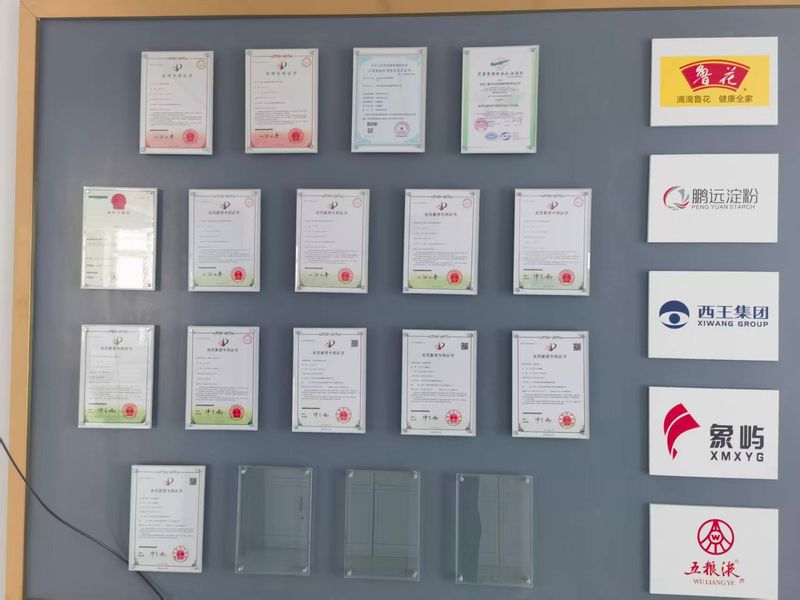
In retrospect, the selection of a rice sampler is essentially a long-term partner, whose strength directly determines the quality of the equipment and subsequent services. As a high-tech company in the country that has been focusing on the field of food autobiography for more than two decades, the company has developed a mature system, with iso 9001 quality management system certification, numerous invention patents and practical new patents, and officially recognized technological research and development capabilities, whether for rice collection, rice deep processing or rice warehousing, which provide well-developed smart sample solutions, equipment operation stability, high automation, effective solutions to the various pains of traditional artificial specimens, improved operational efficiency, management of human risks, and assured that food samples are genuine and reliable。