The data show that last year there was a general decline in coal production, prices and investment, with business profits falling by as much as 61. 2 per cent each year; the only high is stocks。
At the end of the year, the entire society had been storing more than 300 million tons of coal for 48 months, while coal deposits continued to increase, growing by 16. 7 per cent throughout the year。
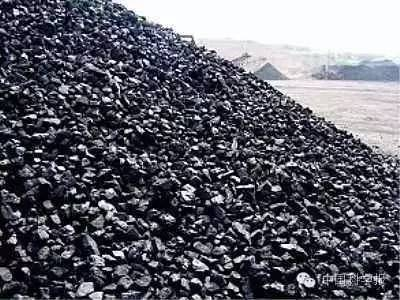
On 5 february this year, the state council issued its opinion on overcapacity reduction in the coal industry (hereinafter referred to as " the opinion " ), which clearly states that "de-capitation" is the main task in the coal industry。
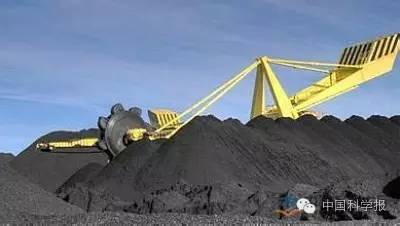
However, during an interview with the chinese science newspaper in recent days, it was made clear that “defeating capacity” still lacks a set of scientific exit criteria。
On 17 july, the china coal enterprises scientific energy list was launched for the first time. The list is the main result of research carried out by china's engineering institute on the subject “technology and strategic research in safe and efficient green mining” and the china coal enterprises scientific research institute's priority fund project, “scientific energy assessment research in china's coal enterprises”。
The project leader, the president of sichuan university, and a member of the chinese engineering academy, xia-ping, told the journalist china science: “scientific capacity based on safety, efficiency and green is a scientific indicator for the coal industry to phase out behind production capacity and develop advanced production capacity, and it is timely for de-manufacturing it.”
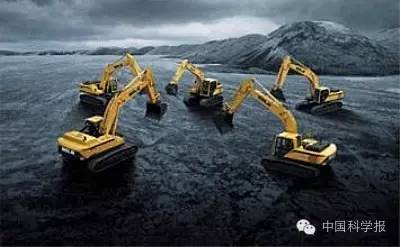
Coal power is imminent
Coal is referred to as “black gold”, especially in my country, which, while it plays an enormous role in economic development, leaves many problems。
First, development is widespread, with nearly 7,000 small-scale coal mines now producing 300,000 tons or less of the country's annual output; secondly, there is insufficient capacity for scientific and technological innovation; and, once again, ecological constraints highlight the fact that the land in the country's open-sourced areas has collapsed totalling 1 million hectares, and the pile of coal pebbles has taken over a large amount of land and caused environmental pollution。
The massive influx of social capital, driven by the rigid demand for coal in previous years, has led to the current situation of overcapacity in coal production and widespread corporate losses。
In an interview with the chinese journal of science, guo jianli, director of the economic research institute of the general institute of coal scientific research, stated that there was a lack of long-term macro-strategic research in the coal industry, particularly in recent years, which had been characterized by an imbalance in management and a severe overcapacity, which had led to a difficult situation for the industry。
The national coal production capacity has exceeded 5. 7 billion tons, and the demand for digestive capacity in the coal sector is imminent as macroeconomic growth slows down and restructurings。
To this end, the opinion calls for a significant reduction in coal production capacity, the phase-out of 500 million tons of lagging capacity and the elimination of 500 million tons of excess capacity。
“the core of the reform is how these two 500 million tons can be achieved.” guo jianli points out that the current pressure to digest excess capacity is enormous, and the task of phasing out the behind capacity is even more daunting。
The vice-minister of science and technology development of china coal industries group, liu zhang, told the chinese journal of science that there were deep-seated problems in the coal industry, such as safe production, the resource environment, and the lack of competition. “when production capacity is removed, the coal industry can re-enter the virtuous cycle, so it is timely to remove capacity, but a set of quantitative criteria is needed to guide the rational allocation of capacity.”
Such a standard system is the “coal science capacity” proposed by the scholars of gratitude and equality。
Science is the way out
In 2014, xie-peace, wang jinhua and others systematically constructed the theory of “china's coal science capacity” in a major consultancy on “technology and strategic research for safe and efficient green mining of coal”。
Scientific energy is described as a production capacity that maximizes coal resources in a safe, efficient and environmentally friendly manner, provided that there is a sustainable reserve for sustainable development for a period of time. It is a concrete expression of the combined capacity of the coal industry and a mining area, with the strategic objective of establishing a modern, modern coal industry production system that is safe, efficient, green, economically and socially coordinated。
The china coal scientific capabilities assessment study is a set of highly actionable evaluation indicators based on effective data collection, based on the theoretical system proposed by the group, including production safety, greenness and efficiency。
The group conducted an assessment of 105 coal enterprises (wellsmen's mines) and found that the average score for scientific capacity and composite indicators for large and large coal mines was over 10 million tons, with lower scores for small and medium-sized coal mines, and a good indication of the technical direction for the integration of the phase-out of backward capacity。
“this empirical study shows that the system of science-based energy indicators can well reflect the overall state of safety, greenness and efficiency of coal mining enterprises in our country, and is an effective technical tool for identifying the strengths and weaknesses of coal enterprises.”
According to liu, these indicator systems will continue to be optimized and the national development of coal science capacity is aimed at over 70 per cent by 2020 and over 90 per cent by 2030。
According to the information received, using the system of indicators and calculations of scientific capacity, in percentage terms: 94 in the united states, 97 in australia and an average of 62. 72 in our country (2014), and 85. 48 in china's best sanhua group, 83 of the top 100 companies met the science capacity criteria, an average of 79. 83。
“it follows that there is still a gap between the level of modernization of our coal industry and the international level, and that the presentation of scientific capacity is necessary for the development of coal industry.” peace notes that, at present, our coal science capacity is less than 3 billion tons, and that the transformation of the coal sector must further advance structural adjustments, and the implementation of scientific capacity assessments is an important tool。
Peace believes that the implementation of scientific capacity will drive the transformation of the coal sector from heavy coal mining to safe and efficient mining supported by high-technology technologies; from production speed to quality efficiency; from single coal production to coal use and deep processing, significantly increasing coal value space; from simple control of coal mine casualties to comprehensive job safety; and from resource-based environmental constraints to eco-friendly environments。
Science forces the coal revolution
Globally, coal has shifted from being a major source of energy to being an important energy source, and my country has entered a period of rising shares of low-carbon energy. According to the national energy action plan, the share of coal in energy consumption will fall below 62 per cent by 2020 and remain within 55 per cent by 2030。
Peace stressed that “the coal industry is in its most difficult times, but we need to be clear that `de-capacity' means the removal of backward capacity, the development of scientific capacity and the imposition of scientific capacity through standard setting”. He suggested innovative transformations, such as coal-based approaches, that would create a multi-pronged clean energy base for the integration of wind, light, water, electricity, heat and gas。
At the same time, xie-peace believes that the coal industry should be positioned not only in the mining chain, but rather in the production and consumption of the whole industrial chain, moving the coal industry from the early stages of coal mining to the advanced stages of the whole industrial chain of clean and quality energy supply。
“if the transition remains at its low end, even it will not escape its fate.” peace is saying that the most critical is the upside-down mechanism of the coal revolution, which is a whole-of-industry chain and which, through scientific capacity, forces the clean-up technology revolution to exploit coal science。
Indeed, our green coal development and extremely low emissions are technically based and economically viable。
“china is the largest consumer of coal, and coal extraction and use of technology should be international excellence, clean up and make coal a green, safe and economically clean energy source.”
For the future, according to the blueprint for peace and planning for the coal revolution, 2020-2030 will usher in an era of 3. 0 years for the coal industry, which is small and close to gas emissions, and 2030-2040 in a period of 4. 0 years for the coal industry, which is empty and close to clean energy emissions, and 2040-2050 in a period of 5. 0 years for the coal industry, which is non-coal and clean on the ground。
"this is my dream of coal, and this is your dream of coal." peace says。