Summary: if the tunnel is to collapse, there will be serious consequences: (1) a threat to the safety of the construction personnel; (2) an extension of the work schedule, an increase in the budget for the work, destruction of equipment and a reduction in the quality of the work; and (3) a negative impact on the reputation of the construction unit and on society. It was therefore necessary to study in depth the causes of the landslides and to take effective preventive and curative measures to reduce harm in the construction process。
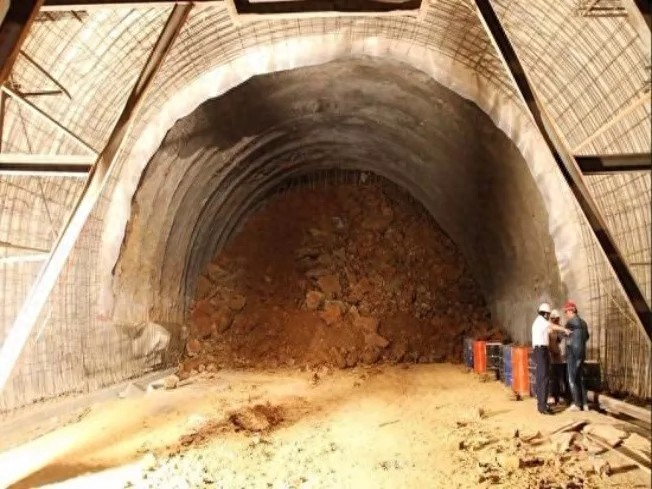
The main cause of the tunnel collapse
1. Weather hydrology
Weather-hydrological conditions are an important factor that triggers tunnel landslides. A large number of engineering cases have shown that heavy rainfall and prolonged rainy weather are important contributing factors to landslides. The strength and carrying capacity of the soft and hard layers of rock are significantly reduced, contributing to the instability and collapse of the rock bodies, which have a soft and hard phase or a weak layer of rock, under the influence of the softening, immersion, erosion and dissolution of groundwater. And if the flow is not smooth, it leads to an increase in pore water pressure, and a reduction in the effective stress of the rock results in a sharp decrease in intensity, resulting in landslides。
2 landslides caused by pressure and poor geological conditions
Ground pressure is defined as the ability of the rock to deform, move and destroy by destroying the balance of the original rock after the rock has been dug up. This includes, inter alia, bulk pressure, deformation pressure, shock pressure and expansion pressure. There are many examples of landslides caused by partial pressure and landslides, as well as extruded landslides caused by plastic pressure. Landslides, faults, dissolved holes, mudslides, expansionary layers, weathered degenerative rock formations, etc., all belong to poor geology and are important causes of landslides. When tunnels pass through these rock bodies, failure to predict and treat them in advance triggers landslides。
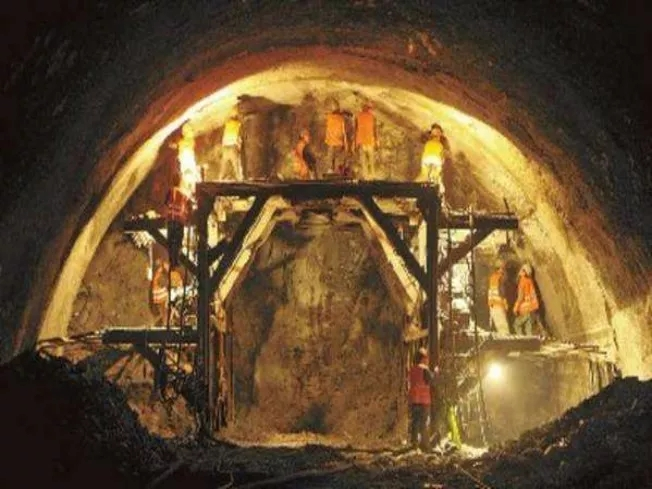
3 landslide due to inadequate design and construction
Most tunnels are now designed and constructed using the “new oli”. The design of the support was unreasonable and the double liner was not properly designed and, if the design and construction staff understood the differences in methodology, some engineering problems arose. Tunnel construction in the ground floors, such as shallow burials, stress, weakness and fragmentation, should be carried out using such measures as exercise measurement, forward support, patching, timely closure of the arches and timely feedback; soft support should not be used, much less emphasis on deformation releases to reduce delivery。
4 management aspects
There is currently a lack of management in most tunnel construction, which is limited to an emphasis on ideas rather than a genuine management exercise, leading to a number of problems, such as: poor understanding of design intentions, incompleteness or even errors; neglect of technical and quality awareness training for operators; lack of attention to detection information; lack of information on construction methods and measures; and unclear technology. These problems cause tunnel collapses and should be given attention by managers。
5 knowledge aspects
The construction staff were not sufficiently aware of the geological work, which was always thought to be a matter of concern to the designers. This perception ignores geological surveys and forecasting in the construction process and increases the likelihood of accidents。
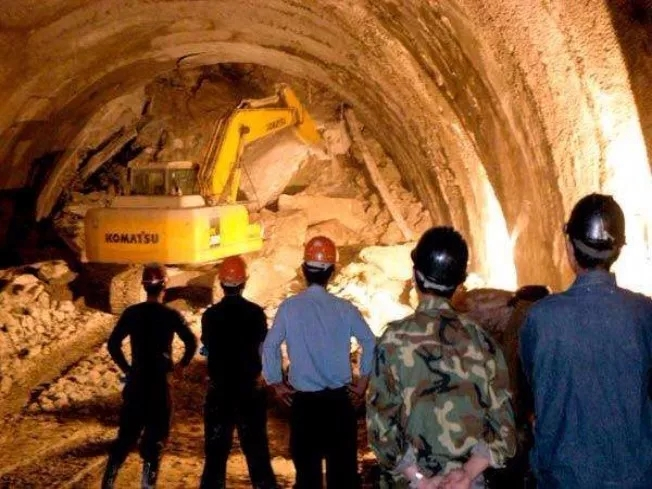
Measures to prevent landslides in tunnel construction
Tunnel construction prevents landslides, except for the selection of appropriate safe and reasonable methods and measures. The main elements of the construction were as follows:
First drain
Implement appropriate drainage measures before and during the construction, as far as possible cutting off the excavated water, preventing flow into the hole and generally treating it with plasma。
Two short digs
In less rocky areas, control is to dig in every cycle, each time a steel arch is to be mounted, and the arch is to be attached to the palm, so that there is no gap between the top and the arch。
I'll take care of you
Reinforcement of the initial support in the case of sculptural and ground pressure ensures that the support structure is sufficiently strong, by increasing the stylistic strength of the arch, reducing the distance between the arches and ensuring the thickness of the ejectives, sometimes with the early closure of the emeralds。
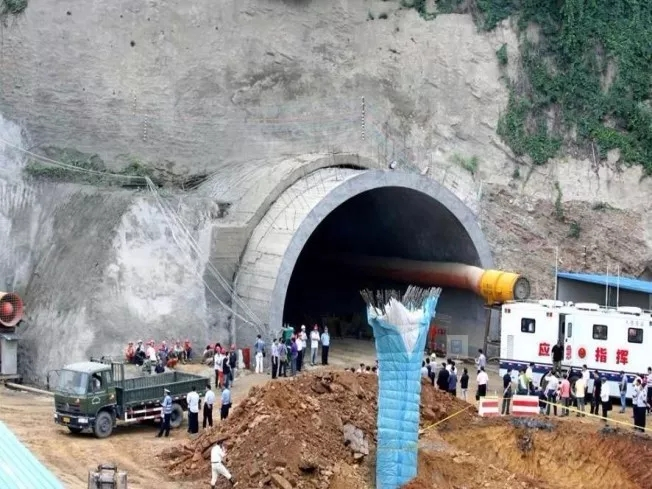
Four, line up
If necessary, double lined up to the palm side, with the aim of making the lined up as soon as possible, and co-opting with initial support。
5-hour measurements
Specialized persons are assigned to inspect and measure deformations, such as escorts and masonry, detect deformations or deformations, take immediate and effective measures to deal with them, prepare advance geological forecasts and keep abreast of the geological and hydrological conditions ahead。
Treatment of landslides in tunnel construction
1 small landslide treatment
If the size of the cave is small, and the area of the cave is embittered or more robustly supported, it can be gradually removed from the ground at either end or from the top to the bottom at one end, taking care to observe whether or not the archeals and surroundings are likely to change and avoid secondary landslides. The digs must be accompanied by temporary support, which must reach the crumbling surface. When the collapse is slightly larger, it is not fully assured that it will cause a secondary collapse, it is not made clear, it is preceded by temporary embossing of the arch, support of the steel arch or emulation of the arch as temporary support, and, in the case of safety, by rigid care for the lack of excavation of the arch。
Treatment of 2 major landslides
When the collapse was higher than the arch opening line, the collapse completely clogged the arch, it was large and unobservable, and the supply of the collapse was not clear, and such landslides belonged to the collapse. In the event of a collapse, it is not possible to support the collapse, nor to clear it, which is likely to follow it and expand rapidly, using only a “sliding” approach. The so-called “tip” is to strengthen the front end of the landslide and to prevent its extension; the so-called “tip” is to use a small catheter to go through the landslide and to pump it in。
Three for the water first
The most undesirable problem in the construction of tunnels is groundwater, which can be washed, softened and dissolved in some of the surroundings, thus aggravating the conditions. More prominent are the piles, the severe weathered areas and the fractured fault strips, which, first of all, are themselves adverse geological areas, prone to landslides and, again, sites with high groundwater activity, making construction difficult. So the lesson learned from the tunnel construction is that it is “water before the collapse”. Such tunnel landslides are treated in such a way as to prevent surface water from pouring into the landslide, to enhance drainage measures and to attract groundwater。
The treatment of 4 landslides
The cave should be secured before the collapse is dealt with, with an anchor to close the surface around the cave and avoid a second collapse of the top when the cave is dug twice. In the case of poor geological conditions, anchors should also be placed on the surface of the periphery or reinforced by surface plurry. Waterproofing measures are to be carried out around the surface and over the caves to avoid rain coming into the fading cavity. If the top of the fading cavity is very shallow and the cavity is relatively large, the surface may be removed for open treatment as appropriate。
5 landslide lined and filled back
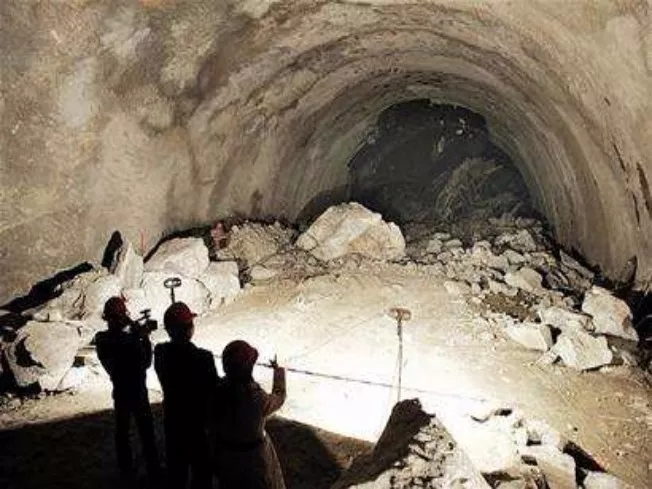
The support and liner of the general landslides need to be strengthened, and the embedding must be closely supported between the back of the liner and the crumbling wall. The treatment of empty holes in the back of the landslide can be filled back with slurry or dry rock when the landslide is smaller. When the cavity is larger, it can be filled with slurberry rock, which should be 2 metres thick, with steel support, etc. Above the space to hold the stable rock. When the collapse croaks, the type of support and embezzling liner is determined on the basis of the top back-filling slag and the load of the soil, and the design strength is formed before the refilling is carried out, light material, such as slag, is generally used to shield water with clay coverings up to 1-2 metres from the surface, which are about 50 cm above the original surface, and backfilling and sealing are required to fill in to prevent collapse。