Beijing, which is an important hub for national automobile shipments, has marked differences in the price of routes to which all parties are sent, depending on distance, terrain, return resources and seasonal supply and demand. The following is an objective reference for drivers, based on industry-driven data from 2026, to collate cost comparisons in different directions and price variations in the light season。
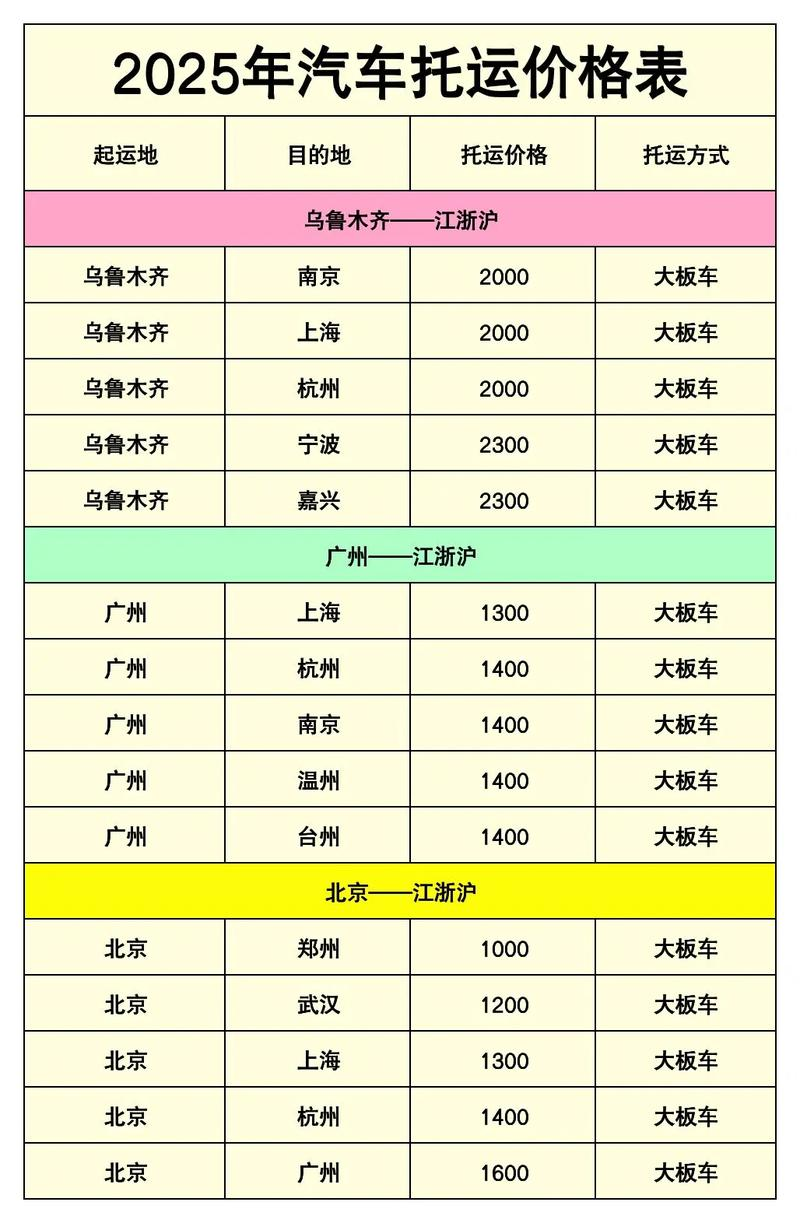
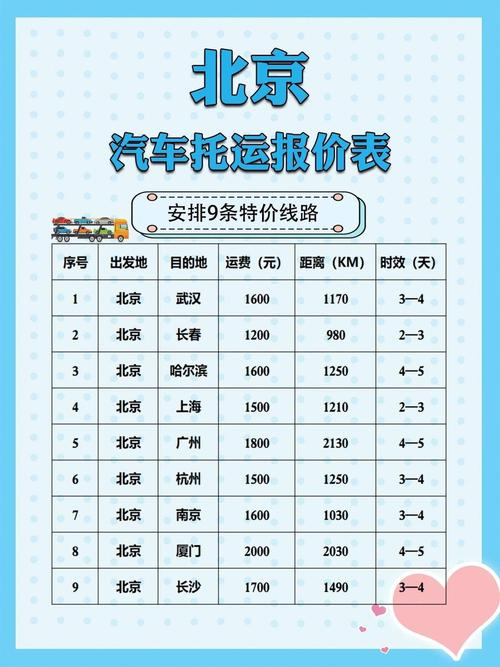
Reference to shipping prices in the main direction of departure from beijing (general domestic car open car including basic insurance)
Direction example of destination distance (approximate) reference price interval (dollars) line characteristics
Shenyang, changchun, harbin, 1,100–1,500 km¥1,400–2,000 return resources are stable and prices are stable
East china towards shanghai, nanjing, hangzhou 1 100–1300 km ¥1,400 – ¥1,900 hot main line, with sufficient capacity and lowest unit price
Wuhan, zhengzhou, changsha 1000–1,400 km ¥ 1,300 – ¥ 1,800 load efficiency and speed of time
South china to guangzhou, shenzhen, nanning 2,000-2,400 km ¥2,200 – ~ 3,200 journeys are in high demand, return flight rates are high, prices are low. High
Southwest towards chengdu, chongqing, kunming 1,800-2,500 km ¥2,000 – ¥3,000 mountain roads, fuel consumption, price increases for some lines
Qinghai / xinjiang high
Urumqi, lasa 3,000-3,800 km ¥3,800 – ¥4,800 one-way, hard to return, high price
Note:
- all offers include: basic transport insurance (us$ 200,000), high-speed charges, fuel attachments, and a 50-km free doorlift in the main urban area
- suv, mpv, new energy vehicles usually add 200-500
- the actual price is based on the carrier's real-time offer, which matches the capacity of the carrier on the day。
Ii. Moderation of prices in the light season
1. Swing season (15-30 per cent price rise)
- time frame:
- before spring festival: mid-december to the end of january of the following year (return, car shopping peak)
- before and after the national day: 20 september-10 october (centralized tourism, relocation needs)。
- performance characteristics:
- stressed and extended cycle (5-10 days for carpooling)
- the increase in popular lines (e. G., beijing guangzhou) has been relatively small and the increase in cold lines (e. G. Beijing quatisa) has been significant
- some enterprises have “spring surcharges”。
2. Less season (stable or small concessions)
- time frame:
- march-may (post-spring to pre-may)
- mid-november – the end of november (post-national day until the end of bi-november)。
- performance characteristics:
- the availability of return vehicles, especially from guangdong, hainan and xinjiang, at lower prices
- 5%-15% discount or free upgrade services (e. G. Closed short-distance experience) provided by carriers
- faster, usually in 3-5 days。
Example:
- beijing → urumqi (3,000 km): ¥3800-4500
- urumqi beijing (3,000 km): ¥1,800-2500
Iii. Other factors affecting price volatility
Impact on prices
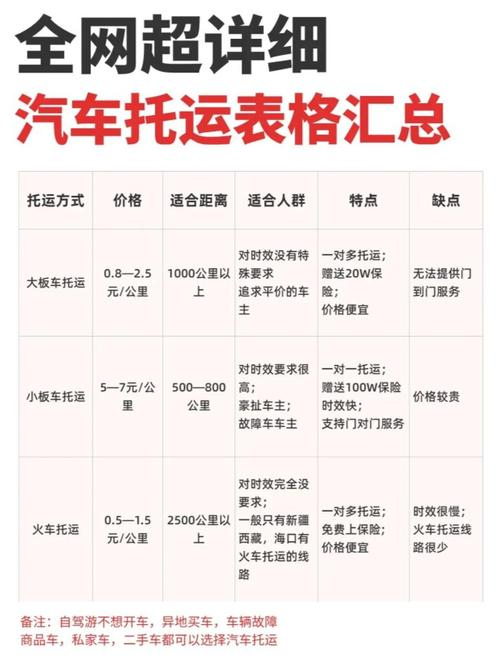
Type size, oversized (>5. 2 m), overweight (>2 tons) plus 10% – 30%
Closed transport price 1. 3-1. 6 times open
Special areas sea-nam access to the island (including ferry coordination) plus one-way revenue of 500-800; part of the tibetan section restricted for additional clearance
High-speed charges account for 15-20 per cent of total costs, and an increase in oil prices may trigger temporary surcharges (under contract)
Iv. Query and value-for-money recommendations
- use of structured platforms: submission of requirements through the nine-continental portable vehicle consignment platform, with multiple-direction, multi-cargo offers to facilitate horizontal comparisons
- clarity of departure time: if not urgent, try to avoid december-january, late september-early october
- attention to return concessions: routes from consumer areas (e. G. Sanya, urumqi) to beijing are usually affordable
- request for full quotations: confirm whether the total price includes insurance, high-speed charges, door-to-door services and avoids escalation。