On 2 february, the provincial government press bureau held a press conference in which the provincial transport department was primarily responsible for gays, among others, providing an overview of the 2026 spring movement in shandong province。
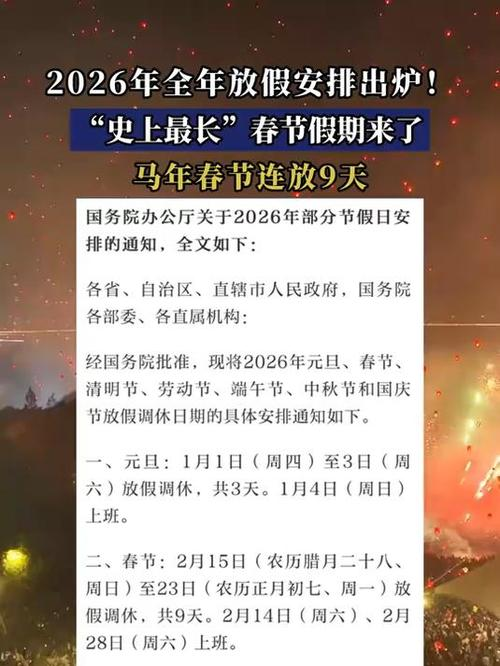
Spring 2026 officially commenced on 2 february and ended on 13 march for a total of 40 days. According to the secretary-general and director-general of the department of transport and communications of shandong province, the study and analysis of this year's spring transport has three main characteristics: high scale. This year, nine days of “the longest spring holiday in history” will be observed, free of charge in highway buses, family visits and tourist flows will increase significantly. During the spring run-off, the province-wide highway traffic is expected to exceed 91 million traffic times, an increase of 5 per cent over the same period, and the volume of open passenger traffic is expected to reach 54 million, an increase of 3. 8 per cent over the same period, all of which is at an all-time high; the pressure is high. It is expected that 5 february (jan 18) and 15 february (jan 28) will be the pre-flag peaks and 23 february (jan 7) and 4 march (jan 16) will be the post-flag peaks, combined with a sustained increase in self-driving, with small vehicles accounting for 90 per cent and, at peak times, major hub stations and priority sections will be tested for hyperbus; security challenges are high. During the spring transport, there is a potential for periodic severe cooling and heavy rain and snow weather in shandong, with heavy contamination of the weather by fog, haze and so on, posing a risk challenge to safe travel。
The provincial council and the provincial government attach great importance to the organization of the spring games, the establishment of the spring games working mechanism, the development of the work programme and the convening of meetings for mobilization and deployment. The province-wide transport system is well prepared for the objectives of “peace springs, easy springs, hot springs” in advance and is striving to ensure that people travel safely and easily with better standards, initiatives and services。
Strengthening security emergency controls and making every effort to create “peace spring”. Increased risk screening and treatment. Prior to the spring transport, the provincial transport system organized a series of enterprise self-inspection, county-level screening, city-level spot checks, provincial patrols, which dealt with 577 persons in danger and effectively addressed the security risks before the spring, without any involvement in the protection of the spring transport until they were modified. During the spring transport, shandong will conduct continuous risk screening and self-censorship checks, making every effort to ensure that the spring transport links are safe and orderly and that significant sources of risk are captured. In line with the concept of “higher-than-conventional, more peaceful” infrastructure inspections, maintenance of transport equipment, maintenance of transport equipment and training of practitioners, a determined effort is being made to ensure the safety of people's lives and property through the dynamic control of the major sources of risk for the safe production of 7 categories of transport and emergency response. Implementation of the “four mechanisms” for fast-tracking, “cross-the-road” disposal, pre-positioning, inter-provincial synergies to ensure active defence against severe weather conditions such as fog and cold and cold rain. During the spring transport, the daily movement control and 24-hour watch system is strictly enforced to ensure rapid response, response and efficient disposal in the event of a sudden onset。
Strengthening of the integrated transport organization (ito) with a view to developing “facility and spring transport”. The first is to arrange for the deployment of scientific resources. Integrated supply of all modes of transport in accordance with the principles of “sufficient arrangements, start-up on demand, rapid response and preparedness”. With regard to road transport, 4,700 inter-provincial and inter-municipal line buses and 148,000 passenger charters were dropped, an increase of 35 per cent over normal times; rail transport, an additional 99. 5 per cent of passenger lines were arranged on the basis of 586. 5 vs. Charted passenger trains; civil aviation transport, 56,000 flights were planned, providing approximately 9 million seats, an increase of 25 per cent over normal times; and water transport, 152 ships and 39,000 passengers, an increase of 30 per cent over last spring. In addition, in response to the boom in the tourism market, shandong will increase its capacity in priority tourism areas and landscapes, with multiple channels to meet tourist travel needs. For example, on the basis of the original six regular public transports, the ta'an landscape has been set up with seven additional special lines, as well as a “ta'san sunrise tour line” to facilitate night-time climbs by tourists。
Optimizing access to transport links. Scientifically, urban public transport capacity, free main-line transport linking to urban and rural passenger transport, urban bus transport, or rail transport, etc. Have been rationalized, with an appropriate extension of the first and last shift, “high iron is not available, bus is not available”, and “first and last kilometre” travel effectively。
I'm going to make sure that the road network is blocked. (c) conduct a thorough pre-screening of spring traffic congestion sections and toll stations, such as the japanese express, and develop a diversion programme. In response to focus periods and focus segments, the network's operational dynamic monitoring and departmental connectivity are enhanced, command routing and long-range diversion are enhanced, congestion is detected in a timely and rapid manner and congestion is addressed, and self-driving is fully guaranteed。
Strengthen the scientific direction of travel. The policy of free passage for minibuses on major holidays is strictly enforced, making full use of service hotlines, microblogging, micro-intelligence programs, apps and road information boards, and issuing timely travel information to guide the population in their rational planning. Here, the owner's friends are also reminded that free passage times on the highway are based on the time the vehicle leaves the exit toll lane, without the need to stay at the entrance until the free time begins. If the free time comes to an end, you can get close to the high-speed and then get to the point of destination, with the payment of the remaining travel costs。
In addition, travel security has been strengthened and efforts have been made to build a “sweet spring”. Full multiplication of the charging facility in the expressway service area is being carried out, and a “one-size-one approach” is being put in place to establish a charge guarantee programme for the busy service area and an emergency disposal plan. During the spring transport, more than 3,800 charging spaces will be available in the province-wide expressway service, an increase of more than 30 per cent over last spring's. The three basic services of hot water supply, food heating and cell phone charge are provided free of charge in all highway service areas throughout the province, with 159 additional free shower services。
At the same time, shandong will be actively engaged in the continuous improvement of the “whole-process” travel experience, such as ticket sales, waiting and security checks, through, inter alia, digitization, and in the development of “hot travel”。
Zhou yi