Silver hair [202] 120
In the face of the significant impact of the new coronary pneumonia epidemic on msmes, the financial and related sectors are firmly committed to the deployment of the party's central and state council's decisions, acting quickly and on their own initiative. A series of measures have been put in place to support the expansion of domestic demand, the resumption of productive assistance, job security and the provision of accurate financial services for disease prevention and control, the resumption of work and the physical development of the economy. In order to facilitate better adaptation of financial support policies to the needs of market-based subjects, to further streamline internal and external transmission mechanisms, to promote a significant increase in the scale of financing for msmes (including individual business owners and micro-entrepreneurs, excluding local government financing platforms, and the same) and to optimize the financing structure, to achieve “incremental increases, price reductions, upscaling and expansion”, to accelerate the return to normal productive life order and to support the quality development of the real economy, the following observations are made。
I. Implementation of the re-entry credit support policy
(i) arrange for debt service extensions for small and medium-sized enterprises. Improve the debt service extension policy and increase support for the debt service extension for all micro-enterprises. Banking institutions need to strengthen their policies to increase the percentage of beneficiaries and extend the credit period to enterprises that are operating normally prior to the epidemic and have difficulty operating as a result of the epidemic. Discrepancies support is to be provided in conjunction with the actual business, such as amortization of the principal, amortization of interest to the subsequent repayment date. To improve the efficiency of response, simplify processing and encourage online processing。
(ii) play a national banking lead. The national bank, with its comprehensive and targeted reduction policy, has introduced a detailed programme for monthly follow-up of loans to msmes. Five large state-owned commercial banks have increased their lending to inclusive micro-enterprises by more than 40 per cent. National banks need to make reasonable concessions to ensure that the coverage of msmes is significantly expanded and that the cost of integrated financing is significantly reduced。
(iii) use of re-loan rediscount policy. The branch of the people's bank shall use the re-credit and discount policy to direct financial institutions to focus on supporting msmes, as well as in areas such as poverty alleviation, spring farming, poultry farming, foreign trade, tourism and recreation, accommodation and catering, and transport. Strengthen oversight and management to ensure that funds are released in compliance with the law and to prevent “run and slip”. Small and medium-sized banks need to use re-loan and rediscount funds to encourage small and medium-sized banks to increase their own financial support, promote greater lending of small and medium-sized enterprises and reduce financing costs。
(iv) implementation of a well-developed, policy-oriented bank credit line. By the end of june 2020, the development and policy bank will have put in place a special credit line of $350 billion to support the rehabilitation of small and medium-sized enterprises at a preferential rate of interest, and a programme for the implementation of the bank's special credit line will be submitted on a monthly basis。
(v) increase support for insurance guarantees. Insurance institutions are encouraged to provide more targeted, relevant loans to guarantee insurance products, depending on the extent of the epidemic. Insurance companies are encouraged to distinguish between country risk types, further improve export credit insurance coverage and increase risk security for exporting msmes. Insurance companies are encouraged to explore innovative and effective methods of settlement of claims during epidemic control to ensure that clients at risk are provided with timely and accessible compensation services。
Ii. Implementation of the project to upgrade the financial services capacity of commercial banks for msmes
(vi) raising political positions and transforming business concepts. Great importance should be attached to financial support for the real economy, such as msmes, affected by the epidemic, and to strengthening social responsibility. In line with the structural reform of the financial supply side, the focus of operations and credit resources has shifted from the preference for real estate, local government financing platforms to the real economy of msmes, with the aim of optimizing credit resource growth and stock restructuring。
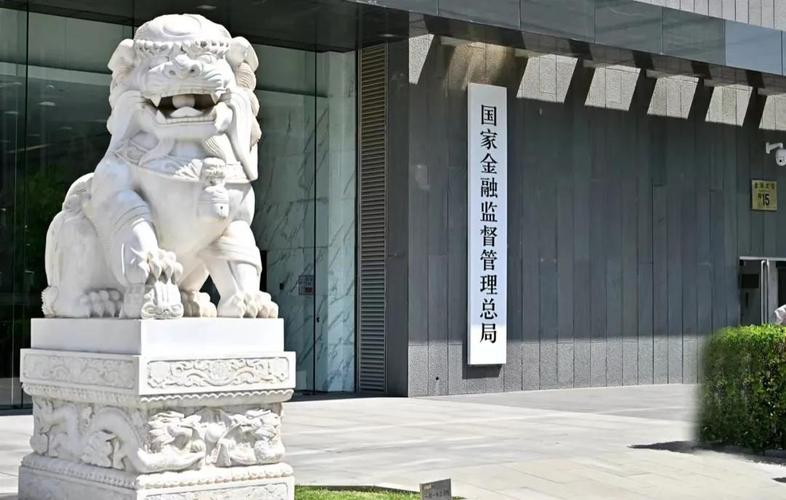
(vii) improved internal resource allocation and policy arrangements. Large- and medium-sized commercial banks are required to establish a “five-part” mechanism for the ministry of inclusive finance, which includes special credit schemes for micro-enterprises, private enterprises and manufacturing, with appropriate decentralization. Reforming the cost-sharing and benefit-sharing mechanism for the lines of micro-credit operations, the domestic transfer pricing preferences of national commercial banks are no less than 50 basis points, and small and medium-sized banks may implement internal transfer pricing preferences or economic profit subsidies, taking into account their actual situation。
(viii) improvement of internal performance appraisal. Commercial banks need to increase the weight of inclusive finance in the performance appraisal of branches and leaders by raising the weight of inclusive finance in the integrated performance appraisal of branches to more than 10 per cent. The assessment of the value of small micro-enterprises'services needs to be increased by reducing the weight of small-scale financial profits. Improve internal credit due diligence recognition standards and processes, recognizing failure as due diligence where there is no clear evidence of failure, and gradually increase the rate of exemption for micro-credit practitioners and motivate them to undertake micro-credit operations。
(ix) increase significantly the number of micro-enterprise credit loans, down loans and non-repayable loans. Commercial banks need to optimize risk assessment mechanisms, focus on auditing first repayment sources and reduce reliance on collateral. Efforts are made to achieve a significant increase in the share of new loans granted, subject to risk containment. Commercial banks are urged to increase the number of households receiving loans from the banking system for the first time. To allow the continuation of loans to eligible micro-enterprises to be included in the normal type of loans, and to encourage commercial banks to increase their investment in medium- and long-term loans in order to achieve a higher rate of renewal of micro-enterprises by 2020 than in the previous year。
(x) enabling micro-enterprises to provide financial services using financial science and technology. Commercial banks are encouraged to develop risk pricing and control models using technologies such as big data and cloud computing, and to adapt the credit approval process. In-depth information on the consolidation of credit information for micro-enterprise clients within banks, improved interface with external credit information platforms, such as letters of credit, taxes, market supervision, and improved customer identification and credit delivery capacity. (c) the establishment of a “last kilometre” closure for business finance to effectively meet the needs of msmes。
Iii. Reforming the external policy environment and incentive constraints
(xi) strengthened countercyclical and structural adjustment functions of monetary policy. Implementation of sound monetary policies, combined with the application of monetary policy instruments such as open market operations and medium-term lending facilities, to maintain a reasonably adequate liquidity of the banking system and to induce financial institutions to increase credit support for msmes。
(xii) act as a reform of interest rates for quoted loans. The differentials between the rates of major bank loans and the rates quoted in the loan market were incorporated into the macroprudential assessment and the variation in the lending position of small and medium-sized banks was closely monitored. To urge banking financial institutions to embed interest rates on lending market quotations into internal pricing and transmission links, and to facilitate internal interest rate transfer mechanisms within banks. In accordance with the principles of market and rule of law, the conversion of stock floating interest rate loan pricing benchmarks is carried out in an orderly manner。
(xiii) optimizing external incentives for regulatory policies. Promote the revision of the commercial banking law and study changes to the provision that commercial bank loans should provide guarantees to facilitate access to credit for micro-enterprises. Conducted a regulatory evaluation of financial services for commercial banks for micro-enterprises, and continued to implement the growth rate of inclusive micro-enterprise loans and the “twin-up” requirement for households. Further liberalization of tolerance of non-performing loans for inclusive micro-enterprises。
(xiv) research to improve the performance evaluation system of financial enterprises. (c) revise the approach to improving the performance evaluation management of financial enterprises and weaken the requirements for profit growth in the performance appraisal of state-owned financial enterprises. Link financial institution performance appraisal to inclusive micro-enterprise lending. (b) to guide financial enterprises to better implement the national macro-strategy, the service economy and support micro-enterprise finance. Futures companies risk management subsidiaries are encouraged to provide better-quality, accessible risk management services to micro-enterprises, including through off-site options, warehouse receipt services, etc。
(xv) better implementation of fiscal policy preferences. (c) increase the dissemination of financial service tax incentives and compensatory measures for micro-enterprises in an effort to achieve full entitlements. (d) strengthen financial security for inclusive financial development by piloting comprehensive reforms of financial services for micro-enterprises。
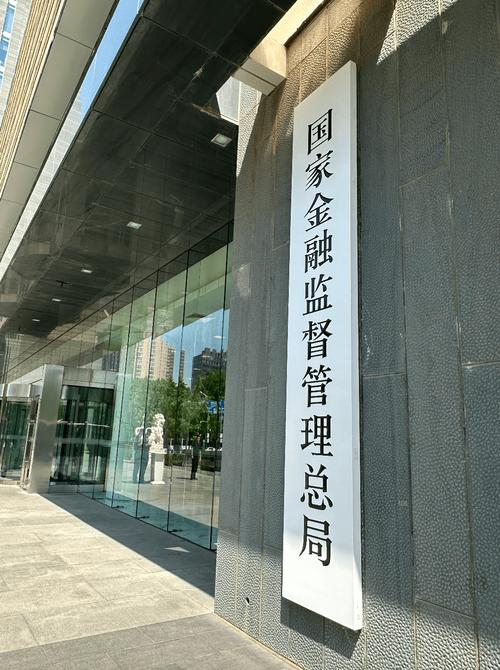
(xvi) play the role of a local government finance guarantee body. Establishment of a system of evaluation of government financing guarantees, highlighting their quasi-public product attributes and policies, phasing out profit-making requirements, focusing on the effectiveness of small farmers (including new households, amounts, percentages, rates, etc.), lowering of counter-guarantee requirements, timely payment of liabilities and initial loan support rates, and implementation of incentive-based mechanisms that directly link results to replenishment, risk compensation, remuneration, etc. Gradually increase the magnification of guarantees and reduce the average guarantee rate for government financing guarantees and re-guarantee agencies to less than 1 per cent。
(xvii) promoting the accelerated operation of national financing guarantee funds. In 2020, efforts were made to increase the size of the re-guarantee business by 400 billion yuan. Cooperation with banking financial institutions on bulk guaranteed loans to increase risk sharing to 30 per cent in bulk cooperative operations. Cooperation agencies are exempt from re-guarantee fees of $1 million or less for their individual guarantee operations and, throughout 2020, for more than half of the guarantee business of $1 million。
(xviii) unjustified clean-up norms and irregular financing charges. Increased regulatory scrutiny and accountability for irregularities in the payment of fees for micro-credits by banking financial institutions and the dissimilarity of the cost of raising the actual financing costs of high-school micro-enterprises, such as loan tied-up, transfer costs and loan linkages。
Iv. Fulfilling the multilayered capital market financing support role
(xix) increase support for bond market financing. Directing net financing of corporate credit-type bonds by rmb 1 trillion more than in the previous year, supporting larger enterprises to finance more debt and releasing credit resources to support micro-enterprise lending. Optimizing the process of approval of micro-enterprise-specific financial bonds, improving control points and strengthening follow-up management, and supporting financial institutions to issue special-purpose micro-enterprise bonds worth $300 billion in 2020. Further develop the support role of private sector bond financing instruments. Promote the development of credit risk mitigation and credit protection tools, and promote private issuance of convertible corporate debt financing instruments。
(xx) increasing the efficiency of msmes in using commercial money orders for financing. To facilitate the use by enterprises of commercial billings that are more conducive to protecting the legitimate interests of msmes, to promote the interconnection of supply chain information platforms with the commercial billing infrastructure, to accelerate regulatory innovation in commercial billing products and to increase the efficiency of the financing of receivables by msmes。
(xxi) support the listing or listing of high-quality msmes. Supporting the marketing of eligible smes on master boards, science boards, small and medium boards, and entrepreneurship boards to accelerate the reform of the entrepreneurship boards and pilot registration systems. Optimizing the new three-board distribution financing system, introducing open distribution mechanisms to non-specified qualified investors, removing the 35-person limit for additional shareholders in targeted single-issue finance, allowing internal microfinance to operate on its own and reducing the cost of corporate finance. The establishment of niches, the establishment of a system of roll-on listings, which allows companies with one year of roll-out and meeting the relevant conditions to move directly to the market, and the establishment of an ever-growing uplink for listed companies. Establish differentiated standards of investor appropriateness for the base, innovation and selection levels, introduce long-term financing such as public fund raising and optimize the investor structure。
(xxii) inducing early investment in private equity and entrepreneurial investment. (c) amend the interim scheme for the supervision and management of private investment funds (csrc order no. 105) to strengthen differential regulation and self-regulation of entrepreneurship investment funds. (c) develop entrepreneurship investment enterprise standards to guide and encourage entrepreneurship investment enterprises and angel investment focused on investing in msmes for innovative enterprise creation. To encourage greater support for investment in entrepreneurship and to gradually increase the proportion of equity investment-based management products, to improve the mechanisms for lending and insurance linkages between banks, insurance and entrepreneurship investment enterprises, and to strengthen market-based cooperation between entrepreneurship investment enterprises and financial institutions. (c) promoting the improvement of the policy of the investment fund for insurance funds。
(xxiii) promoting regional equity market innovation pilots. The selection of qualified regional equity markets to pilot institutional and business innovations promotes the revision of regional equity market trading systems, financing products, and policy provisions related to corporate governance. Promote greater policy support from relevant ministries and local governments, using regional equity markets as a platform for integrating local msme enabling policy measures. To strengthen the interface between letters of credit, taxation, market regulation, local credit platforms, and to encourage the involvement of commercial banks, securities companies, private equity investment agencies, etc., to facilitate the provision of related financial services by commercial banks。
V. Strengthening credit systems for msmes

(xxiv) increased guidance on building local communication platforms and integrated credit service platforms for sme financing. Research to develop standards such as data catalogues, operational management, promotion of local governments to take full advantage of existing credit information platforms, establishment of local credit information platforms and integrated credit service platforms for sme financing, and support for the establishment of local platforms for market-based credit agencies in areas in a position to do so. Accelerate connectivity and regional economic integration based on local service platforms. Explore the creation of a repository of high-quality msmes, such as single champions in manufacturing, specialized new “small giants” enterprises, specialized new small and medium-sized enterprises (smes) and advanced manufacturing clusters in the industrial sector and industrial enterprise technology upgrading and upgrading programmes, building productive cooperation platforms, enhancing information sharing and matching, facilitating interface between financial institutions and msmes and providing quality financing services. Refinement and promotion of the credit swap model。
(xxv) establishment of a unified system of publicity for registration of movable property and security rights. (b) promote reform of the registration of movable property and security rights, establish a unified public system of registration of security rights in movable property and rights, and progressively achieve the registration of movable property and security rights on a platform by market subjects。
Optimizing the local financing environment
(xxvi) establishment of a sound loan risk compensation mechanism. Local governments in a position to do so may set up risk compensation “pools” to provide interest rates and incentives for msme loans, capital replenishment of government finance guarantee institutions, etc. To cover limited liability up to the amount of the contribution. Improve the risk compensation management system, rationalize hosting, compensation conditions and increase efficiency in the use of risk compensation。
(xxvii) support supply chain financial services for msmes. Supporting productive cooperation, promoting industry-wide chain financial services, encouraging the development of supply chain financial products such as orders, warehouse receipts, inventory, receivables financing, and acting as a platform for receivables financing services, promoting the financing of receivables for msmes by 800 billion yuan by 2020. Strengthen the linkages between financial, fiscal, trade-related and national finance policies, and accelerate the system interface between core enterprises, the financial sector and the accounts receivable financing services platform, with a view to achieving full access to the accounts receivable financing services platform by the state-owned commercial banks and the major equity commercial banks。
(xxviii) promote the deepening of local government deregulation reform. To promote local government accountability for risk sharing, information sharing, debt settlement, to continue organizing the clearing of arrears to private enterprises, msmes and to urge government departments and large enterprises to pay all outstanding accounts in a timely manner and in accordance with the law. Support is provided to places where conditions exist to explore platforms such as renewal centres, first-time lending centres, surety centres, etc., for the provision of off-the-shelf services. (c) continue to clean up the unreasonable and irregular charges of local government departments, intermediaries and micro, small and medium enterprises。
Strengthening organizational implementation
(xxix) strengthening organizational facilitation. The branch of the people's bank, the superintendence of the bank and the superintendence of the bank, through the establishment of special units, can strengthen the links with the local development reform, taxation, credit, commerce, state finance, etc., and develop specific actions to improve the financial services capacity of commercial banks for small and medium-sized enterprises by strengthening internal incentives, enhancing loan support, improving the efficiency of services, reducing the cost of financing, strengthening bank interfaces and optimizing the financing environment。
(xxx) improved monitoring and evaluation. To explore the establishment of a scientifically objective national statistical system for the survey and evaluation of the financial situation of msmes, and to develop an index of the financial conditions of msmes, to be released to society in due course. The deputy provincial urban centre branch of the people's bank, in conjunction with the bank's superintendency, explores the establishment of a system of environmental assessment of msmes at the municipal and county levels, focusing on the level of msmes in the districts, financing guarantees, disclosure and sharing of information in government departments, accounting arrears, etc., and, where appropriate, informs financial institutions and municipal and county governments of the results of the evaluation and the creation of a sound financial ecological environment。
26 may 2020