1. The roles of the four are different:
1. Role of the roadbed: the roadbed is the basis of the road and bears the load from the road。
2. Role of roads: the primary role of roads is to provide the necessary conditions for the operation of orbits or surfaces and trains and motor vehicles and to withstand static loads of orbital and rolling vehicles or surface and traffic loads, while transmitting and spreading them to the depth of the foundations。
3. The role of the road embankment: in both directions, the route must guarantee the high distance required by the route; on the plane, the road is connected to a bridge, a tunnel and a fully connected line. In civil engineering, the road is of major importance in terms of the number of works, the size of the land and the investment。
4. Roadblocking: it acts as a mitigating factor for road slopes or crossing the crossing line through the junction。
The overview of the four is different:
1 overview of roadbeds: roadbeds are slots made from the floors of the surface structure and the height requirements of the markings, on the basis of the basis of which they are to be filled or dug。
General description of the route: the route is the basis of the orbit or surface and is a geotechnical building formed from excavation or excavation。
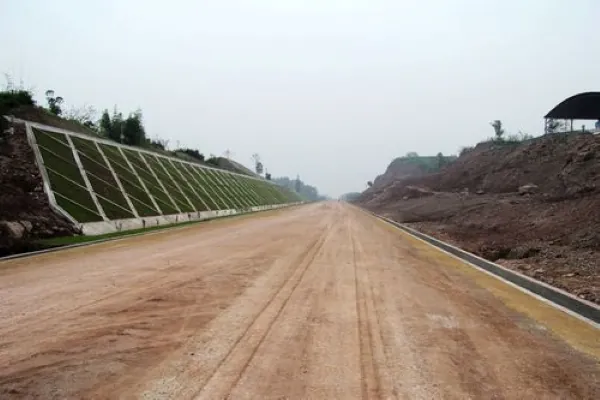
3. Summary of road embankments: the embankments are those at top of the road base above the original ground. A common form of cross-road construction in transport engineering roads。
4. Overview of roads: an excavator base below the original ground is referred to as a roadblock and refers to the form of the foundations dug downward from the original ground。
The requirements of the four are different:
1. Requirements related to roadbeds: depending on the actual condition of the roadbeds, the reinforcement of individual roadbeds shall be based on soil mass, precipitation, groundwater type and depth of burial, sources of reinforced materials, etc., and may be matched by reinforcement measures such as ground crushing, earth exchange or soil improvement, enhanced underground drainage and the installation of composite earthwork materials。
2. Related luki requirements: the building of road-based materials, whether filled or excavated, is mainly a gravel mass material, so that the road-based structure is an earth-based structure that is often affected and destroyed by changes in natural conditions, such as geology, water, rainfall, climate and earthquakes, and has poor resistance, and should therefore be sufficiently robust, stable and durable. For high-speed railways, the base should also be reasonably rigid in order to guarantee the smooth and comfortable conduct of the train at high speed。
3. Requirements related to road embankments: the selection and tightness of the road embankment structure base fillings are most important in the design and construction of the route. Road emitters are subject to compact deposition by their self-heaviness and by the vehicle load, and cumulative deposition by the long-term repetition of the train load。
The issue of reducing and controlling the landing of road dykes is an important one to be addressed by the road dyslexic project, which can cause road-based disease, increase the maintenance and maintenance workload of the route and affect normal vehicle traffic. This is mainly addressed through controls over fillings, increased pressure standards, etc。
4. Requirements related to roads: roadside construction slopes must be stable by setting up trenches and, if necessary, cutting trenches to ease drainage. Roadblocks undermine the natural equilibrium of the in situ layer, which is detrimental to drainage and ventilation; their stability depends largely on geological and hydrological conditions, as well as the depth and slope of the slope。