Core tip: automobile ac works and composition i. Automobile ac works. Automobile ac and other refrigeration acs work in the same way, using refrigerant r-134a to absorb large amounts of thermal cooling from liquid to gas. Automobile air-conditioning compressors transfer power through belts (non-independent air conditioning) through motors, compressors inhale low-temperature low-pressure refrigerant gases, operate as high-temperature high-pressure gases, cool through condensers ' radiators and cooling into liquids with high-pressure moderate temperatures, then dewet and buffer through the liquid dryer, then flow to the expansion valves with more stable pressure and flow, then flow to the evaporation unit through the throttle and coolant, and evaporate in the low-pressure environment and absorb large amounts of thermal energy. The air in the car continues to flow through the evaporation unit, which reduces the temperature in the car
Activation and composition of car air conditioning
I. Working principles for car air conditioning
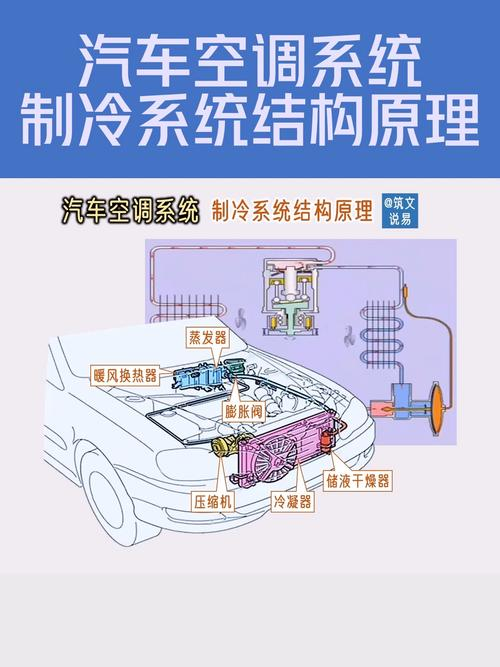
Automobile air-conditioning and other refrigeration air-conditioning refrigeration principles are the same, and the refrigerant r-134a is used to absorb large amounts of thermal cooling from liquid to gas. Automobile air-conditioning compressors transfer power via belts (non-independent air conditioners), compressors inhale low-temperature low-pressure refrigerant gases, operate as high-temperature high-pressure gases, cool through condensers ' radiators and cooling into liquids with high-pressure moderate temperatures, then dehumidize and buffer through the liquid dryer, then flow to the expansion valve with more stable pressure and flow, then flow to the evaporate through the throttle and cooler*, so that the refrigerant evaporates into a low-pressure environment and absorbs large amounts of thermal energy. The air in the car continues to flow through the evaporation unit, which reduces the temperature in the car. The liquid refrigerant flowing through the evaporation unit is transformed into a low-pressure gas and is re-inhaled to the compressor for the next cycle. In the system as a whole, the expansion valve is the control of refrigerants entering the evaporation unit. Too many refrigerants enter the evaporation unit without evaporation and too little cooling and not enough, so the expansion valve is the control hub. And the compressor is the heart of the system, the power source of the system cycle。
As car air conditioning is a mobile vehicle-mounted air conditioner, it is more difficult to move than a stationary air-conditioning system, it is more volatile with car tremors, the refrigerant of air-conditioning systems is more likely to leak than a fixed pattern, the repair and maintenance of air-conditioning systems is more frequent than a fixed pattern, and the mid-windway system of air-conditioning units often inhales dust, jams filters and evapotors when inhaling new winds。
Ii. Automobile air-conditioning system classification (by power source)
1. Independent air conditioners: operation of compressors with a dedicated power source (second engine) which are generally used in large and medium-sized vehicles because of the large internal space position of the large and medium-sized bar and the higher requirements for the operation of air conditioning. The use of stand-alone air-conditioning is limited to large and medium-sized vehicles owing to the need for two engines, the high consumption of fuel and the high cost of their maintenance and maintenance。
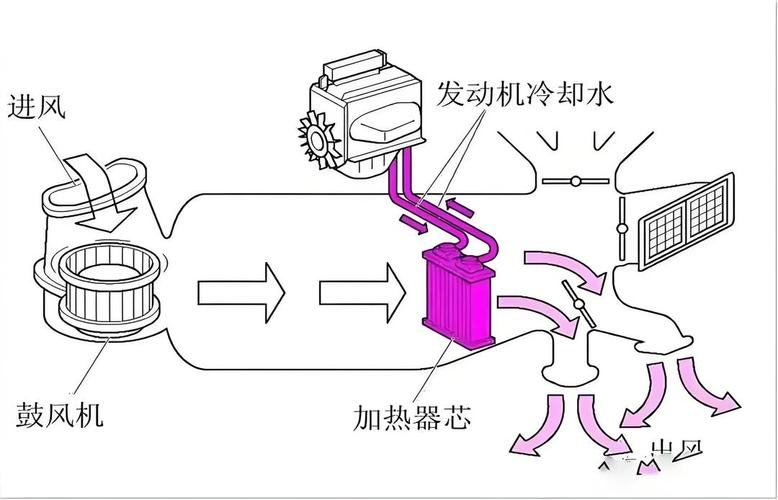
Non-independent air-conditioning: air-conditioning systems operated directly by motors, and non-independent air-conditioning units operated by compressors driven by main engines and controlled by electromagnetic centrifuges. When the power is connected, the clutch is disconnected and the compressor is shut down, thus regulating the supply of cooling gas for the purpose of controlling the temperature inside the car. The advantages are simple structure, ease of installation and small noise. The need to consume 10-15 per cent of the power of the main engine has a direct impact on the accelerator performance of the vehicle and the ability to climb the slope. At the same time, the amount of refrigeration is affected by the speed at which the car is moving, and its air-conditioning system is not functioning if the vehicle ceases to operate. Nevertheless, non-independent air conditioning has become the dominant product in the market because of its lower cost (relatively independent air conditioning). Currently, most cars, vans and minibuses use this type of air conditioner. Currently, non-independent air conditioning。
Iii. Composition of vehicle air conditioning
Automobile air conditioning generally consists mainly of compressors (compressor), electro-controlled ionators, condensers, evaporators, expansive valves, receivers dryers, pipes (hoses), condensers, vacuum electromagned valves (vacuum solenoid), nitrators and control systems. Automobile air conditioning splits high-voltage and low-voltage pipes. High pressure sides include compressor output sides, high pressure pipe routes, condensers, liquid dryers and liquid pipe routes; low pressure sides include evaporationers, accumulaters, gas circuits, compressors input sides and compressors tanks。
Compressors: the heart of the air-conditioning refrigeration system, which is a power source to recycle refrigerants in the system. Its role is to enable refrigerants to complete the process of transformation from gas to liquids for the purpose of refrigerant dissipation. At the same time, throughout the ac system, compressors are a pressure source for the functioning of the piped medium, without which the system is not only non-refrigerated but also has lost the power to operate. The rotary axis of the compressor is powered by magnetic centrifuges and belts linked to engine curves, because when the sensor attached to the evaporation vents senses that the temperature of the wind is not low enough, it closes the compressor's magnetic compressor's compressor by electrical circuits, so that the compressor works with the engine and cools. When the wind temperature is lower than the set temperature, it controls the magnetic clutch cut off so that the compressor does not work. If this control fails, the compressor will continue to work, causing evaporation units to freeze to overstretch the piping pressure,* destroying the system and even causing damage。
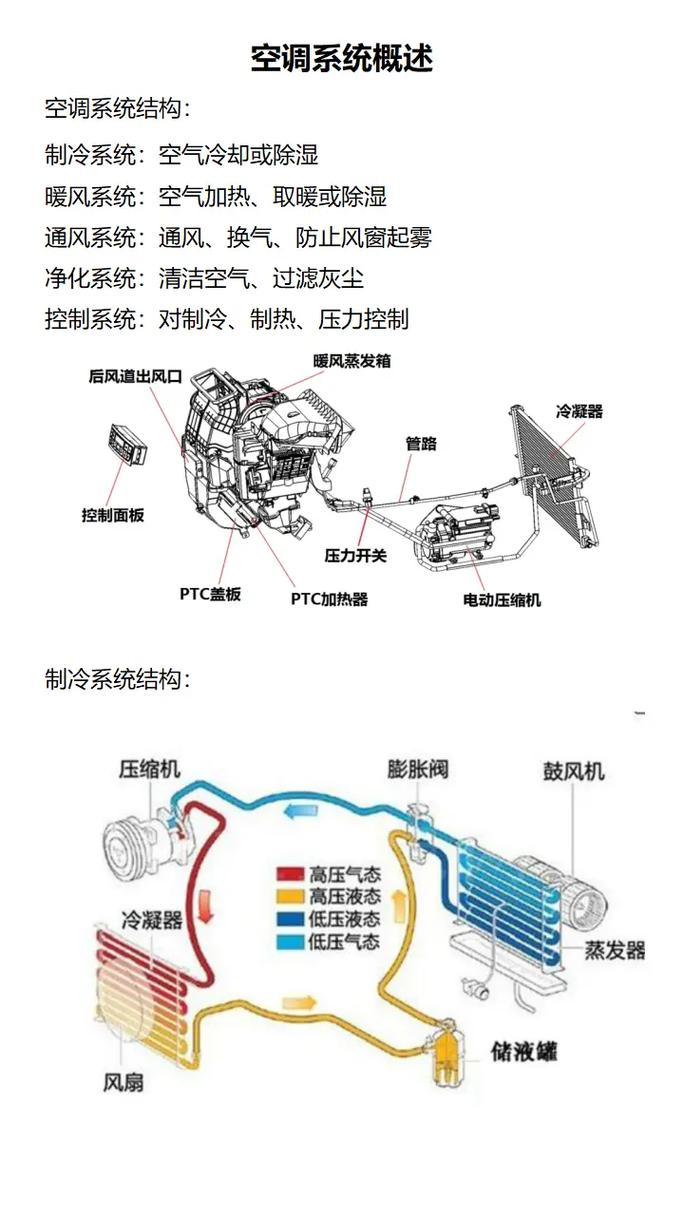
Condensers and evaporaters: these are devices for thermal exchange between external air and the substance within the pipe by filling a line of convexed piping with sheeting of metals for dispersing use. The condensation of the condenser means that the refrigerant distillation in its pipe is liquid from a gaseous state and is often installed at the head of the vehicle, with the water tank, and enjoys a cold-trained wind from the front, and where the condenser goes so that it can disperse the heat condensation. Contrary to the condenser, the evaporater is the site where the refrigerant is converted from liquid to gaseous (i. E. Evaporation) absorbs heat
Liquid dryers: refrigerant storage and absorbent water and impurities. On the one hand, it is equivalent to a car's fuel tank and supplements the leaking of excess refrigerants. On the other hand, it filters out impurities from refrigerants like air filters. The liquid dryer also contains a certain amount of silicone material to absorb moisture。
Pipelines: metal pipelines have to be used because of refrigerants for some pressure. In particular, from compressors to condensers to refrigerant bottles to expansion valves, there are higher pressure-resisting requirements than other pipelines because they are part of the system。