Do you have a cat this year
As the “two elevens” approached in 2020, the treasure team launched a new play, and users were invited to feed a talented meow star online, and to join their friends' teams in the pk with other teams to win a shopping subsidy. Apart from poaching, other electrician platforms have introduced preferential activities, such as numerous team racing cars and teams in kyoto。
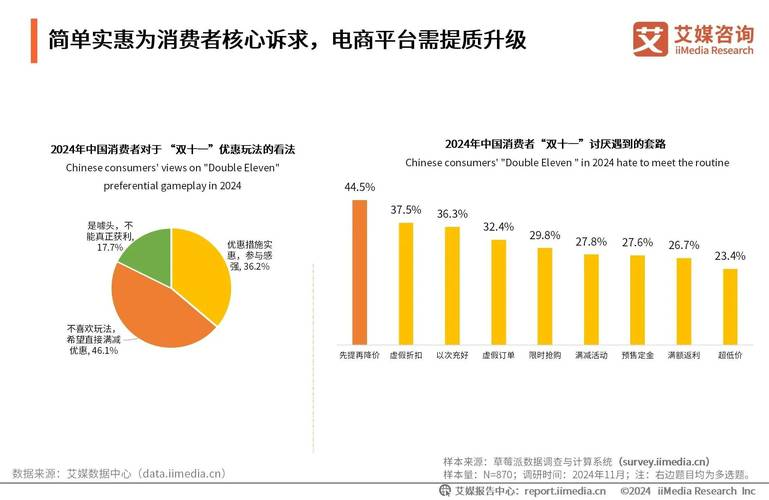
However, since a few years ago, both the “two-point-one” game and the rule of waiver and relief have led to a lot of blame, and even more so this year, consumers have been “deterred” by cumbersome discount games and downside rules。
Why is the rule of the “two elevens” becoming more complex? A number of scholars have explained this by using the economics principle of price confusion — the growing number of vendors selling homogeneous goods in markets, the fact that it is more difficult to keep their customers here than it is for each of them to consider, the difficulty of pursuing product differentiation, the fact that simply relying on low-price competition may not guarantee gains, and the creation of price confusion can effectively attract consumers to buy goods in their own shops by making it more difficult for consumers to calculate real prices。
The assistant professor at the university of edinburgh business school, wang tung, for example, was also a box of toothpaste, and the sales strategy for the two brands was “20 dollars a box, one for one” and “29. 5 dollars a box, which is now at a 60-50 per cent discount, and which one would be better to buy if you had spent 100 dollars and returned a $20 coupon? If it makes it more difficult for consumers to compare prices, competition among businesses will be less intense and different consumers will be more likely to choose different brands based on their own judgement。
A number of scholars have simulated price confusion strategies to clarify their impact on markets. Research has found that as the number of enterprises in the market increases, price confusion becomes more effective, and the more competitive the market becomes, the stronger the incentive for traders to increase the complexity of pricing. From this perspective, the complexity of the “two-xity” rule is a corollary of market competition, and the added value of the platform for users is added to the profits of the business。
In terms of prices, higher commodity prices tend to use price confusion. The university of california, los angeles, economist carlin, has proposed a model to test the use of unsympathetic price confusion. A simulation of the model by scholars has shown that higher-price vendors are more likely to set up more price-mixed levels in order to confuse buyers and make it difficult for buyers to calculate real prices. Moreover, increasing the complexity of price calculations can help businesses to mask the true quality and value of products in intangibles。
Thus, market competition does not necessarily counterbalance the ability of traders to provide affordable products, but rather encourages commercial skills to transfer costs to consumers. Thus, intense market competition may not be entirely a good thing for consumers。
In such cases, consumers are largely in the position of “man-made swords, i am fish” and are able to cope with the price trap of merchants by increasing their maturity. In the “two-xi” context, the ability to identify the strength of a commercial discount is an expression of consumer maturity。
In addition to the efforts of consumers themselves, public policies can sometimes be effectively engaged. In july 2006, owing to the lack of transparency of airline fares, the european commission adopted a regulation for the european single aviation market requiring that fare calculations should include all applicable taxes to enhance consumer protection mechanisms in markets with complex airline pricing strategies. However, complex pricing by traders does not violate relevant laws or rules, and public policy can only drive a shift in the market culture from the perspective of increasing consumer maturity。
Scholars at the university of brunell, london, have found through computer simulations that increased consumer maturity can lead to lower average market prices and expected profits for businesses and industries, but without having an impact on the complexity of price confusion in the market. Thus, the introduction of consumer protection programmes in the area of public policy, while increasing the likelihood of consumer self-awareness to enjoy commercial concessions, does not reduce the complexity of price confusion in the market, and the initiative of the complexity of the “two-xity” rule remains in the hands of the business and the platform. This year, a number of electrician platforms announced at the launch of the “two-xii” ceremony that they would simplify the rules of the shopping process through multiple initiatives, but with little success at present。
However, this distribution of power has also given rise to a new division of labour in the market, after which third parties have become involved in addressing information asymmetries between merchants, platforms and consumers, given the inevitable trend of complex market pricing and limited consumer energy. Outside the country, web-page shopping has become more frequent and, in order to help consumers select more affordable commodities, web-page plug-in companies that offer a wide range of services, such as returns, discounts and exclusive discounts, homey, groupon, etc., have arrived。
In the “two elevens”, the anchors, represented by li jiaqi and via, also play a third-party role in helping consumers calculate the actual price of the product after preference has been added, indirectly completing the embedded plugin function of the above-mentioned web page. Moreover, the more consumers rely on information provided by third parties, the more they have leverage to work with businesses to gain more concessions for their own users in order to enhance their viscosity。
Objectively, the presence of third parties offsets consumer vulnerability in complex pricing to some extent, but prices have multiple reference systems, and consumers are still unable to avoid themselves identifying whether the information provided by third parties is true or accurate. At present, such third-party constraints come mainly from market rhetoric, but existing market regulations still need to be improved compared to the rapid growth of live broadcasters. In the first half of 2020, the total number of live broadcasts by chinese market electricians exceeded 10 million. According to data published by the general directorate of market supervision in the first three quarters of recent days, the 12315 platform received 219,000 complaints, an increase of 479. 60 per cent。
In response to this phenomenon, the superintendence of markets has recently drafted, on the basis of a revision of the regulation of network transactions, the regulation of network transactions (advisory draft), and has been consulting society since 20 october. In a market with mixed prices, the future direction of the orderly development of the telecom industry will still require many efforts。