In life, accidents are inevitable, injuries are minor and life is endangered。
The second saturday in september of each year is world first aid day, and the observer has prepared a “first aid guide” for you. Learn a lot, you're ready
Usual first aid techniques
Research shows that one minute after sudden death, someone goes for cpr, and within seven minutes, they have an external defibrillation device, that is, what we usually call aed relief, which tends to be more than 90 per cent successful and does not even damage the brain. So, what do we do with first aid? How can we help each other
Cpr
The cpr isn't very deep, you can be a life-saving hero with a few key steps
1. To ensure a safe environment on the ground and then to come quickly to the patient to identify his consciousness and examine his breathing. They beat the patient with their hands on the shoulder, shouted at the patient and used 5 to 10 seconds to observe the patient's chest and abdomen with an abdomen. Counting in thousands, each time is exactly one second, 10 seconds to confirm whether the patient is conscious or breathing。
2. Call for first aid. If only one person is present, call 120 or 110 to briefly describe the situation and location. If someone else is present, they need to call the emergency number immediately。
3. Open the airway and then press the chest. Raise the patient's jaw, back the head, open airways. Kneel on the side of the patient, with overlapping hands, with the palm of the palm right in the middle of the chest at the mid-point of the double nipple line, and leaning forward to see if the face of the patient has changed, and pressing hard and fast. The frequency is over 100 times per minute and is above 5 cm. For every 30 times the pressure is applied, two oral oral respirations are performed。
Exterior tremors (aed)
At present, more than 1,200 aeds are installed in pudong, and aeds have been installed in various places, such as the podong rail crossing points and educational institutions。
It's easy to use aed
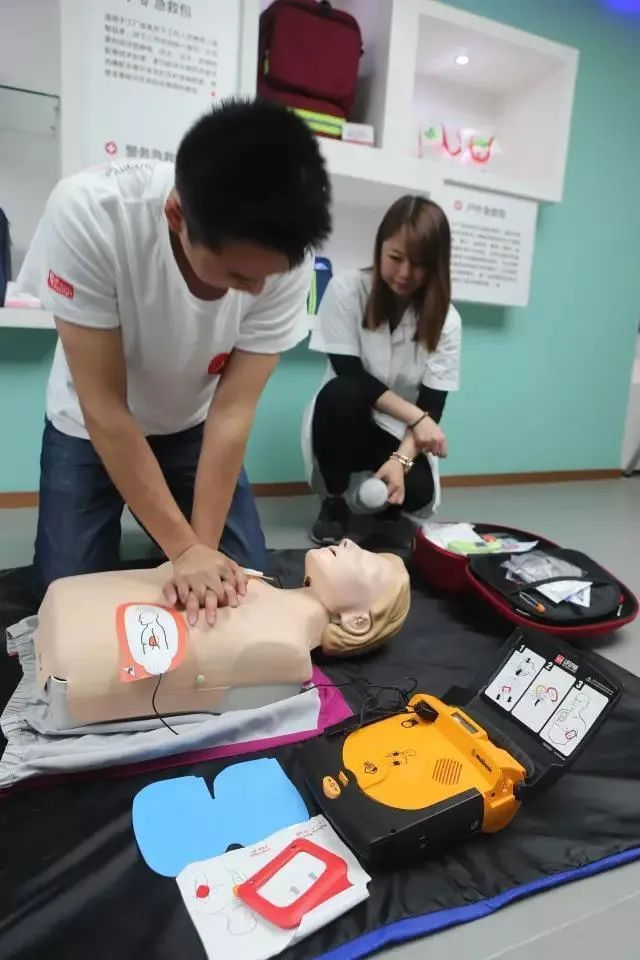
1. Turning on
When you turn it on, aed will have voice signals to tell you about the next steps。
2. Discharge poles
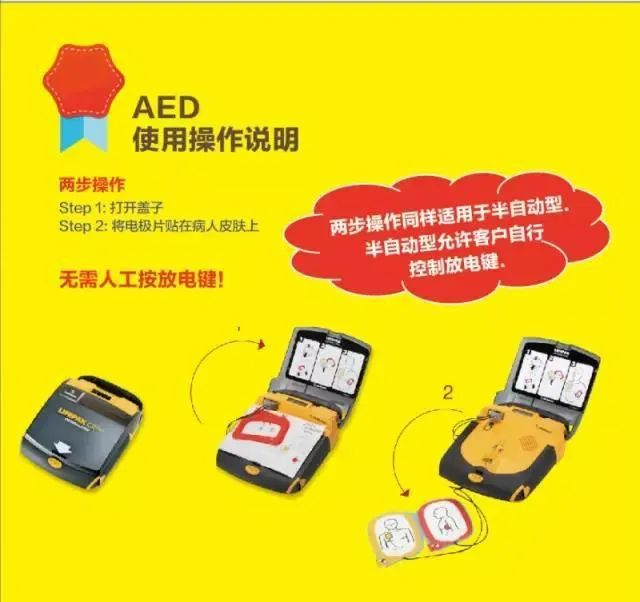
The video was posted on the patient's naked chest as described。
Analysis
Aed collects patients' electrocardiogram data by means of electrodes attached to the patient, at a time when aed warns of “no contact with the patient”, because if the helper comes into contact with the patient, it interferes with aed's analysis of the patient's electrocardiogram data。
4. Electric shocks
If aed analyses the patient's need for electroshock, aed automatically charges the charge, and prior to giving the electric shock instruction, the aed again warns: “don't touch the patient” and, after confirming that the patient has not been exposed, the patient is electroshocked。
Heimrick
Aeropharmaceutical inaccessibility is an acute condition that can cause asphyxiation or even death in minutes if it is not treated promptly。
Children's first aid act:
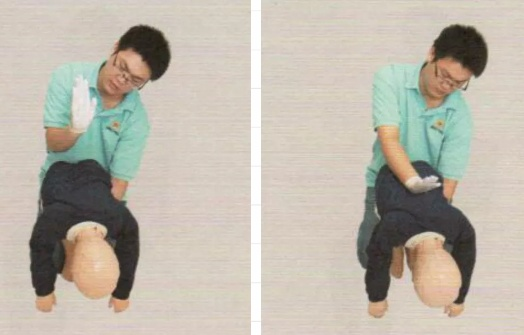
The back prostration method applies to patients who are conscious and suffer from severe aerobic obstructive symptoms。
1. Encourage patients to cough loudly
2. The paramedics stand by the patient for a second and approach the patient's back
3. To support the chest with one hand, and to allow the patient to lean forward when the alien is excluded, so that the alien can come out of the mouth and not go down the aeropath
4. Five hard prostrations with the other hand in the palm between the pelvis
5. The back prostration method is conducted up to five times, but if the prostration is used to mitigate the obstruction, it is not always necessary to do so。
Save each other's abdominal shocks
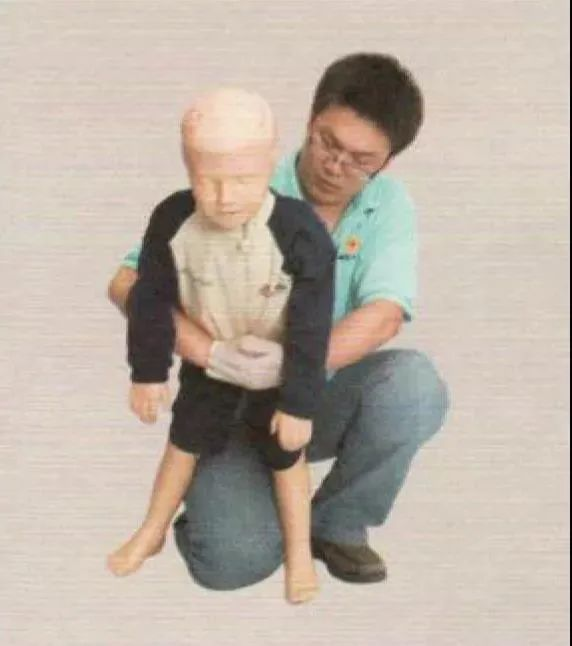
It applies to patients who are conscious and are associated with severe aerobic barriers, and five instances of bowing cannot remove the aerobic barriers。
1. The patient's position or position
2. The paramedics stand behind the patient, with their arms around the person's waist, bending him down and leaning towards his head
3. The ambulance holds an empty fist in his hand and the thumb side of his fist closes between the sword and the umbilical cord of the patient
The other hand grips the fist and strikes hard and fast inwardly and upwards
5. Five times, if the barrier is not lifted, the practice of prostration continues to alternate five times。
Chest pressure
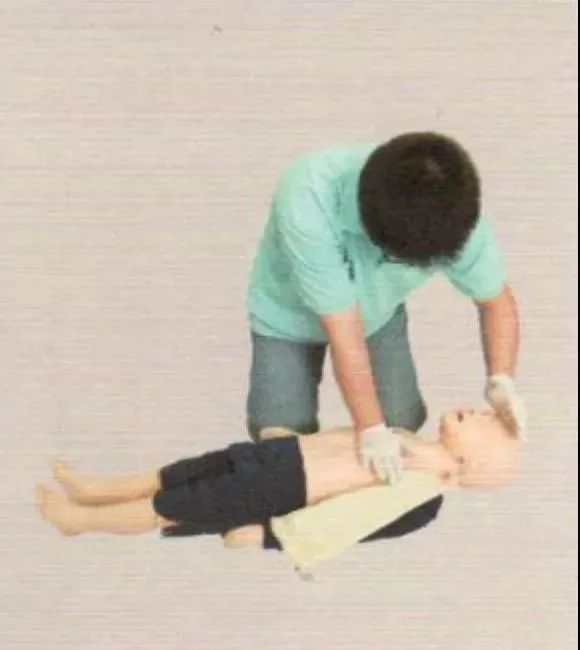
It applies to patients who are unconscious or have lost consciousness during abdominal shocks. Operating methods are associated with cpr for children。
1. The patient is placed on the back and the ambulance is on the side of the patient
2. The heart outside of the chest is at the same level of pressure as the cpr。
The icrc could provide training in the above-mentioned first aid approach. The icrc website is accessible to interested small partners
Http://www. Cnredcross. Org), click on the query “i want to attend first aid training in situ”。
Common accidental injury
Burn
1. Eject: quick leaching of the injured area in cold water or washing with liquid running water in order to rapidly reduce skin surface heat. The rinsing period lasts more than half an hour and is based on a significant reduction in pain after removal from the cold source。
2. Off: after full bleaching, carefully remove the clothes and, if necessary, cut them with scissors or temporarily retain the sticky parts. If there is a bubble, it cannot be broken to avoid infection。
Bubbles: further immersion in cold water can reduce pain and stabilize emotions. However, if the burns are extensive and young, they do not need to be immersed too long in order to reduce body temperature too low or delay treatment。
4. Covering the wounded with clean sheets or gauze, etc. No soy sauce, toothpaste, herbal medicine, etc. Should be painted on the part of the injured so as not to affect medical personnel's judgement and urgent treatment。
5. Delivery: apart from minimal burns, it is advisable to take them to a nearby hospital for further treatment. If the injury is of such magnitude that it requires hospitalization, it would be preferable to send it to a well-equipped and experienced burn specialist。
A pet bite
The death rate from rabies is almost 100 per cent. Thus, once a person has been bitten, scratched or licked by a pet such as a dog or cat, the following treatment measures are taken:
(i) complete cleaning
1. Upon being bitten by a dog, the wound shall be thoroughly washed with 20 per cent of soap, followed by a large amount of water for washing and washing for no less than 20-30 minutes. The rinse must be thorough and as wide as possible. If there is no water source around the perimeter, human urine can be used instead of water washing and then finding water。
2. While washing the wound, squeezed blood from the immediate end to the wound and managed to wash the saliva and blood on the wound contaminated with the wound and remove the venom from the blood。
(ii) sterilization
After thorough cleaning, two to three per cent of iodine wine and 75 per cent of alcohol (or 50-70 degrees of white wine) were used to wipe the wounds several times in order to remove or destroy local viruses。
(iii) cleaning and disinfection
In the case of small-bleed wounds, there is no need to stop the bleeding as long as there is no large blood vessels, and there is no need to bandage it and to expose it as much as possible, as sunlight, ultraviolet light, alcohol, etc. Can kill the virus。
(iv) vaccination
After the wounds are treated, regular treatment is provided in a timely manner at the regular medical unit. The rabies vaccine and the anti-rabies serum are administered as soon as possible, within 24 hours, and rabies are routinely administered throughout the course。
Electrocution
(i) power cut immediately
1. Close the switch or remove the plug on the plug or directly turn off the power switch. Do not try to turn off the switch on the electrical device, as it may have been the switch that leaked. If the electrocutor is close to high voltage, you must stay at 50 metres away, do not blindly, and call the electricity department and the hospital as soon as possible。
2. If it is not possible to turn off the switch, you may stand on insulation, such as a stack of thick newspapers, plastic sheeting, wooden boards, with a broom or wooden chair, to remove the wire from the body of the electrocutor, or to remove the injured person from the power source, or to remove the injured person from the power source with a rope, trousers or any dry cloth around his arm or leg. Do not touch the wounded with your hand, nor remove the wounded with wet tools or metal, which will cause you to be subjected to electric shocks and will not be able to forget your safety by saving people。
(ii) emergency ambulance
When the injured person is removed from the power supply, if he/she is conscious, he/she is examined for burns, injuries and prompt treatment, and is sent to the hospital for further treatment as soon as possible. In case of loss of consciousness of the electrocutor, his breathing and pulse are checked immediately. If the electrocutor breathes, his heart stops, cpr is performed immediately and an ambulance is called。
Drowning
In the event of drowning, the first aid must be delivered on the ground in a race to the point of time, and it must not be rushed to a hospital without the precious opportunity of rescue. The main points of first aid are as follows:
If a person is found drowning, he should immediately call for help and call 120。
2. When inundated, if the drowning person is not unconscious, he shall approach him in the rear direction of the drowning person or, if he is unconscious, in the front. If the drowning person shows a push-down position, he or she holds the patient gently with his or her hands and turns his or her body over to the side. With their wrists the underside of the drowning man, so that he may shed water on his head, then swim to the shore。
3. There is a risk of damage to the neck of the drowning person, so that the neck is protected and every effort is made to keep it open。
When the drowning person is rescued on shore, he or she shall, as far as possible, be placed in a flat place where he or she may lie on his or her back to check for pulses and breathing。
5. The drowning population has severe respiratory obstructions, which require the immediate removal of internal stains from the mouth and nose, followed by controlled water treatment. On one foot, and on the other, he bowed, and the drowning fell down on the knees of the saviour, and his head fell down, pouring out water。
If the heartbeat has stopped, cpr should be performed immediately。
7. Rescues should not be abandoned easily, especially at low temperatures, for longer periods until the presence of medical professionals。
8. The on-site ambulance was successful in drying out the body of the drowning person and keeping the body warm with thicker cloths before being immediately taken to hospital。
Accidents, disasters
Earthquake
How do you save yourself in an earthquake
When people are buried, they should make the best possible use of the conditions in their own environment to remove risks and save lives in a timely manner。
The most important of self-help is: calm, excise, and call for help。
Calm means that people in distress should live firmly in their convictions and eliminate fear and impatience。
It is to remove danger, to try to break free of the shackles, to remove objects from the body, to make every effort to create a living space, to search for water and food, to preserve strength, to continue life and to wait for rescue。
A distress call is an attempt to send a distress message outside. The call for help is particularly implacable, must not be loud and continuous, and should be carefully listened to and called intermittently. A call for help can be made by striking objects with stones, metals, etc., to make a sound, which can save physical strength and enable information to reach further and more effectively。
Fire
How does a family fire escape
When opening the door, if it is cold, check the smoke through the door and, if not, leave immediately. When you flee, if you encounter smoke, you must step forward and keep your head down。
When the fire is washed out, the head and body are wet. If the clothes were on fire, it would be right to use both hands to protect the face, slowly roll back and forth on the ground in order to extinguish the flames, and to wrap itself in thick coats and blankets to extinguish the fires。
In the event of a fire, both the alarm and the firefighting are to be conducted simultaneously. In the event of a gas leak in the house, the gas valves shall be immediately closed and the doors and windows shall be immediately ventilated. At this point in time, no telephone calls should be made to the police inside, with a high risk of detonation。
The flames were found to be plowed in the ground. Water is the most convenient fire extinguisher. Fires such as gasoline, kerosene and electrical fires cannot be saved by water. Fire can be covered with dry powder, yellow sand, blankets, cotton, etc。
The boiler is set on fire and can be covered directly, thus separating the air from the fire, while the source of the fire, such as the gas stove, should be shut down or the oil boiler should be smoothed out of the fire。
Do not enter the elevator when there is a fire in the building floor。
The bathroom can be used for shelter. If all safe passages are cut, the only option is to retreat to a relatively safe bathroom. Those who are unable to escape the fire should wait as long as possible for the balcony, windows, etc., to be easily discovered and to avoid pyrotechnic closeness, with fresh clothing to be moved during the day, and with flashlights to send signals out at night。
Family prevention kit
In order to provide effective self-help and mutual relief in the event of a disaster, each family should have a disaster prevention kit, which should be located where it is easily accessible. In the selection of disaster prevention kits, both shoulder backpacks are inclusive of all emergency supplies, are easy to carry, bear and grind, have a visible colour, preferably reflector design, and act as a security alert at night. Among the items to be prepared in the family prevention kits are:
1. Battery radios, dry batteries, flashlights, first aid and commonly used medicines。
2. Foods that are easy to carry, easy to keep (e. G. Cans, biscuits, etc.) and bottled with drinking water。
3. Protection from shovels, hammers, ropes, pliers, knives, life-saving supplies。
Emergency clothing, blankets, plastic bags, lighters and small quantities of routine supplies。
5. Copies of important documents, such as identity cards, insurance documents and bank balances。
Important telephone numbers and information, books, etc。
(oriental hospital has published a series of 15 volumes of the book entitled disaster rescue, which describes simple self-help methods for common types of disasters, such as earthquakes, floods and traffic accidents, in the form of illustrations. Young interested partners can buy learning