1 order of construction of lime stabilization soil:
Elimination of lime, earth preparation, preparation of ash-filled test bands to test plastering and flattening of pressure-crushing collages for processing of collages, based on water-bearing excavators adoption
2 specific construction steps for limestone:
2. 1 material preparation: selection of earth fields suitable for dust, plastic fingers at 12-20, which, if the earth is too wet, must be treated with ash and prepared with tested and qualified ash. Folio is fully digested and sifted 7-10 days in advance. Lime should not be less than level iii. (b) the elimination of lime should be kept within two months
The dry mix weight is based on the width, thickness and intended pressure density of the section: the distance and quantity of the materials are calculated on the basis of the mix, the amount of water contained in the materials and the tonnage of the vehicles used for the materials。
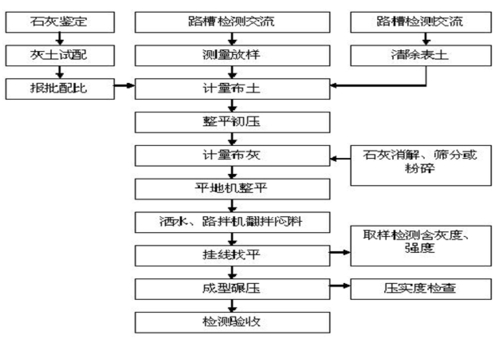
2. 2 major construction machinery: bulldozers, land levelers, stabilizers, dumpers, water tankers, rollers, loaders。
2. 3 test period: a 100-metre test period to determine the amount of lime, soil and maximum dry density of the maximum water content of the different fields, and a test period to determine the construction process, the relaxing factor, the quantity of mechanical equipment, the organization of personnel, and the mass of solid mass before formal implementation。
2. 4 preparation of the lower bearings: preparation of the lower bearings, examination of the pressure level, flatness, slope, height, width, etc. Of the lower bearings. The earth-base must be crushed (3-4 times) with a 12-15t tricycle pressor or equivalent, if the surface is loose, spring etc. Must be addressed。
2. 5 construction sample: the median road is restored with a medium pillar per 10 m and the boundary pillar is released, horizontally measured, and the executive top marker is accurately marked and clearly marked。
2. 6 ash and earth preparation: the general use of water is excessive and requires a concentration of ash and a mix of excavators. The earth shall be prepared with earth and the shoulder shall be equal to the structure. Land preparation: evenly spread the earth in accordance with the thickness of the sheeting, facilitating mechanized construction. After the soil is laid, the bulldozer will be used to generally level the ground, then the flattener will be used to fill the remaining gaps and ensure consistency of thickness and surface levelling。
2. 7 ash preparation, ash-painting: before ash preparation, the plowing of the loose land, which has been paved, is used as a roller, ensures that the ash is prepared in a manner that does not create large patterns, and that heavy vehicles are strictly prohibited from turning around during their operation. The amount of lime used per square metre is calculated on the basis of the ash dose, the dry weight of the lime pine square and the maximum dry weight of the lime soil in different water-bearing cases. Two grey lines are marked prior to ash preparation to ensure straightness. Before the ash is laid, a grid line is drawn along the edge of the ash, and the lime is laid equally by hand。
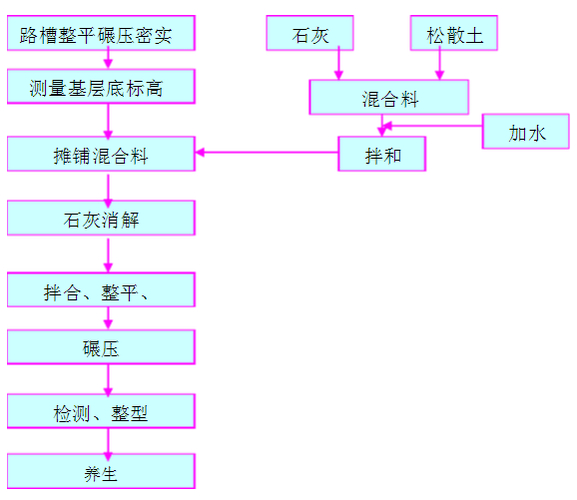
2. 8 combination: plowshares are used as auxiliary equipment to carry out road-mixing works using special stabilization and aircraft. Consider the loss of water during mixing and flattening, with an appropriate amount of water (determined by the climate and the length of the mixing and consolidation time); if the soil contains too much water, it can be ploughed and cooled. When the water is suitable, it is then flattened with a ground machine and then stabilized with a mix and a mix. At the same time, a person is assigned to carry out an exhumation at a distance of 5 to 10 metres to check the mixing and the end. For mixed and non-finished segments, a timely reminder is required that the engine driver returns to the restart。
2. 9 flattening: with a ground machine combined with a small number of manual flattening。
When the dust is mixed and the requirements are met, the ground machine is used to level the surface roughly by removing the mudcans, waves, trenches, etc. That are mixed and produced. (b) a steady pressure of 1-2 times with a vibrating or tyre press. The level of the driver of the ground machine is determined by the distribution of the sample points, marked by lime powder using a control pillar scale or mounted line. The flat-bed machine was scraped from the outside to the inside. The clearing and flattening should be carried out manually where the ground is not functional. It is not allowed to be abandoned on the slopes。
Element note: the last round of flat-time flat-land machines should be “land-carrying” operations, with a view to filling the thin layer, giving due consideration to the abundance of soil and dust, and rather than scraping it。
2. 10 crushing:
The crushing was done by a combination of vibration-type and 18-21t three-wheel static circuitrs. When the flatness is completed, the main road centre is crushed by a vibrating pressurizer along the side of the road (higher than the outer side), the outer side is crushed by an ultra-high section from the internal side, and the bottom layer of pressure meets the requirements, and the three-wheel pressurizers are reduced by two to three strokes by a half wrong wheel to clear the tracks to the surface level, smooth and smooth. The shoulder of the road will be crushed with the road。
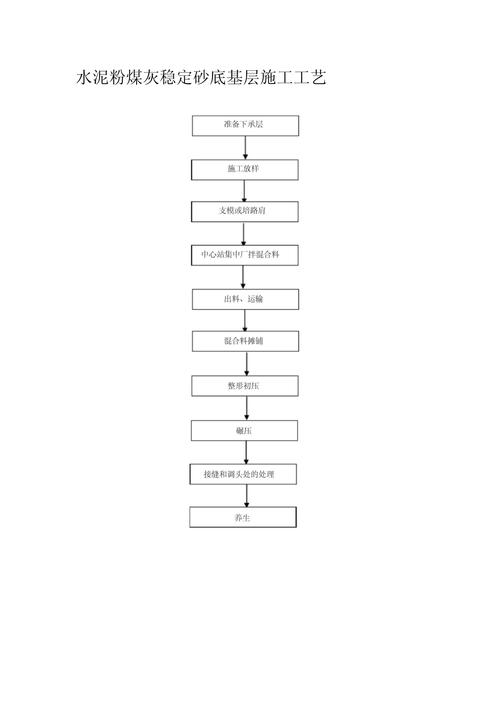
Earmarks: the crushing must be continuous and must not stop, the roller should be sufficient to reduce the pressure formation time, reasonably equipped with a vibration roller of 1-2, a three-wheel roller of 2-3, and should run straight and low。
2. 11 tests
The tester should aim at the construction site and, upon completion of the run-down count, take a sample test floor (to produce the test results in a timely manner) and repressurize immediately until the pressure requirements are met. (c) complete the flatness, height, slope, width, thickness test within two days of formation, and require measures to pre-process the non-conformity test。
2. 12 maintenance
Seven days of water is sprayed immediately after life, wet on a regular basis, and self-receiving is performed, unsatisfactory treatment is administered, compliance with standard requirements is confirmed and payments are measured。