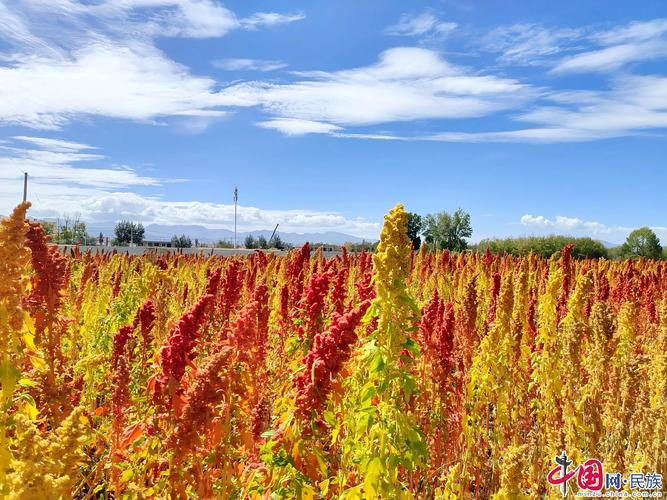
In recent years, the area of quinoa has expanded year by year, with a rapid increase in total production, and in order to take advantage of the efficiency of the quinoa industry to guide the standardized production of crops, the ministry of agriculture and rural affairs, in collaboration with the national centre for agricultural technology extension, will provide technical guidance for the production of quinoa in 2025, focusing on the “bettering of the mouths, selection of good seeds, planting at the right time, strengthening of the field, and timely harvesting”。
I. North piece
(i) choose the good species. The region comprises mainly inner mongolia, hebei, and the cold areas of shanxi, and the quinoa species selection should be based on the following principles: making full use of the variety determined through review, registered, evaluated and in accordance with market needs, adapted to local climatic and soil conditions, able to take full advantage of light and heat conditions, and ensuring safe maturity and high yield of local varieties. High-yielding, high-yielding and high-yielding species should be selected for areas with good water fertilization and high production levels. Dry-dry areas should be selected for drought-resistant, low-resilient and stable varieties. Areas with higher mechanized levels should be selected for compact, resistant, and dense varieties。
(ii) full fertilization. Quinoa seedlings are more reliant on moisture and should be irrigated prior to sowing, and areas that are not irrigated need to be sowed on the basis of hysteria or rain. In accordance with the principles of “gay, flat, pine, shredded, clean, plentiful”, spring tilling 20 to 40 cm after crop harvesting before autumn or after soil melting. Quinoa is not resistant to herbicides, and if herbicides are applied in front crops, the depth of tillage needs to be increased. In combination, the ground is fertilized to the bottom, with conditions of 2-3 tons of manure per acre or 800 - 1,000 kg of manure per decomposed cow and goat, 10 - 20 kg of urea, 10 - 20 kg of ammonium phosphate, 3 - 5 kg of potassium sulfate or 10 - 25 kg of compound fertilizer per acre. Fertilizers may also be applied with precision based on soil formulas。
(iii) the planting is scheduled. Quinoa is not suitable for heavy cultivation and can rotate with crops such as potatoes, oats, barley, mussels, sorghum, sunflower, oil and vegetables. Based on factors such as planting patterns, regional climates and mechanized levels, seeding at average daily temperatures of 5°c or above (generally from early april to late june) is carried out at different stages, avoiding the rainy season as much as possible during periods of time and maturity. Seeding can be done in the form of demagogues, strips or remurals. The general seeding lines range from 30 to 60 cm, suitable for 10 to 20 cm, and sow at depths of 1 to 3 cm, so that “the lower seed level is even and repression is effective” and so that seeds are avoided. While ensuring that seeds are more dynamic, the volume of seed per acre is generally 0. 15-0. 4 kg and the den is 4-6 particles per den. When the seedlings are soiled, they are identified in a timely manner. Quinoa per acre is used in 4000 - 12,000 units (adjusted for varieties, strains and soil fattening conditions), with an appropriate increase in the density of quinoa per acre, usually 12,000 - 18,000。
(iv) strengthening the field. Weeding in china: currently, there are no special herbicides for quinoa, mainly artificial or mechanical. It is proposed to plant 2-3 times in china, with pine soil in depth and without damage to root systems, to remove grass pine soil for the first time during the sapling period (5-6 leaves or 10-20 cm high) and for the second time during the initial flower period (about 40 cm high), and to use grass for the third in a flexible manner in accordance with quinoa growth and weed conditions. The membrane cultivation cleans up weeds in membranes and caves in accordance with the above period. Water fertilizer control: in order to ensure the high yield of quinoa, leaf-faced fertilisation can be carried out during the first flower, it is recommended that 50 grams of botts + 100 grams of potassium phosphate per acre be applied to water to prevent quinoa from being “frowning”, and that leaf-face application be less fertilized than thick. The number and the amount of water to be poured during the whole reproductive period are determined by soil conditions and rainfall. The current guillotine and flowering periods are sensitive to soil moisture reactions, and the later gusts are avoided by wind weather to the extent possible in order to reduce the inverts caused by flooding. Insect control: “agriculture prevention, physical control, supported by chemical control” focuses on common pests such as frosting, leaf-spectosis, root (drill) decomposition, pedals, elephants, grassland problems, plasters, aphids, aphids, platinum, tigers, maggots and beaks. Selection of disease resistant varieties, seed disinfection before seed planting, seed wrapping in areas with endemic or underground pests。
(v) collect in due time. Quinoa seeds are highly active and the failure to harvest seed grains in a timely manner is reduced in quality by the onset of rainfall. When the plant leaves turn yellow or red, most of the leaves fall, the straw begins to dry and the seeds reach the waxing period, they should be harvested in time. In order to ensure the quality of quinoa, before harvesting, the ears and scavengers must be removed, after harvesting they must be tanned in a timely manner, protected from decay and deterioration, capable of being harvested artificially or mechanically with a combined harvester, and if taken off, they must be tanned or dried in a timely manner。
Ii. Western spring zone
(i) choose the good species. The region consists mainly of the provinces of qinghai, gansu, xinjiang and others, with the option of fronting with beans (beans, peas), potatoes, barley, maize, wheat, and oilseeds, etc., in order to avoid a succession. Given the region's high altitude and high temperature differentials, which are characterized by drought, coldness and low rainfall, good varieties suitable for local climatic ecological conditions should be selected to avoid cross-area seeding without testing. Specific reference may be made to the northern spring area。
(ii) plantation at the appropriate time. In combination with factors such as quinoa stock maturity and natural climatic characteristics, seeding occurs at a suitable temperature of 10°c or above, usually from late march to late may, usually not later than mid-june; it can also be repeated on the basis of local conditions, with a suitable time frame of late june to mid-july for the selection of pre-cooked varieties. Appropriate early transmission using membranes. The “dry-dry-wetted” plots are subject to drop-out of seed water: immediately after seeding, a connection to the ground drip irrigation system, such as a supervisor, a deputy tube, a three-channel and a wool pipe, a piping treatment, timely completion of surface pipe installation and drip test pressure to ensure that the pipe is impregnated, no leak in the connection, no leakage in the main tube and stable pressure indicators. Saplings drop 30-35 square/acre within 48 hours of broadcast, saline plots add a drop of fertilizer or saline improvement agent, and can be recharged once after three to five days depending on the condition to save the whole seedling。
(iii) field management. To ensure that the pre-sowning soil is fertilized for seed seed seeding, properly repressed after seeding, and that seedlings are identified and filled in in a timely manner, and that if seedlings are replanted in a timely manner, seedlings are replanted in a timely manner and water is refilled (or replanted after rain). For areas of higher altitude, membrane cover can be used and black membranes may be preferred. Under drip irrigation conditions, timely drops of water are made to catch fat。
Other plant management measures are referred to in the northern spring area。
Iii. Southern spring/autumn zone
(i) choose the good species. The zone includes yunnan, sichuan and other provinces, which are characterized by a stereoclimatic climate and are generally characterized by low latitudes and sufficient light. More economically efficient varieties such as red quinoa, black quinoa, white quinoa, etc., should be selected for inverted, mid-prematured and sprout-resistant species, depending on local conditions, avoiding cross-regional seeding without testing. Specific reference may be made to the northern spring area。
(ii) plantation at the appropriate time. Based on local climatic characteristics, seeding can be done at a suitable time, and it is recommended to avoid high-temperature seasons and to stagger flowering, maturity and local rainy seasons. The planting period in yunnan is determined on the basis of the birth period and altitude of quinoa varieties, with planting occurring in areas above 2,500 metres above sea level generally at the end of may and early june; in areas above 1,800-2300 metres above sea level generally at the end of mid-july and early august; and in areas below 1,500 metres above sea level with good light and irrigation conditions, planting can be delayed until october, with an appropriate increase in seeding. Seasonal rainfall areas, such as the dry sichuan river valley, can be broadcast in spring from mid-february to early march, and in autumn from mid-august to early september, with flexibility in choosing different maturing varieties to avoid the rainy season; in other areas, seeding is reasonably arranged at sea altitude and crop vents, above 2,800 metres above sea level, and can take place after snow melt in march-april with a preference for medium- and early-fining varieties; in the 1500-2,800-metre sea-level area, normally seeded from late march to mid-may, before the fall of october; and in areas below 1,500 metres above sea-level, it is generally desirable to sow in mid-february to mid-april。
(iii) collect in due time. When the plant leaves turn yellow and red, most of the leaves fall, the straw begins to dry, and the seeds can be harvested when the wax is ripe. The harvest time should be chosen for early morning and the loss of seed grains should be reduced。
Other planting and management measures are referred to in the northern spring area。
Iv. Chang queahio and the central and lower yangtze
(i) inversion. It can rotate with crops such as rice, soybeans, barley, maize, and thorium. Quinoa taboos allow for the selection of high-lying, well-drained fields to ensure that they are either dropped or drained during heavy rainfall. It is advisable to select plots with an average salinity concentration of less than 5 per 1,000 in saline cultivation。
(ii) good seed options. The region includes the plains of jiangsu, shandong, zhejiang, shanghai and anhui provinces, where food should be selected for varieties with a fertility period of less than 115 days and a height of less than 160 cm; and forage should be chosen for species with high biological productivity and greater resilience. The introduction of varieties should be based on the principle of seed testing and promotion. It is desirable to select new salt-resistant varieties from the eastern coast。
(iii) the planting is scheduled. Early seeding, based on climatic conditions and soil conditions, ensures that the season is avoided as much as possible during the flowering and maturity periods. Spring cultivation in the gangay region was generally from mid-february to early march, no later than 15 march. The area south of the yangtze river needs three to five days to sow. It is recommended to grow in broad and narrow lines. It was followed by appropriate repression。
(iv) field management. Pre-spread soil conditions have a greater impact on quinoa's seedlings and cyanide rates, which should be broadcasted on the basis of either quinoa or after the rain, and which need to be irrigated early in the year of extreme drought. The current guillotine and flowering periods are sensitive to soil moisture reactions and require timely run-off and precipitation. In the case of saline plots, seeding is based on the field water facilities, mainly “tens” of large trenches, accompanied by small drains, well-structured drainage systems, using natural conditions with abundant rainfall to achieve salt washing, salt desalination, salt drainage and salt mitigation, with soil improvement agents available in the zone。
(v) collect in due time. Seeds are harvested in a timely manner when the wax is ripe, usually by mid-june。
Other planting and management measures are referred to in the northern spring area。
Scanning on the phone to open the current page