


The long-term stagnation of the economies of the western developed countries has been manifested in four main areas: a decline in potential economic growth rates, low real interest rates, a decline in total factor productivity and high debt levels. In coping strategies, negative interest rates have been slow to help the global economy out of its predicament. Moving out of a long period of stagnation is fundamentally dependent on investment in fixed assets in innovation and technological progress, seeking out the power to emerge from difficulties in terms of supply and demand。
Long-term economic stagnation in developed countries
Eight years after the 2008 financial crisis, there was still no sign of a full recovery in the economies of developed countries, and economic development was at a standstill. To this end, some have named the current phase “secular stagnation”, a period in which stagnation and the financial crisis have fed on each other. The united states economist summers, whose speech on “long-term stagnation” was striking, stated in 2013 that prolonged stagnation meant that conventional monetary policy and market forces themselves could not maintain financial stability while achieving full employment and economic stability. At present, this usually means that real interest rates that match capital utilization will be negative and will be sustained for a long time, with continued low interest rates contributing in turn to asset price bubbles and threatening financial system stability. In all its aspects, the long-term stagnation hypothesis has re-emerged mainly as a result of lower-than-anticipated real economic growth rates over the long term, declining growth expectations and declining trends in real interest rates. The “long-term stagnation” has become a new norm in developed economies, mainly in the following areas。
One is the decline in economic growth. The world economy grew at an average rate of 3. 89 per cent in 1999-2007 and, following the crisis, the world economy grew at an average annual rate of 2. 8 per cent in 2008-2013, a decline of about 1. 1 percentage points. At the same time, the crisis exacerbated the slowdown in the developed economies, which averaged 2. 63 per cent to 0. 51 per cent before the crisis. According to estimates by the budget office of the united states congress (cbo), the potential growth rate in the united states has declined from year to year since 2007 and resulted in the united states GDP level in 2014 being nearly 5 percentage points lower than projected in 2007. The situation in europe is clearly worse than in the united states. According to imf world economic outlook data, real GDP growth in the euro area averaged 2. 08 per cent per annum in 1992-2007. In 2008 and 2009, the annual rate of increase was -2. 03 per cent. In 2010-2019, the eurozone economy grew at an average annual rate of only 1. 12 per cent, with low growth becoming the norm. The growth of the japanese economy was reversed in 2013 as a result of the abe government's “three arrows” (the introduction of a new stimulus package, the adoption of a new version of the defence white paper and the reshuffle of the cabinet). The government's debt crisis and the economic crisis will continue, as long-term factors contributing to the decline in growth have not been effectively addressed, and the “three arrows” contain many prescriptions that lead to thirst。
The second is low real interest rates. Since the mid-2000s, the global economy's balanced real interest rate, the real rate needed to achieve full employment, has been in a large negative region, ranging from -2 to -3 per cent. The average real interest rate in the united states fell from 5 per cent in the 1980s to 2 per cent in the 1990s and only 1 per cent in the twenty-first century. After lehman went bankrupt, the real interest rate in the united states was only about -1 per cent. Real interest rates in the european region also declined from about 4 per cent in the 1990s to negative values at the beginning of the twenty-first century。
Third is the decline in total factor productivity (tfp). While the overall factor productivity situation varies among the major economies of the euro area, it is on a downward trend and is significantly lower than in other developed economies. Between 1900 and 2012, the united states experienced a reverse u-rate annual average of full factor productivity. After a period of rapid growth from 1930 to 1970, full factor productivity was in a declining phase until 2012。
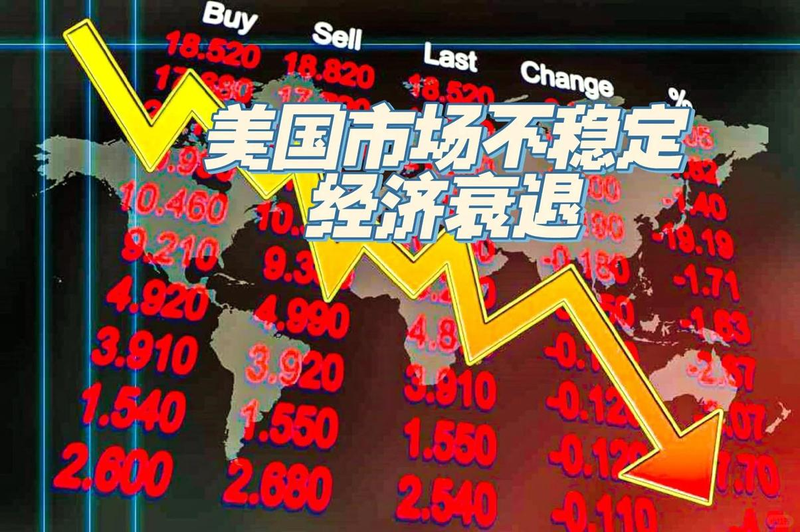
Fourth is the high level of debt. According to the latest international monetary fund data, government debt to GDP increased to varying degrees in all g-7 countries between 2007 and 2013. Among them, the united states, the euro zone, japan and the developed economies as a whole climbed 40, 29, 60 and 33 percentage points, respectively, which also led to a continued rise in the leverage rate of the economy as the private sector began to deleverage after the crisis。
Causes of prolonged economic stagnation in western countries
Major technological innovations have stalled. Studies have shown that the core variable in determining long-term economic growth is technological progress. Total factor productivity had stagnated long before the it era had arrived, and, more importantly, GDP had almost always tended to underestimate the impact of technological progress on social welfare at every historical time. Scholars have estimated that the total factor productivity of the united states has already returned to its pre-1930 historical low, with major advanced economies, such as europe and japan, having limited innovation capacity of their own, while the united states has experienced varying degrees of deceleration in productivity growth as a result of higher overspills in knowledge and technology. Major scientific and technological innovations during this period, such as the internet and personal electronic devices, contributed significantly less to output efficiency than the innovation applications of electricity, internal combustion engines and running water systems a century ago。
Underconsumption and deteriorating patterns of income distribution inhibit the growth potential and social dynamism of developed economies. Consumer demand is a sustained engine of economic growth, but depends on a range of factors, such as income growth and income distribution. Indeed, developed economies have generally experienced a continuous deterioration in income distribution inequality. Despite the temporary reversal of the situation during the 2008-2009 financial crisis and recession, the trend towards its long-term deterioration has not changed. Such distribution patterns not only contribute to social unrest and stratification, but also further undermine the dynamism of innovative entrepreneurship in the market, hinder the accumulation of human capital, discourage consumer demand and increase fiscal pressure。
Ofdi has taken place on a large scale, accelerating the process of industrial hollowing in developed economies, with a sharp decline in industrial competitiveness. Since the 1970s, ofdi from major western countries has been growing in scale, with large companies rushing to invest. In the process, a large number of traditional industries were transferred to developing countries. Large-scale industrial transfers driven by profit-driven incentives by large firms in developed countries have serious consequences: the erosion of domestic investment projects and the financial supply capacity of the productive sector in the home country, leading to a reduction in employment opportunities; a substantial reduction in fiscal revenues; a rise in the spatialization of industries, economic recession and social unrest; competition between the products of the host country and those of the home country in the host country and international markets, and even crowding out the markets of the products of the home country; and international r & d through direct investment channels, leading to a weakening of the advantages of the home country innovation system and the loss of technology。
The rise of neoliberal thinking and the weakening of state intervention contributed to the decline of countries in developed economies. Starting in the early 1970s, in order to overcome the stagnation, the major western countries abandoned the keynesian doctrine of state intervention and shifted to neoliberal economic theories and policy claims. Under the influence of neoliberal thinking, overall privatization, full marketization and extreme liberalization were vigorously pursued, resulting in a massive weakening of government intervention in the economy. Historical developments have shown that the implementation of neoliberal policies has not been a boon to western countries, but rather has weakened state intervention, overstretched confidence in the self-regulation of markets and rapidly set industrial capitalism on the path to industrialization, leading to a crisis of industrial capitalism and stagnation。

The hegemony of the united states dollar has led to serious imbalances in the world economy. The united states dollar hegemonic system has allowed the united states to issue currencies on a liberal basis, based on domestic economic objectives, without fear of its balance-of-payments position and exchange rate levels; other countries have to bear the pressure of balance-of-payments adjustment and have to proactively maintain the stability of the dollar exchange rate and fail to maintain their monetary sovereignty. The united states abuse of the united states dollar as the main exchange medium in international transactions to maintain high rates of domestic inflation, while at the same time contributing to the constant depreciation of the dollar against the currencies of its major trading partners in an attempt to generate more seigniorage tax revenues. The financial hegemony of the united states had created a heavy dependency on the united states dollar system, forcing developing countries to sacrifice their internal economic equilibrium in order to maintain external equilibrium, which had seriously hampered their economic development and exacerbated global economic imbalances。
Financial liberalization and virtualization of the economy have accelerated the rapid decline in wealth creation capacity. After the 1970s, financial capital completely prevailed over industrial capital, which became a subsidiary of financial capital. In order to overcome the stagnation, western governments have embarked on financial liberalization to create conditions and facilitate the search for profit opportunities for huge financial capital. Financial institutions have begun to move beyond the pre-existing division of professional roles to integrate financial operations, open financial markets to each other and innovative financial instruments. Financial liberalization had led to frequent financial crises, which had hit the economies of developed countries hard。
The slow impact of negative interest rates in helping the global economy out of its predicament
By 2016, countries and regions with negative interest rates are expanding, and negative interest rates are increasing, extending their coverage further from commercial bank deposits in central banks to interbank and national debt markets, and more countries are also considering the possibility of interest-rate reductions or implementation of negative interest rate policies. In germany, japan, the united kingdom and the united states, the return on the treasury debt fell to a record low, with $14 trillion in global sovereign bonds at negative rates。
Can negative interest rates help the global economy out of its predicament? Indeed, negative interest rates have both positive and negative effects. The positive effect of negative interest rates is reflected in the fact that the central bank's negative interest rate policy was, of course, originally designed to reduce borrowing costs and encourage commercial banks to extend consumer and investment loans as much as possible to boost real economic growth. Theoretically, negative interest rates can stimulate growth in the real economy through multiple channels, but negative interest rates can also have negative effects, such as pressuring banks into profit space and capital outflows in search of a way out; competitive devaluation of currencies, with excessive speculation causing bubbles; and frequent adjustments in interest rate policies, making it more difficult for countries to operate monetary policies。
Against the backdrop of weak global economic growth, negative interest rates could be used but should not be too dependent. Negative interest rate policies have played a role in reducing the cost of credit for households and businesses, thereby boosting the economy. Without negative interest rates, the current global economy is likely to face even more dire conditions and to be trapped in a rapid recession. However, monetary policy, which includes interest rate policies, is not a panacea and cannot address structural problems in the real economy at the root and cannot be relied upon too much. In addition, negative interest rates may have worked slowly, with success or failure in terms of access to the real economy and recovery of economic growth based on structural adjustment and technological progress. Central banks should therefore focus their efforts on ways to channel funds into the real economy, and incentives should be based on a real increase in domestic demand。
How to get the west out of a long-standing stagnation
Fixed capital investment is key from depression to recovery. Theoretical studies have shown that, in the post-crisis period, large-scale fixed capital upgrading by capitalists led to a demand for production materials such as machinery and equipment, which contributed to the recovery of production-related industries, provided a large number of new jobs and reduced unemployment, thus boosting the demand for consumer goods and further boosting the recovery of the consumer goods production sector, thus bringing the capitalist economy as a whole into the crisis recovery phase. However, without revolutionary technological advances, fixed capital investment would generate material preconditions for the next economic crisis, while stimulating economic recovery. Large-scale fixed capital upgrades have contributed to the rapid expansion of production, and if social production expands faster than the income of workers and accumulates to a certain extent, it can be put back into crisis because of insufficient purchasing power and overproduction. Thus, only fixed-asset investment that takes advantage of revolutionary technological advances can be a fundamental force out of stagnation。
To seek out the power of distress from both the supply and demand perspectives. The nature of the economic crisis is an imbalance between global aggregate supply and aggregate demand, which cannot be absorbed by total demand under existing income distribution. In the long term, investment driven by revolutionary technological advances is fundamental, with structural adjustment improving resource allocation efficiency; short-term demand regulation with fiscal and monetary policies; and improved income distribution between and within countries to stimulate recovery at a deeper level. In the current crisis, governments have responded in a timely and robust manner, but the prospects for recovery are limited by the severe ageing of the population, stagnation in technological progress, declining business dynamics, deteriorating income distribution and structural and institutional problems in emerging economies. Therefore, countries should continue to regulate short-term demand and increase supply over the long term。
Structural adjustment and reform. Structural adjustment includes, inter alia, changes in industrial and urban-rural structures and involves the allocation of capital and labour factor resources between industries and between rural and urban areas. In market competition, because of the failure or loss of an enterprise, capital and labour resources flow from one enterprise to another, and this flow of resources between enterprises is a business dynamic. With declining business dynamics, slower resource flows to high-productivity enterprises and less efficient resource allocation, overall full factor productivity growth will slow. The exception, however, is that in certain industries, such as services, large national and even multinational enterprises are more efficient and stable compared to small enterprises, so that while business dynamics have declined, overall factor productivity has increased in the transition from small to large enterprises。
Appropriate alignment of multiple policies. Fiscal policy is often more effective than monetary policy in the face of deflation and structural adjustment. Many countries were counting on other countries to shoulder the burden of fiscal expansion because their governments already had a heavy debt burden. This requires trade-offs between immediate and long-term interests, local interests and overall interests. There is also a need to reform the system of income distribution. Improvements in income distribution within traditional countries include tax systems, trade union forces, welfare states, etc. In the context of globalization and the changes in modern business patterns, universal access to higher education, the upgrading of human capital, the breaking of monopolies, increased competition, and the promotion of equity of opportunities have helped to narrow the income gap between and within industries. Income distribution between countries could be improved, for example, through the coordination of the corresponding international organizations。
Innovation and technological progress. In the long run, emerging from long-term stagnation depends on innovation and technological progress. As a result, developed economies with long periods of economic stagnation will also look for new paths of development that will push for reform and technological innovation to make supply-demand structures more rational and economic growth more sustainable. Innovation cannot be achieved without the support of governments, and innovation inputs in the field of scientific research are essential。
(by professor at beijing university of aeronautics and astronautics, school of administration; associate professor at the marxist institute of the yunnan teacher training college)



