I. Causes of fire in higher education institutions
1. The use of the open fire caused the fire. Such as candles, mosquitoes, smoking, the use of alcohol stoves and the burning of garbage。
2. Electrical fires. If electricity is used in violation of the regulations, it is not used properly。
Violation of laboratory protocols。
Secondly, fire prevention is crucial。
(i) careful implementation of fire regulations, conscious compliance with fire safety management requirements and basic fire safety skills。
One, four, four, four, four, four, four, four, understood the danger of fire, understood fire prevention measures, understood fire suppression methods and learned how to escape. Four, four, called fire alarms, saved initial fires, used fire extinguishers and organized evacuation escapes。
2. Provisions for school fire management。
(ii) daily fire protection within the dormitory。

1. In order to prevent the occurrence of fires in student dormitories, students are required to observe a seven-point ban: one should refrain from pulling power lines to prevent wires from crossing the flammable fabric. The second is the use of electro-thermal devices. Three do not use high power appliances. The electrical appliances are not guarded and must be cut off. The five-barrel flames are lighting, and electrical lighting is equipped with combustible materials to make lamps. The six-banded bed smokes, smokes, fires, etc. Seven times the use of counterfeit, counterfeit, hypocritical, poor and substandard appliances。
2. Fire-fighting facilities, fire-fighting equipment in residential homes, education and counselling on the destruction of fire-fighting facilities and individuals。
In the case of the above-mentioned dissuasiveness, the repeated practice is to be reported to the teacher or the board officer。
Iii. Organize a dormitory to put out the initial fires in time
(i) find sufficient fire extinguishers and use them correctly。
First fires are the easiest to extinguish, and when they are focused on rescue efforts, they often turn into safety and security. First, you have to get enough fire extinguishers inside the building or in the shift room, and you have to organize the rescue of your classmates to calm down, to avoid panic, to delay for a moment and to cause a major disaster. The method of use of fire extinguishers, as you know, should be to remove the safety switch, to hold the nozzle, and to press down to the root of the fire。
(ii) if the fire cannot be extinguished and is beyond its control, the fire shall be reported promptly。
One, remain calm and call fire alarm calls 119; two, clearly state the type of incident, such as fire or gas spill; three, clearly state the location of the incident, district, street name, door number, unit name, number of floors, etc.; four, simply state the situation on the ground, what is on fire, how fire is on, who is not trapped, who is injured, etc.; and, if the scene of the accident is not easy to locate, name the place in the vicinity, which is clear and easy to search. When the police call, wait for the fire truck at the intersection and guide it to the scene of the incident。
The fire cannot be controlled and the students of this dormitory must be evacuated in time to learn to escape correctly。
The basic knowledge of fire escape is as follows:
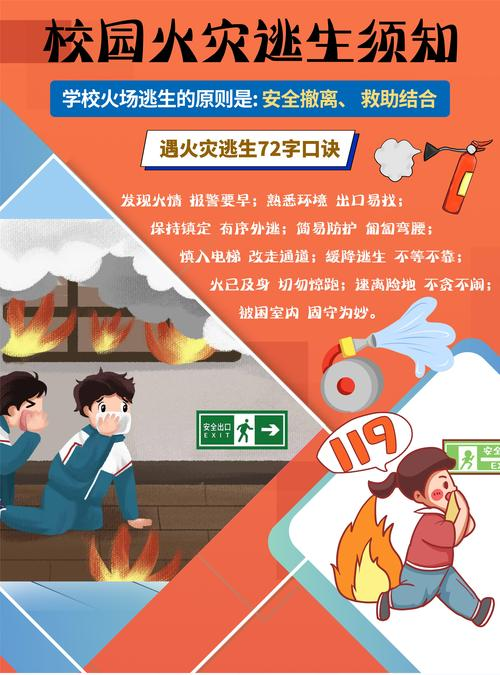
1. Be familiar with the environment and be in danger. The structure of the building in which each person learns or lives and the path to escape are about to be fulfilled on a daily basis. For their own safety, care must be taken about evacuation routes, safe exits and the location of the stairs so that they can escape the fire as quickly as possible in critical times。
2. Stay calm and discern direction. In the event of a fire, first of all, keep yourself calm and do not blindly obey people and crowd each other and rush into chaos. When evacuating, be careful to run towards bright spots or outside open spaces, to run below the floor as far as possible, and if the passage has been blocked by fireworks, to leave in the direction of fireworks and to escape through the exits to and from the outside。
3. No risk, no greed. In the fire, human life is of paramount importance, and it is important not to waste precious escape time on clothing or on finding and moving precious goods because of shyness or care for precious goods. Those who have fled the fire must not return to danger。
4. Improvised protection, covering the nose. When the fire escapes, the smoke-filled route allows for the use of towels and masks to blindfold the mouth and nose, and for the evacuation of the ground to prevent fumes poisoning and suffocation. In addition, the head, cold water on the body, wet towels, wet cotton, wet blankets, etc. Can be covered and then washed out。
5. Good use of the passageway. Do not enter the elevator. Standardized buildings have more than two escape stairs, corridors or safe exits. In case of fire, the relatively safe stairs and passages are selected as appropriate. In addition to the use of stairs, buildings may be used to climb up the balcony, windowsill, roofs, etc., to the surrounding safety zone, or to slide down the stairs along the cams of buildings such as sewers, thunderlines, etc. Remember, no ordinary elevators when the upper floor is on fire。
6. Places of refuge, where assistance is sought. If the door was hot with your hand, the fire and smoke would have to come when the door had opened. At this point, the doors and windows of the fire should first be closed, the doors and windows of the back fire should be opened, the doors sewd with wet towels, wet cloths, etc., or the water should be humid, the doors and windows should be covered, and then the water should not stop pouring through the room, preventing the smoke from leaking, securing the room and waiting for the rescue personnel to arrive。
7. Send signals and seek assistance. When surrounded by fireworks, stay as close as possible to the balcony, windows, etc., as can be easily discovered and avoid fireworks. During the day, fresh clothes, etc. Can be moved outside the window; at night, effective distress signals can be sent by flashlights that flash or knock on things in the window. When suffocated by smoke, self-help should be lost, efforts should be made to roll to the side of the wall or the door, both to facilitate the search and rescue of firefighters and to prevent the destruction of homes when they fall。
8. The fire is over. Don't run away. If a fire were found on the fire, running and beating with hands would only create wind, accelerate oxygen recharge and fuel fire. The right thing to do is to quickly try to take off their clothes or roll over and crush the flames. It's more effective to jump into water in time or to get people to water themselves。
9. Slow escape, slid rope saves itself. In the event of a fire in a high-rise building, easy, home-made lifelines, such as ropes or sheets, curtains, clothing, etc., can be used quickly and water wet to escape from the window or balcony along the rope to the floor or ground below. Even if the jump is to take place on an aerobic pad or below the four floors prepared by the firefighter, consideration should be given to how to jump, and care should be taken to choose places such as water pools, soft rain caps, grasslands, etc. Whenever possible, a few loose items, such as blankets and sofas, should be carried as far as possible or the umbrella should be opened. It is important to be careful and careful to jump from a building that is viable but that causes some bodily harm。
V. Several typical fire prevention commons:
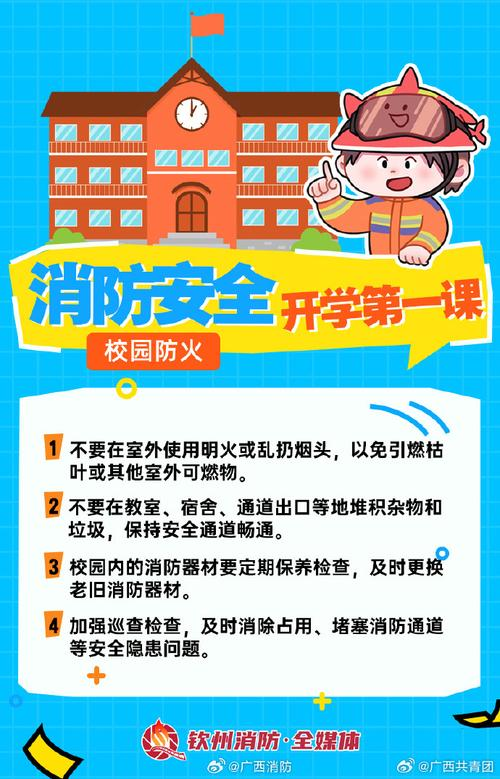
Why are the mosquitoes on fire
The mosquitoes have a strong incendiary capacity to ignite without flames, but can burn for long periods of time. When mosquitoes burn, the central temperature is as high as 700°c, exceeding the point of combustion of most combustible substances, and if exposed to the flammable material, it can cause combustion or even increase to disaster。
Why fireproof with candle lighting
As a moving source of fire, candles may melt, flow, or fall, and are prone to fire in case of flammable materials。
Three, why would a cigarette head cause a fire
The surface temperature of the cigarette is 200 - 300°c and the central temperature can be 700 - 800°c. It exceeds the flame point of flammable materials such as cotton mammoth, hairy fabric, paper, furniture, etc. If the smoke is thrown into contact with these flammable materials, it is prone to combustion and even to fire。
What about the computer fire
If the computer fires, even if the machine is shut down and even plugged down, the internal parts of the machine are still hot, they will still burst out of flames and produce poison gas, and the fluorescent screens, cathodes may also explode, as follows:
When the computer begins to smoke or fire, the plugs are removed or the general switch is turned off, and the computer is covered with wet carpets or cotton, so that both the pyrotechnic spread and the glass fragments of the screen are stopped. Do not pour water on a fire-fired computer, even for a computer that has been shut down, because the sudden temperature drops can burst a hot catheter. In addition, there are remaining electricity currents inside the computer, which can cause electrical shocks. Do not expose the cover to see, and when fire is extinguished, only the computer can be approached from the side or behind in order to prevent the explosion of the cathode。