I. Common causes of fire on campus
(i) low awareness of fire safety among teaching staff and students. Universities are teaching and research venues, and many teaching staff and students are less concerned about other matters because of their underlying research, their fire safety awareness tends to be weak, the law and order of fire is weak, their mental paralysis, lack of awareness and safety, lack of discipline and violations of fire safety regulations such as fire and electricity。
(ii) electricity from fire does not comply with safety norms and the causes of fire are numerous. Fires due to short circuits or exposure to unholy heats occur when electricity is used to overload and to make it easier to replace fuses with copper wires or wires, thereby causing electrical fires if the circuit is not able to melt in time in case of failure. The use of candles on the bed, smokers throwing unserviceable cigarettes and matches, burning of miscellaneous items in dormitories, the use of gas in dormitories, inadequate liquefied gas, and the use of flammable explosive substances such as kerosene stoves, gasoline, alcohol, etc., have led to a clear fire. There are also electric light bulbs baked for long periods of time near flammable materials; burning fires with unsupervised electric heaters; prolonged use of electrical insorption, insulation of wires, short circuit leaks and fires。
(iii) the number of old buildings and the risk of congenital fires. A number of wood structures are still in use in universities with decades or even centuries of history. One is the age of these wooden structures, the ageing of the house, the severe damage, and the fragmentation of the roof and the ridge; the second is due to inadequate regulations at the time, such as fire protection, and inadequate law and order in the design of the buildings, which resulted in an unreasonable layout of the buildings, a lack of access to fire routes, inadequate fire-protection spacing, a lack of fire-proof separation of large buildings, the extensive use of flammable materials in the interior fit-out and evacuation lanes, and many congenital fire hazards, such as the extensive use of flammable materials in the interior; and the third is due to the widespread use of open lines in old buildings and the fact that some wires are also attached directly to the beams or logs. At the same time, the power supply of these old houses has not kept pace with the needs of the times. The consequences are not conceivable in the event of a leak in the house or the burning of these years of dry wood by hot wires。
(iv) university campus complex and highly mobile. Fire sites include school buildings, office buildings, laboratories, canteens, gymnasiums, guest houses, family buildings, student dormitories, staff dormitories, school factories, rental of front rooms, etc., which can be said to involve various places within the campus. The university campus is a condensed, open society and a complex public place. In terms of construction, there are high-level, multi-storey civilian buildings, factories, warehouses and underground defence works. In terms of use, there are both teaching places, public entertainment places, hotels, hotels, commercial sites, laboratories, dormitories and office buildings. Buildings are relatively concentrated and staffed. Some of these schools include living, teaching and family areas, and even small, secondary subsidiary units, which objectively characterize the complex and mobile nature of the population on university campuses. The establishment of a market economy system, in particular, has created favourable conditions for the coexistence of various economic systems in university campuses and has made the management of fire safety even more difficult by the widespread rental of campus buildings or by the use of front-door houses。
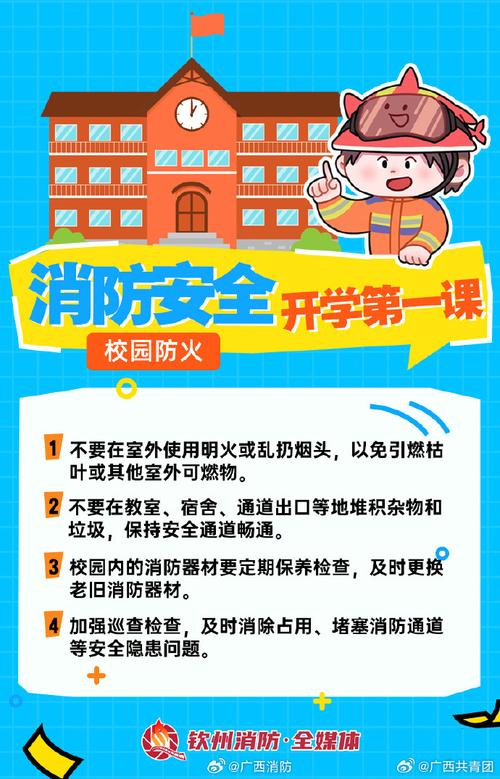
(v) high density of buildings and low security access. Undergraduate education is different from that of primary and secondary school pupils, and higher education institutions have a centralized accommodation of students because of their origin throughout the country. At present, most of the buildings in the student dormitories are generally about 3,000 square metres per building, some of them even larger, with 1,000 students living in one building. While most institutions of higher education have built student dormitories with fire safety requirements in mind, many have closed most fire safety exits or added safe doors for students, taking into account day-to-day security concerns or student safety, leaving only one or two exits for daily access, leaving the name “safe exits” in place, and the loss of life in the event of a fire is known. In order to prevent the mixing of dormitories between male and female students, the school also provides half of the floors for male and female students, with doors placed in the middle of the building, walls separated, dormitories divided in two, fire-fighting facilities such as stairs, embolisms and safe exits divided into two, and fire risks increased significantly。
(vi) less investment in fire safety. The university is a business unit, with annual expenditure largely dependent on financial allocations from all levels of government, and with limited national resources and a focus on education spending, funding for fire safety is limited. Today, when the system of university management has changed, competition among schools has become more intense, with emphasis on the difficulty of investing in hard-to-reach fire infrastructure and fire hazard rehabilitation at a cost to teachers and teaching hardware. In addition, there are very few, if any, of those who actually carry out fire safety management in the security services of the universities, or even only one person, or many more, resulting in a fragmentation of efforts。
Ii. What are the fire precautions in student flats
1. There is a strict prohibition on the private exploitation of wires and the use of illegal electro-thermal devices
2. No bed resting or smoking or throwing cigarettes
3. Strict prohibition of incineration of waste
Storage or use of flammable explosive substances such as liquefied gas tanks, alcohol furnaces, etc. Is prohibited
5. V. Strictly prohibit the blocking, diversion or destruction of fire facility equipment, firefighting equipment and fire safety signs, markings
6- safe passages, stairwells, elevator front rooms, securely exported internal and external stacking or parking of vehicles are strictly prohibited
The removal of power plugs from security evacuation signal or emergency light is prohibited
8. Non-storage of flammable articles under air conditioning
Equipment for facilities, such as flammable articles, to be far from plugs, plugs, wires, electrical appliances, etc.
10. People cut unnecessary power
11. No person can charge a charger and light mosquitoes, candles, etc. While not inside
12. The power switch must be shut down immediately when power is out
Light mosquitoes (using mosquitoes) and candles to stay away from flammable materials and to be stored in unburned containers。
Iii. What is the fire-fighting process in the event of a fire
Since the initial fire was smaller, the area of fire was small, the fire spread slowly, the smoke was low, visibility was high and the gas was low, it was important to capture the fighter jet and not cause a small fire to be catastrophic。
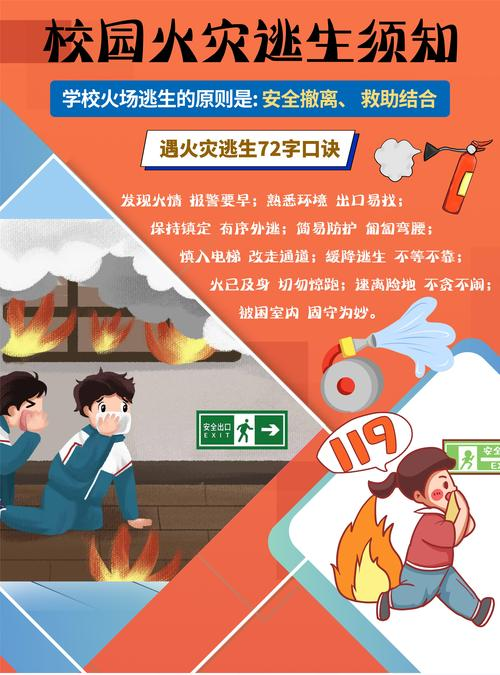
1. To alert the police, in case of a fire, to call the security guard, in case of a fire, to dial 119, to alert the public security authorities, and to promptly open the safe exit route for evacuation of persons in distress。

2. Use of fire extinguishers to control the spread of fires, to keep them within a certain space, to prevent them from spreading, to remove and isolate flammable and explosive substances。
3. The use of fire bolts to shoot water to prevent the spread of fire and protect persons trapped。
4. Organizing evacuations and actively seeking to rescue persons in distress must fulfil their responsibilities and must not be left to their own detriment。
In general, it is important to uphold the principles of first-in-first-in-first-in-first-in-first-out-first-out-first-out-first-out-first-first-first-first-first-first-first-first-first-first-first-first-first-first-first-first-first-first-first-first-first-first-first-first-first-first-first-first-first-first-first-first-first-first-first-first-first-first-first-first-first-first-first-first-first-first-first-first-first-first-first-first-first-first-first-first-first-first-first-first-first-first-first-first-first-first-first-first-first-first-first-first-first-first-first-first-first-first-first-first-first-first-first-first-first-first-first-first-first-first-first-first-first-first-first-first-first-first-first-first-first-first-first-first-first-first-first。
Iv. How can fires be safely evacuated
2. Disspection and withdrawal of fish
3. The smoke is thick, protected, low-positioned, wet towels can be used to block mouths and noses or short-respiration methods。
4. The floor was set on fire, using favourable conditions at the site for rapid evacuation, and those upstairs were not to panic when there was a fire on the lower floor, and the correct evacuation measures should be taken in the light of the different circumstances at the site。
5. Protect evacuees from re-entry into fire。
V. How are fire extinguishers used and what are the concerns
1. The method of use of dry powder extinguishers: first, to remove the safe sale, one hand holding the nozzle, the other holding the pressure and lifting the pressure, the dry powder will be pumped out, the fire extinguisher will be turned upside down several times before it is used, the dry powder will be loosened and the valve spray will be opened, and the nozzle will be moved to the right and right of the root of the flame, from near and far, rapidly advancing, without a fire, in order to prevent a recurrence, and when the fire of a combustible liquid, such as oil, should avoid impacting the surface in order to prevent the spill of liquids from spreading。
Attention: dry powder extinguishers should be placed in protected areas and in areas where dry ventilation is convenient, in order to guard against tide and sun, and should be reported to the security services in a timely manner each time they are used, and air pressure gauges should be checked for normality。
2. Use of co2 extinguishers: since co2 extinguishers are a non-power-free substance, they are used to reduce the temperature of the burning area, to isolate the air and to reduce the oxygen content of the air. The method of its use is to point the syringe at the source of the fire, open the switch and eject carbon dioxide. It is important to be safe when used, because when carbon dioxide is 20-30 per cent of the air, it is likely to suffer from respiratory distress, mental discomfort and severe asphyxiation, so that when a narrow, closed space is used, it should be quickly evacuated with ventilation, as well as to prevent freezing injuries, as the nozzles spray low-temperature gaseous carbon dioxide, with some corresponding protection, such as covering mouths and noses with wet towels。
Vi. Methods of use of flaring? The squire's attention
1. Fire-proof embolden boxes, often glass doors, can be broken with hand-held articles in case of emergency。
2. Take out the water belt, throw it away in the direction of the fire, one head of fireproof embolism and the other of a water gun to prevent distortion of the water belt。
3. Directly wringing the fire bolt switch。
4. Water gunners are required to fix their mouths and noses with wet cloths, wet towels, etc., and to shoot water along the heavy wall, using their positions or on their knees, first to spread fire, then to firmly control the spread of fire, then to raise fire and reduce its fire intensity, and finally to attack and destroy it. When someone is found to have been surrounded by fireworks, water gunners should actively and accurately fire water to the trapped person, lower his ambient temperature, dilute the smoke and cover the evacuation。
Vii. Scope of use of commonly used fire extinguishers
Dry powder extinguisher: this fire extinguisher is known for being filled with dry powder extinguisher. It applies mainly to the rescue of liquid fires, electrical equipment fires and, in particular, gas fires, which are not suitable for the rescue of precision instrument fires。
Foam extinguishers: fire extinguishers using foams are used mainly to save oil fires, such as initial fires such as gasoline, kerosene and vegetable oil; they are also used to respond to fires of solid substances in general, such as wood, cotton, pyrotechnics, bamboo and fires caused by aircraft and car accidents; they are not used to save fires with electrical equipment and gas fires。
3 co2 extinguishers: fire extinguishers using co2 gas are used to extinguish book archives, precision instruments, and fire of precious equipment. Because they do not conduct electricity, fires with electrical equipment can be saved。
Viii. How can fire be reported
When a fire occurs, it is difficult to extinguish it by its own means. It is quickly called to the public security fire department, where it is called to account for the size of the fire, the substance on fire, the presence of persons trapped, the name of the person, the contact details, the location of the fire, the route to the fire site, and then the entrance of the road to guide the fire truck to the fire, when the fire has been extinguished, and the firefighters are assisted in the investigation of the reasons for the fire。