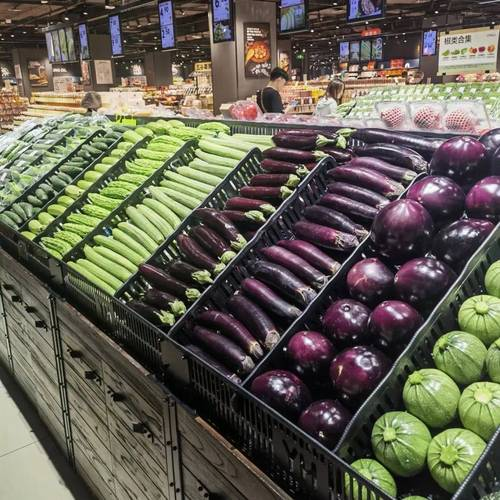
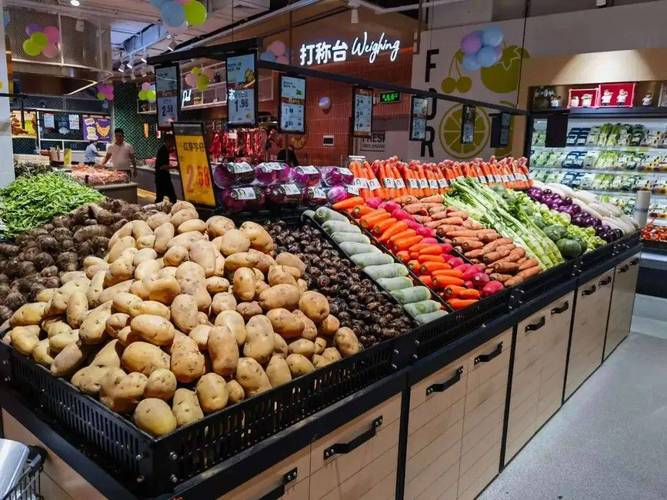
1- tube type: when commodities with long shapes such as onions are organized in a certain direction, a straight line is formed on the side. This pattern is called the “tip-tails”。
Round rows: when side-by-side or pile rounded vegetables and fruit, adjacent commodities can be supported by insulation boards, etc., that pose easy-to-break round commodities in a form that is not easy to break down。
3- grids: goods of long shape, such as onions, carrots or in bags, which are staggered and are presented in combination as “plains”。
4. Segment size: once the commodity display has been completed, the top line presents a pattern of steps。
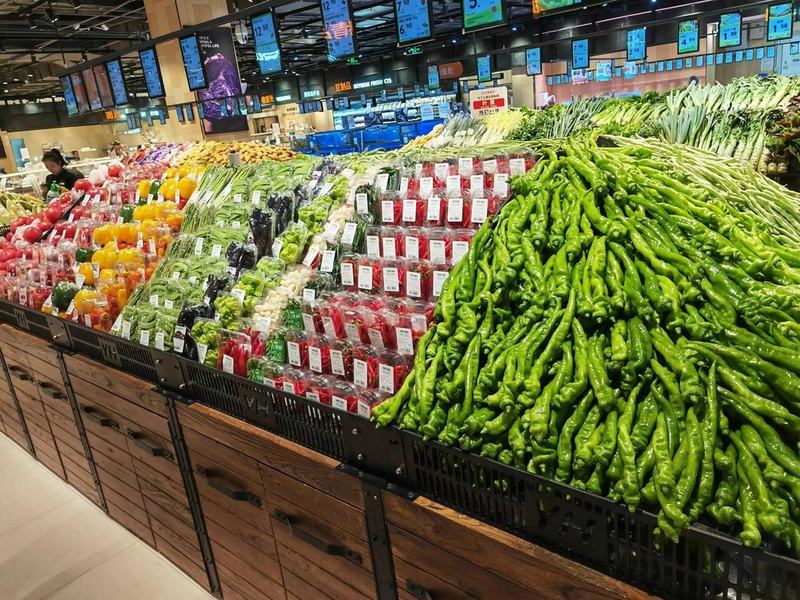
Input type: smaller commodities (e. G., croquettes, peppers, etc.) or commodities with different shapes (e. G., four-season beans, bean sprouts) can be subjected to random input using containers or partition boards that fix the front and side, which are described as “input”。
6 and stereotyping: using, for example, slabs, goods are presented in a stand-up parallel, called “steop-steed”. This can be done in the case of cabbage, celery, in order to make a difference。
7 stacking: a non-rounded commodity, such as packaged, bagged or deformed, long-formed, non-converted goods are first lined up to the front and side, and then stacked up to a certain extent, i. E., "ccumulation"。
Implanting: “implanting” by displaying a leaf and vegetable commodity as if it had been planted in a field。
9- tube builders: placing root and root commodities in an organized fashion, building up, becomes a pattern of “tip builders”. Don't get mixed up with the tuber type。