Pee-hoon upgrade 2 fountain experiments and applications
Contents navigator
1. Fountain experimental principles。
2. Relevant calculations of fountain experiments。
I. Fountain experimental principles
1. Fountain experimental principles
(1) rationale:
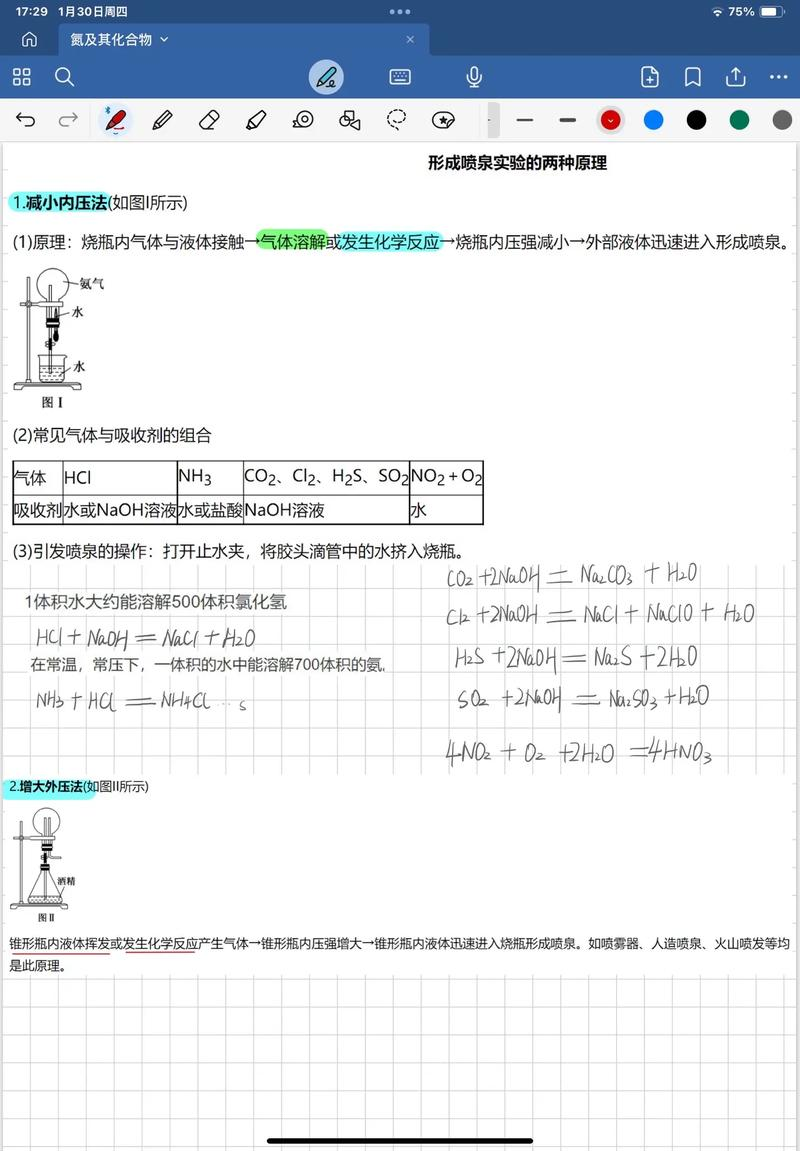
A small amount of water can rapidly dissolve large quantities of gases, reducing rapidly the pressure inside the flask and creating greater pressure differentials inside and outside the flask. External gases pressured the water from the cup into the top bottle and formed a fountain。
(2) initiation of operation:
Open spring clips, squeeze the glue head of the glue drip tube, or perform other operations that create pressure differentials that cause liquid to flow into the flask。
2. Key to the success of the fountain experiment
(1) the device is of good air security。
(2) round bottom bottles shall be kept dry。
(3) the cylinder shall be filled with gas。
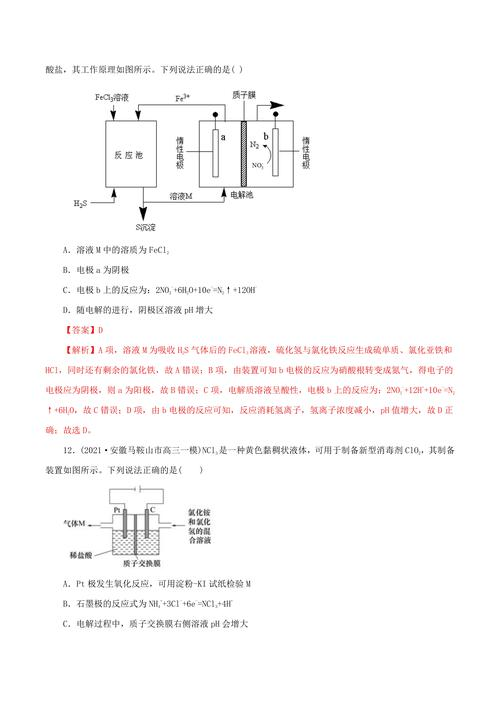
(4) fill the cup with sufficient quantities of water to prevent the fountain from stopping or not occurring due to the lack of sufficient water。
3. Combination of substances commonly capable of forming fountains
Gas
Hcl
Nh3
Co2, cl2, so2, h2s
No2 and o2
Absorption agent
Water or naoh solution
Water or hydrochloric acid
Naoh solution
4. Relevant calculations of fountain experiments
(1) upon completion of the experiment, the solution is filled with flask and the amount of the dissolved substance is the same as that of the gaseous substance (as determined by volume conversion)。
V(aq) = vl, nb eq\f (vl, 22. 4 l. Mol-1)
Cb=eq\f (nb, v? Aq?)=eq\f (vl, 22. 4l, mol-1), vl=eq\f (1,22. 4)mol l-1。
(2) if the solvent is converted from a portion of the gas, it is judged by the circumstances. If v volume no2 is mixed with o2 by 4°1, and the reaction is 4no2+o2+2h2o==4hno3, there is v(aq)=vl, nb=eq\f(4,5) xeq\f (vl, 22. 4l. Mol-1)
Cb=eq\f (\f(4), vl, 22. 4 l. Mol-1), vl=eq\f(1,28) mol l-1。
[communication discussion] as in graphic devices, dry bottles contain some kind of gas and cups and drip pipes contain some sort of solution. The following is not consistent with the test facts:
A. Co2 (nhco3 solution)/foundless fountains
B. Nh3 (h2o phenolated)/red fountain
C. H2s (cuso4 solution)/black fountain
D. Hcl (agno3 solution)/white fountain
Summary
The source of the fountain is the low pressure of internal and external pressure of the flask and, as the pressure of the gas in the flask is less than that of the flask, the liquid is pressured into the flask to form the fountain。
(1) as in fig. (b) flask, the gas is highly soluble in water (or chemically reacts with the solution in the solution), so that the pressure in the flask is reduced rapidly, and the liquid in the flask is moved up quickly, under atmospheric pressure, to form a fountain。
(2) as in the case of the chemical reaction in the vase, which produces gas, the pressure in the flask increases rapidly, prompting the flow of liquids up the crayon to form a fountain。
The fountain experimental device is shown in the diagram. The following groups of gases - solution - can be used to produce a fountain phenomenon ()
Options
Gas
Solvent
H2s
Rare hydrochloric acid
Hcl
Scarlett
No
Rare h2so4
Co2
Saturation nhocko3 solution
[i. E. Exercise 2] as illustrated by the fountain experimental device used in chemistry teaching。
A fellow student conducts a fountain experiment with gas containing different components of the bottle, helping to analyse the concentration of the solution obtained from the bottle after the experiment. (assuming that the experiment is completed under standard conditions and the solution is non-proliferation)
(1) for hcl gas, c(hcl)= 。