Chemical reagents provide chemical inhibitors for h+ (ion analysis) and oh- (ion analysis)
2. The electrolytic water produces self-cycled regenerative ion inhibitors for h+ (ion analysis) and oh- (ion analysis)。
Structure to classify
1. The resin filler
Chemical membrane inhibitors
3. Electrical chemical inhibitors
Special assistive inhibitors, attached to the back of the inhibitor, reduce background conductivity by de-co2。
Ii. Description of different types of inhibitors
1. The resin filler
R-h+
+na+oh-→r-na++h2o
R-h++
+mn+an-→r-mn++hna
R represents the fixed phase of ion exchange resin, oh-to rinsing ion, a-to detect anion and mn+ to match anion in the sample。
2. Rotation filled bed-type suppressors
The metrohm rotor-filled suppression system has three equivalent inhibitors; while one pillar works, the other column is reborn and the third column is washed with super-purified water. Upon completion of the analysis, 120°c is rotated, the rinsed columns are used for inhibition, the post-analysis columns are regenerated, the post-regeneration columns are washed with super-purified water and repeated, so that they can become continuous work。
The inhibition of continuous analysis was addressed, but because of the low inhibitive capacity of single columns (which could not be increased by fillings because of the size of the dead), the actual use of each pillar was not long enough to be used in conjunction with the high-capacity analysis pillar, the compatibility of gradients was limited (which could not be used for long periods of time for gradient analysis, and the gradient was repetitive), and the use of extra-sulphate regeneration and water balance was required。
3. Rubber suppressors
In the structure of the original single-root-filled inhibitor, a combination of discardable inhibitors is proposed and during the operation, the inhibitor poles need only be replaced without regeneration。
In this way, because the inhibition does not need to be regenerated, even if the sample has contaminated the inhibitor, the next replacement inhibitor remains in its best condition and is suitable for the analysis of the inhibitor that would cause serious contamination。
There are two alternative forms of inhibition。
4. Ion exchange fibre tube suppressors and thin film suppressors
The limitation of ion exchange resin filling column inhibitors is that the regenerative ion is bound to a fixed phase of limited capacity. Also, resins must be intermittently regenerated and, in order to overcome these shortcomings, a regenerative ion is developed and used as a continuous ion exchange fibre tube or thin membrane inhibitor provided by chemical reagents。
5. Electrically moved electrochemical inhibitors
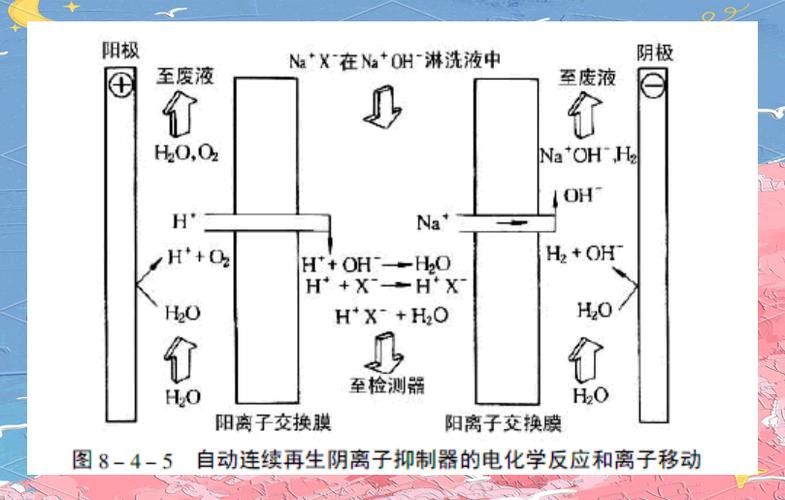
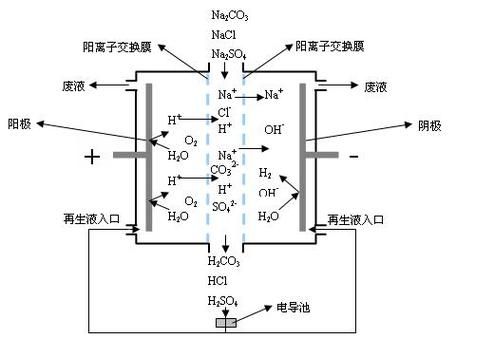
The inhibitors consist of three rooms, using anion analysis as an example, two anion exchange films, two inter-story inhibition chambers, one on the other side of the two anion exchange membranes and six cathode chambers, respectively, with electrodes 3, 4 and electrolyte in the cathode interior。
The leachate from the separation pillar flows with the ion from the inhibition chamber to the conductive test pool. The following electrochemical reactions occurred at the electrodes as a result of the electric field:
Anode: h2o=? O2↑+2h+2e-
Cathode: h2o=h2↑2ah-
Reactions to electrolytic tanks: h2o=h2↑? O2↑
6. Self-cycle regenerative chemical film inhibitor
7. Electrochemical inhibitors for the vaginal, anionic dual function
8. Salt converters
A new type of salt converter - the aor (sc-csrs) - replaces the csrs-ultra inhibitor with the anion exchange application, which is used to increase linearity and sensitivity in the determination of ammonium salt and ammonium compounds. Sc-csrs has increased the response value and linear scope by converting the ionising ammonium salt and ammonium-like compounds into the msa form。
The sc-csrs inhibitor only applies to methane sulfuric acid showers, which are not suitable for sulfuric acid showers, and the other limitation is that it is only available at an equal concentration and does not support gradient operations。
9. Atlas silencer
Self-regent inhibitors of membranes。
10. Ds-plus suppressors
(1) depression
In pools, mobile phase and sample ion react neutrally with acid/alkali。
(2) electrochemical regeneration is electrolytic and continuous regenerative from liquid water. Regeneration does not require additional water or fluids from detectors。
(3) elimination of gas
Repression fluids are removed from dissolved co2 before entering the conductor pool by removing the pipe。
Ds-plus suppressors can be used for gradients of carbonate systems, as they transform carbonate into water reduces background electrical conductivity and minimizes the baseline drift of naco3/nshaco3。
11. Dual chemical inhibitors
Usually, the ic is separated by a degree of equivalence, using nako3/nhhhco3 as a detergent, and it is difficult to achieve gradient removal. Thus, the ic gradient is removed using naoh or koh systems (with h2o after inhibition and low background)。
The bichemical inhibition is based on the original chemical inhibition and the addition of a special device to remove co2 from the rinsing solution, which significantly reduces the background electrical conductivity and makes it possible to wash the naco3/ nshaco3 gradient。
12. Auxiliary suppressors - crd suppressors
In order to overcome the interference of the system and sample co2 by replacing the inhibitor with a crd, co2 interference with other ion determinations can be effectively eliminated and the background conductor further reduced to increase the sensitivity of the detected ion with a co2 removal efficiency of 95% (1,000 mg/l)。
The crd applies only to rinsing fluids for hydroxygen and boric acid systems, which are best used in the rfic system and cannot be used simply for carbonate systems, except in multiple crd chains。
The rationale of the crd is based on the permeability of gases on teflon af, whereby co2 produces carbonate through membranes and waste fluids from the inhibitor (naoh or kah), is excreted from the rinsing fluid and nuclei are ably applied to self-recycling inhibitors。
14. Auxiliary suppressors - mcs suppressors
The background conductor is reduced to less than 1 μs/cm by removing co2 from the background after chemical inhibition. The principle of this inhibitor is based on the permeability properties of the gas on teflonaftm, through the instrument control of the inner vacuum pool, teflon aftm film and co2 absorbent。
The connection to the mcs inhibitor significantly reduces the peak of the input system by 20 to 50 per cent, further reduces the ion detection limit and significantly reduces the background conductivity。