What's static
The static power is a common feature of our daily lives. When you take off your clothes, touch the elevator buttons, etc., you occasionally hear cracks and the pain. I'm sure we all have。
So where is static power? Can you make so many people of different genders and ages uncomfortable? In the final analysis, how did "static power" come about
The rationale behind the creation of “static power” and the resulting stings are described below。
Understand the principle of static power and learn to respond
Clients troubled by electrostatics must not miss out! Detailed descriptions of the various levels of knowledge, including the basics, responses to electrostatics。
Download
The principle of static power
There are various kinds of objects around us. They include metals, plastics, fibres, etc., with different materials and structures。
In fact, all objects are atoms. The internal atoms consist of protons with a positive charge and electronics with a negative charge. We humans too. Typically, the positive charge is the same as the negative charge。
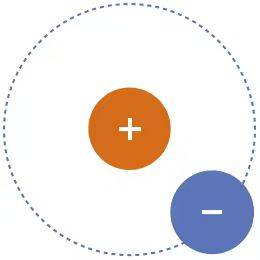
One positive, one negative
In the figure above, the positive charge is the same as the negative charge, which can be said to be a checks-and-balance and well balanced. In professional terms, it is called “electrical neutrality”。
Neutrality is neither positive nor negative. In other words, it can be “unpowered”. When exposed to objects in a neutral state, there is no sound of cracking because they are free of electricity。
However, this good balance cannot always be maintained and can easily be undermined by the occurrence of something. This “situation” is “contact”. When two different objects come into contact, the negative charge of one side moves towards the other。
There is a relationship between the negative “take side” and the “take side”. This is due to the different attractiveness of objects to negative charges. When two objects touch each other, the negative charge on one side moves to the more attractive side of the negative charge。
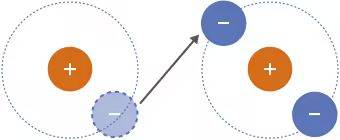
When you touch
The negative charge will move to the more attractive side of the negative charge
The object to which the negative charge has been seized will carry more positive charge. On the other hand, objects that seize negative charges will carry additional negative charges. The balance of objects that had reached a good balance would be undermined by contact。
The state in which the balance was destroyed was called “static power”. In the field of expertise, the state with electrostatics is referred to as “carrying”。
The electrostatics are divided into “positive electrostatics” with positive electrons and “negative electrostatics” with negative electrons。
Objects with “static power” in an unbalanced state of charge. An object with an imbalanced charge seeks to recover to a balanced state. It's like being tripped and losing balance and trying to get back on your feet. To avoid falling, we want to get back to balance。
Unified confirmation on PDF
The truth and the static
What happens if a positive object is brought close to a negative object
In order to restore balance, the negative charge on the negative side would want to return to the positive side. When both are exposed (extremely close), the negative charge returns to the positive side。
This negative charge-back movement is called "discharge". The so-called discharge, or “discharge negative charge”, is when current flows between “object” and “object”。
Let's think about it with the example of the elevator buttons at the beginning. Assuming the elevator buttons are negative. And at this point, we're carrying a positive charge。
In that state, touch the elevator button, the negative charge will flow to our fingers. There's a discharge, there's a current. Humans experience pain in a state of electrocution (physical exposure to currents)。
We usually call this slight electrocution “static”, which, to be precise, should be “static discharge”。
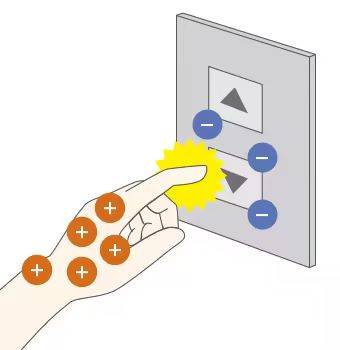
Unified confirmation on PDF
Index
In-depth learning of static
Please take a look at the clients who are ready to officially start a static response
It encompasses a variety of elements ranging from static basic knowledge to specific issues。
Electric charge and calculation methods
Type of electrostatic response
The static response to different problems
Knowledge, selection, use of electrostatic eliminationrs
Genence's static electrocutor
Free support for the static response
The case of the import of electrostatic eliminationors by industry